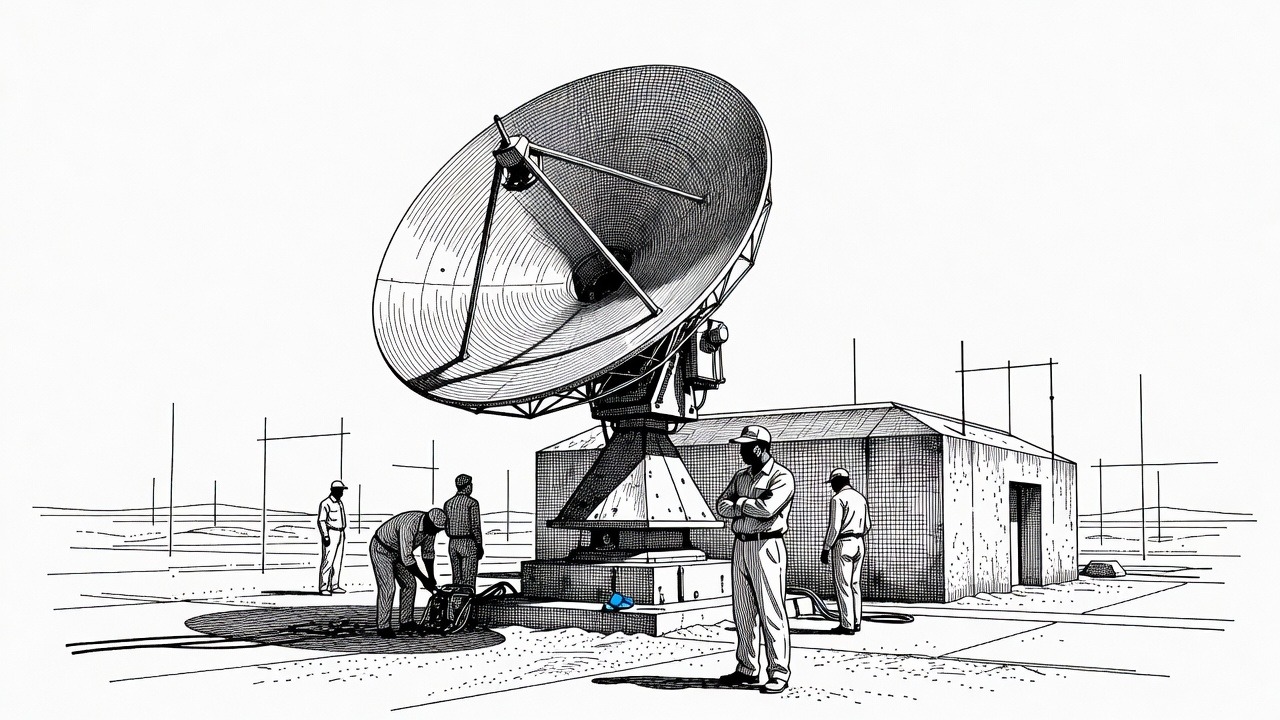
In the span of a single news cycle, the American public was told that U.S. forces had struck an Iranian missile site on Qeshm Island, and that the president was investigating a possible dirty bomb plot in Washington. The Secretary of State then said he saw no imminent threat to the capital, and Iran called the allegation baseless. Those two things don't sit comfortably together. Anyone who lived through 2002 and 2003 should feel the floor tilt.
I am not claiming the dirty bomb story is false. I am saying a president who wants a country to accept escalation with a nuclear-adjacent adversary owes it evidence, not a teaser. Trump floated the specter of radiological terror in the capital while his own top diplomat was publicly lowering the temperature. When the commander in chief and the Secretary of State give the public two different levels of alarm about the same alleged plot, the public is entitled to ask which statement is doing political work. We have been taught what unverified claims about frightening weapons can do. A war built on them cost trillions of dollars and hundreds of thousands of lives, and it empowered Iran in the bargain.
Then there is the question nobody in power seems eager to answer: who authorized this? The Constitution gives Congress the power to declare war. Presidents of both parties have spent decades treating that clause as a suggestion, with a one-line war powers notification as the courtesy. Trump has gone further than most. He struck Iranian nuclear sites in 2025 and then declared victory without ever asking lawmakers for anything. Each unilateral strike makes the next one easier, and the next president inherits a precedent where the legislature is an audience.
The strike itself is also not an isolated act. This crisis has a history. Trump tore up the 2015 nuclear agreement, which Iran was verifiably complying with, and promised that 'maximum pressure' would produce a better deal. It produced a more advanced Iranian program, a more entrenched Revolutionary Guard, and a region that moves from flare-up to flare-up. Now we are asked to treat each round of violence as a reaction to Iranian provocation, as though the story began this week. Iran's government is repressive and its Guard is dangerous. Both things can be true, and neither makes a Congress-free air campaign wise.
Qeshm is no empty rock. It sits in the Strait of Hormuz, the chokepoint through which roughly a fifth of the world's oil moves, and it is home to civilians, fishermen and port workers who did not choose the Guard's missile placements. Americans who will pay for this are even less consulted: service members in range of retaliation, and working families who feel Gulf instability at the gas pump long before any strategic benefit materializes.
And where are Democrats? Too many offer a murmured 'we need more information,' then go back to fundraising emails. That is not opposition. If this party believes Congress owns the decision to go to war, it should force the vote, put every member on record, and make Republicans explain why they will cheer a conflict they refuse to authorize. Tim Kaine has been doing this nearly alone for years. He shouldn't be.
The standard is simple. Show the evidence for the dirty bomb claim. Explain the legal basis for the strike. Put the question of sustained force before Congress. Anyone who calls those demands naive about Iran is asking us to repeat a mistake the country already paid for in blood.
How it may affect me
Escalation near the Strait of Hormuz, a key route for global oil shipments, can push crude prices up and, with a lag, gasoline and shipping costs. U.S. troops stationed in the region also face a higher risk of retaliation.