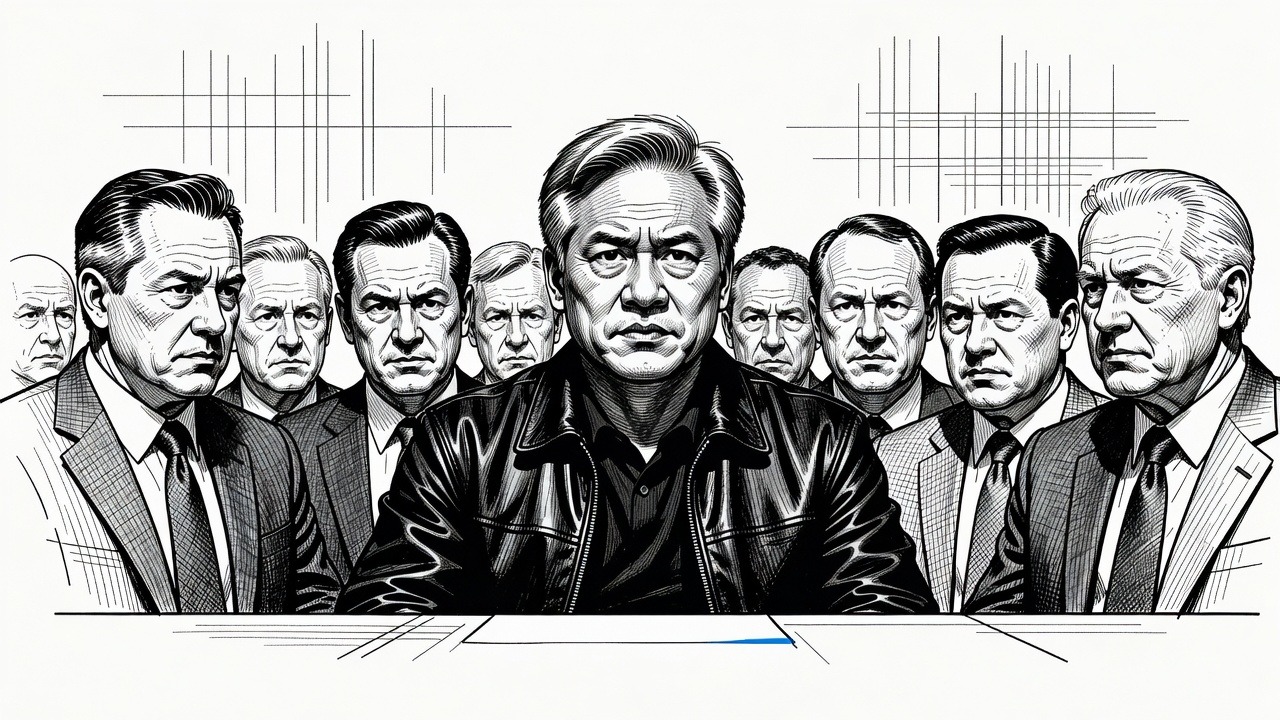
Start with what we actually know, which is not much. Jensen Huang has resigned. Reports tie his exit to allegations about personal relationships, including with an Nvidia employee. The company has opened an internal investigation. Those are allegations, and the details come from thinly sourced accounts. The Left learned the hard way, in both directions, that a rush to verdict and a rush to dismissal both fail the people involved. Let the facts come out.
But the structure of the story is already revealing, and it deserves attention whatever the investigation finds.
The first question is the one corporate statements always skip: could the employee say no? A relationship between a chief executive and someone in his chain of command is not a relationship between equals. He can shape her pay, her promotions and her future, and she cannot do the same to him. Calling it "personal" does not make that power disappear. It only moves the problem somewhere HR cannot easily reach. Companies write conflict-of-interest rules for exactly this reason, and the people who write them are rarely the people they bind.
Which brings us to the investigation. An internal inquiry at a company whose founder-CEO has just left is an inquiry run by people he hired, promoted and enriched. It may be honest. Honesty is not the same as independence. If Nvidia wants anyone to believe the process, the board should retain outside counsel with a real mandate, protect the employee and any witnesses from retaliation, and publish findings that go beyond a two-line statement. The board has a track record to overcome here. One report says a board member was only now named the company's first chairman. If that is right, the most consequential chipmaker on earth ran for decades without a formal chair apart from the man everyone worked for. That is not governance. It is a monarchy with a quarterly earnings call.
Then look at how the market reacted. Shares fell more than 4%. On a company valued in the trillions, that is a staggering sum, and it was wiped out by news about one person's conduct and departure. Investors are not pricing the welfare of the employee at the center of this. They are pricing the risk that a single man's absence breaks the machine. That tells you how much of the AI boom rests on personality rather than institutions.
That should worry more people than shareholders. Nvidia chips sit under the AI buildout that politicians in both parties keep calling the future of the American economy. Index funds hold the stock, and so do the retirement accounts of teachers and nurses who never chose that exposure. When so much wealth, and so much of the country's industrial strategy, depends on one company, its internal accountability stops being a private matter. We should not be comforted that a CFO is minding the shop. We should be asking why a firm this important was built so that one resignation shakes it.
The Left should also be honest about where its own caution belongs. Due process is not a weapon of the powerful. It is what protects the accused and the accuser alike. If the employee's account is credible and was ignored, that is a story about institutional failure, and Huang's exit does not end it. If the allegations collapse, the people who rushed to judgment should own that. Either way, the lesson is the same. When power is concentrated in one person, the rules end up applying to everyone except him.
Colette Kress is an experienced operator and may steady things. But a steady interim is not an answer to the real question. Who watches the person at the top, and who protects the person at the bottom? Nvidia owes its workers and the public an answer that is more than a press release and a market recovery.
How it may affect me
If you own a broad index fund or target-date retirement fund, you likely hold Nvidia, which now makes up a large share of major U.S. indexes. A 4% swing in one stock can visibly move your balance. Watch for the board naming a permanent CEO and for any published investigation findings.