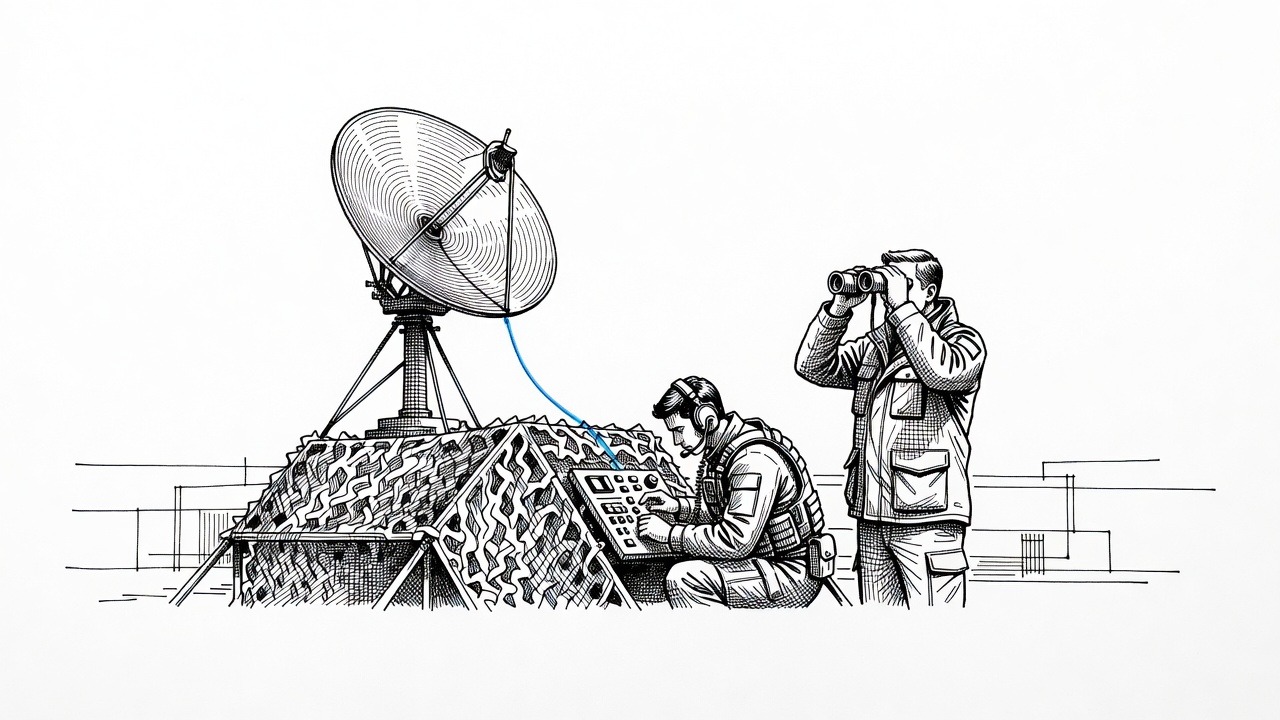
A Ukrainian interceptor drone chases a Russian jet-powered Shahed. If it flies faster than about 100 miles per hour, its satellite link drops, and the weapon built to stop a bomb becomes a falling piece of plastic. Volodymyr Zelenskyy says that is happening now, because of new restrictions on Starshield, the military arm of Elon Musk's satellite empire. Ukraine says it has asked Washington to explain.
It is worth pausing on that last detail. Ukraine is asking *Washington*, and Washington does not obviously hold the answer. Nobody outside a private company's executive suite and a few classified contracts can say who decided this, why, or whether anyone in the U.S. government signed off. That is the scandal, whatever the motive turns out to be.
We have been here before. In 2022, Musk reportedly declined to enable Starlink coverage near Crimea during a Ukrainian operation. He disputes the characterization, but the lesson was already plain: a single unelected billionaire can shape the battlefield in a European war. Four years later, we have built even more of the war around his hardware. The Pentagon, which spends close to a trillion dollars a year, apparently could not or would not make sure that a democratic ally's air defense did not depend on one man's terms of service.
The restrictions may have a defensible rationale. Russian forces have been caught using Starlink terminals, and a company can reasonably want to stop that. But the defensible version still proves the point. Foreign policy is being made through product settings. When a policy this consequential comes down to an engineering switch, voters, Congress and allies get no vote, no hearing and no appeal.
Now look at who is carrying the diplomacy. As interceptors lose their guidance, Steve Witkoff and Jared Kushner are in Moscow with Vladimir Putin. Neither is a career diplomat or a Senate-confirmed official. One is a real estate investor, the other the president's son-in-law, whose private equity firm has been bankrolled by Gulf sovereign money. The Abu Dhabi talks produced no ceasefire. This is the arrangement the administration trusts to settle the largest European land war since 1945: deal-makers, no institutional memory, no public accountability, and every incentive to treat a nation's survival as a negotiable asset.
I cannot prove the Starshield limits are leverage on Kyiv, and nothing in the reporting says they are. But that is the indictment. In a functioning system, no one would have to guess. A government that answered to the public could say plainly whether it wants Ukraine to keep defending its cities while envoys talk. Instead we get silence, plus a private company holding a switch.
Some on the left will say this vindicates their discomfort with open-ended military aid, and that a war this dependent on corporate infrastructure should be ended through talks. The impulse to end a war is decent. But talks conducted while one side's defenses are throttled are not neutral diplomacy. They are pressure with better manners. And the people absorbing the cost are not in Dublin or Moscow. They are in apartment blocks in Kharkiv and Kyiv, listening for the engine note of a jet drone.
The remedy is not complicated, though it will not come from this White House. Congress should demand to know who authorized these restrictions and on what terms. Washington should treat the satellite links that sustain an ally's defense as public infrastructure with public rules, not a favor revocable by a founder's mood. And any envoy negotiating Ukraine's future should be someone the Senate has vetted and whose financial entanglements are on the record.
If Ukraine's air defense can be degraded by a terms-of-service update, then it is not an American policy at all. It is a franchise.