Let's get the tabloid part out of the way. A married man had affairs and apologized to his family. That is between him and them, and anyone on the Left tempted to preach about it should remember how this genre of scandal has usually been used: to humiliate people, not to protect the public.
The real scandal is that the board of the most strategically important company on earth appears to have been jolted into action by leaks, a congressional uproar and an 8% after-hours drop in the share price.
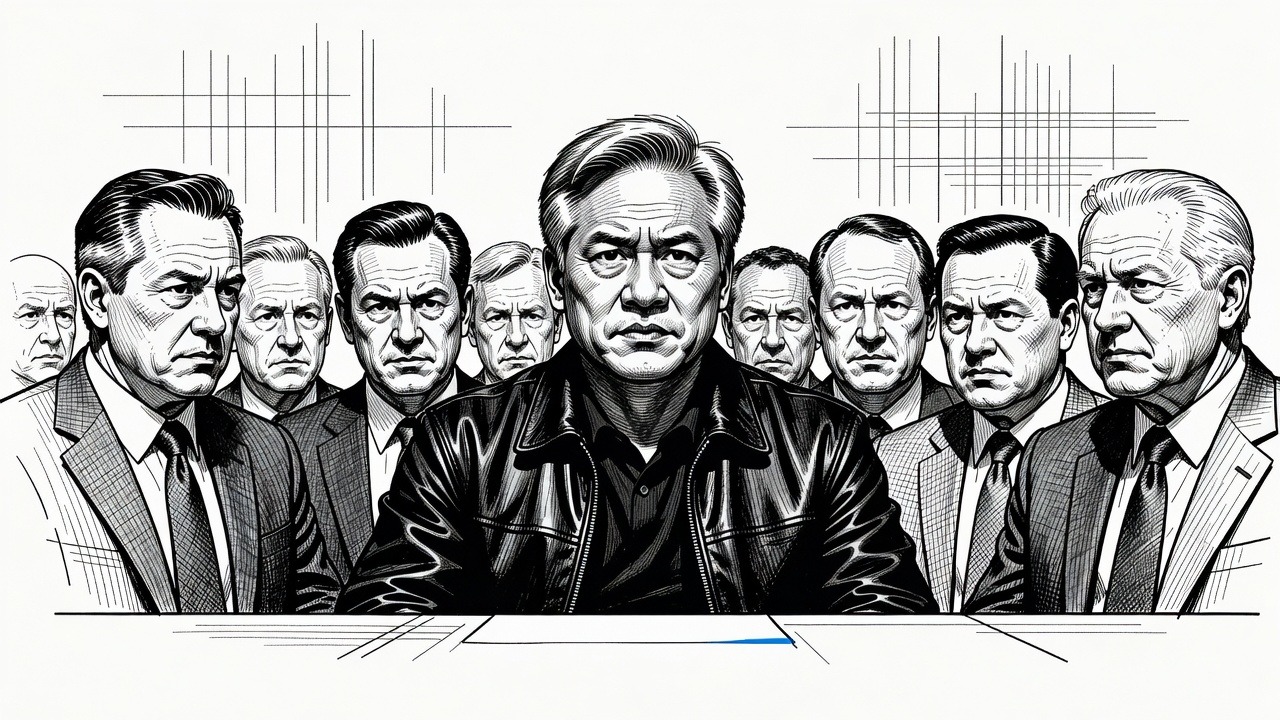
Consider what is alleged. U.S. intelligence officials say the founder of Megaspeed, a Singapore cloud firm, was recruited by China's Ministry of State Security to gather information on Jensen Huang. Nvidia says his contacts were part of his professional duties and that it has found no evidence of compromised secrets or national security. Beijing calls the allegations baseless. None of that has been proven, and it should be treated as allegation. But notice who is vouching for whom. The company is clearing its own chief executive, while an inquiry led by outside counsel, retained by that same board, decides whether the board should have worried.
This is what happens when a handful of firms control chokepoints in the global economy and we call them ordinary private companies. Nvidia's chips are the physical substrate of the AI race. Washington treats their export as a national security question. Yet the person with the most influence over where they go has spent years as the loudest salesman for selling more of them to China. Huang has argued that export controls backfire and that the Chinese market is indispensable. He may even be right on some points. But it is an argument made by a man whose company's valuation depends on being right. Policymakers have still let him function as both seller and unofficial adviser, and the arrangement has been remarkably cozy. Last year's deal to let Nvidia sell certain chips to China in exchange for a cut of the revenue sent to the Treasury made export policy look like a transaction between a CEO and a president, not a considered strategy.
Now we are told to wonder whether that same executive was being cultivated by a foreign intelligence service. Even if the answer is no, the question exposes how thin the guardrails are. Who monitors the contacts of a CEO whose decisions shape the military balance? Apparently, no one but a board that serves shareholders first.
The Elon Musk quip, that it would be an honor to hire Huang, completes the picture. It reflects the founder-as-demigod culture of Silicon Valley, where chief executives are treated as irreplaceable geniuses and the institutions around them as decoration. A trillion-dollar enterprise should not rise and fall on one man's judgment or one man's private life. If a single person's departure can erase hundreds of billions in market value, that is a governance failure, not a tribute to genius.
Congress is right to demand a briefing. But Democrats should not settle for a hearing that asks only whether Huang should resign. The better questions are structural. What disclosure should be required of executives at firms whose products are designated strategically sensitive? Why should an industry's top lobbyist have this much sway over export rules? And why do we keep deferring to corporate self-investigation when the stakes include national security?
If Huang goes, the board will say the system worked. If he stays, it will say the same. Either way, the public will have learned only what the company chose to tell it. That should bother everyone, including those who admire what Nvidia has built.
How it may affect me
If you own a broad stock index fund or a 401(k), you likely hold a lot of Nvidia, since it is among the largest weights in major U.S. indexes. A leadership shake-up could move your balance, and the episode is a reminder of how much retirement savings now depends on a few companies.