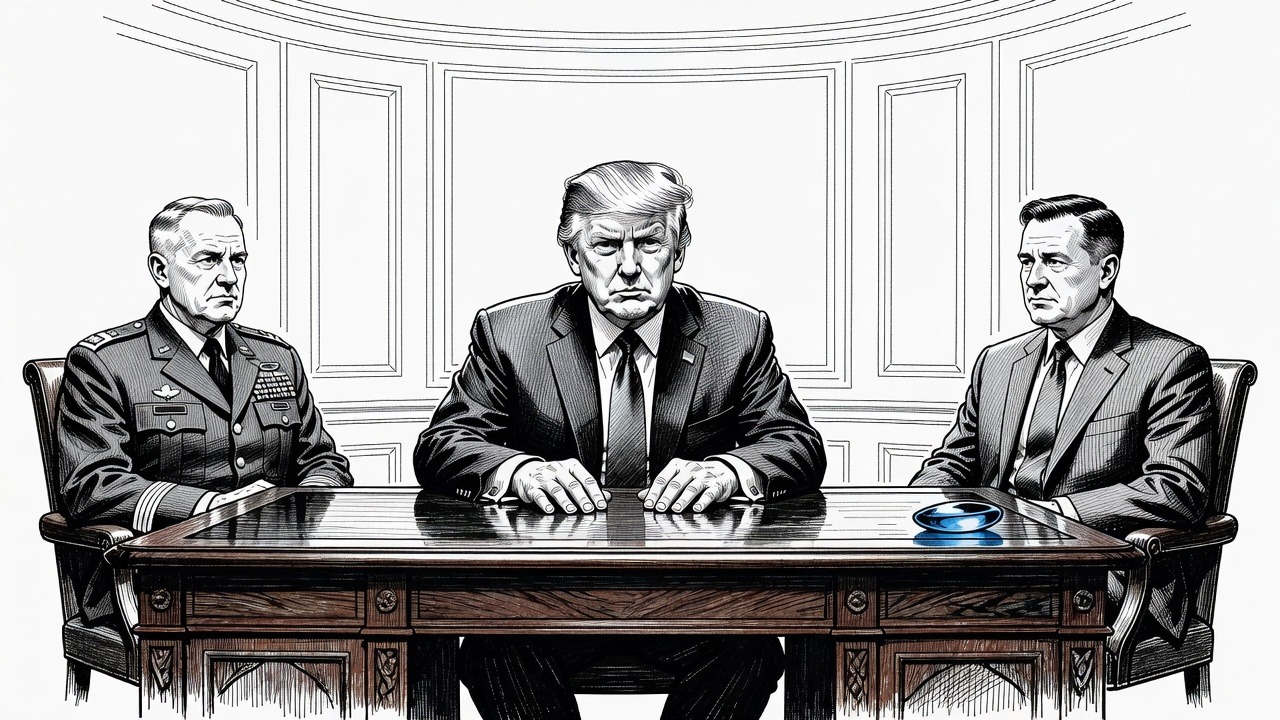
It took a Kentucky Republican to say out loud what most of Washington has avoided for a quarter century: if Congress will not defend its power to take the country to war, it doesn't have that power.
Thomas Massie's eight articles of impeachment against Pete Hegseth cover strikes on Iran and Yemen without congressional authorization, the killing of suspected drug smugglers on boats, the seizure of Nicolás Maduro, and the Pentagon's retaliation against Senator Mark Kelly for reminding service members that they may refuse illegal orders. On paper, this looks like a grab bag. In substance, it is one charge: a Defense Secretary has been running a war machine that answers to no one but the president.
Start with the boats. The administration has declared that people in small vessels, suspected but never tried, are "narco-terrorists" and can be blown up on sight. No court, no evidence presented, no Congress. Scores of people are dead. Once the government can kill without proving anything, the label does all the work, and the label is whatever the executive says it is. A country that would be horrified if another government did this to Americans has decided that process is a luxury for other people's victims.
Then there is Kelly, which should alarm anyone who has ever worn a uniform. A sitting senator and former combat pilot said what military law already says: you do not follow unlawful orders. The Pentagon's response was to threaten his rank and retirement. When a Defense Secretary punishes the recitation of the law, he is telling troops which authority counts, and it isn't the statute.
The strongest objection comes from Republican Warren Davidson: impeachment is a blunt instrument, and Congress has the power of the purse. Fine. But Congress has had that power throughout this entire stretch and has not used it. The funding lever is a way to look responsible without voting for anything. And impeachment is not reserved for a secretary who steals. It exists for officials who usurp powers the Constitution gave elsewhere. Unilateral war-making is that offense in its purest form. If it doesn't qualify, nothing about war does.
The Left has to be honest here, because we are not clean. Obama bombed Libya without authorization and had his lawyers explain that it wasn't really "hostilities." Biden struck Yemen on his own authority. Democrats have spent years letting the 2001 authorization stretch to cover anything a president wanted, then complained loudly only when the other party held the pen. Hakeem Jeffries backing this is welcome, but it will mean something only if Democrats mean it when a Democrat is in the Oval Office. Principle that appears only in opposition is just a strategy.
That is why Massie matters. He has been voting this way, alongside Ro Khanna, when it cost him with his own party and when the president was of his own party. The coalition for restraint has never been neatly partisan, and its credibility comes from that.
Will the Senate convict? Of course not. Two-thirds is a fantasy while Trump says he stands behind Hegseth and most Republicans fear him more than they respect their oath. But the vote isn't pointless. It makes every member say, on the record, whether a secretary may start wars, kill without trial, and punish a senator for citing the law. Republicans who vote no will own the answer.
Hegseth called the effort illegitimate. Consider that. The House exercising a power written into Article I, against a cabinet officer, is illegitimate. The killing of unnamed people at sea on the strength of an executive label is not. That inversion is the argument for impeachment.