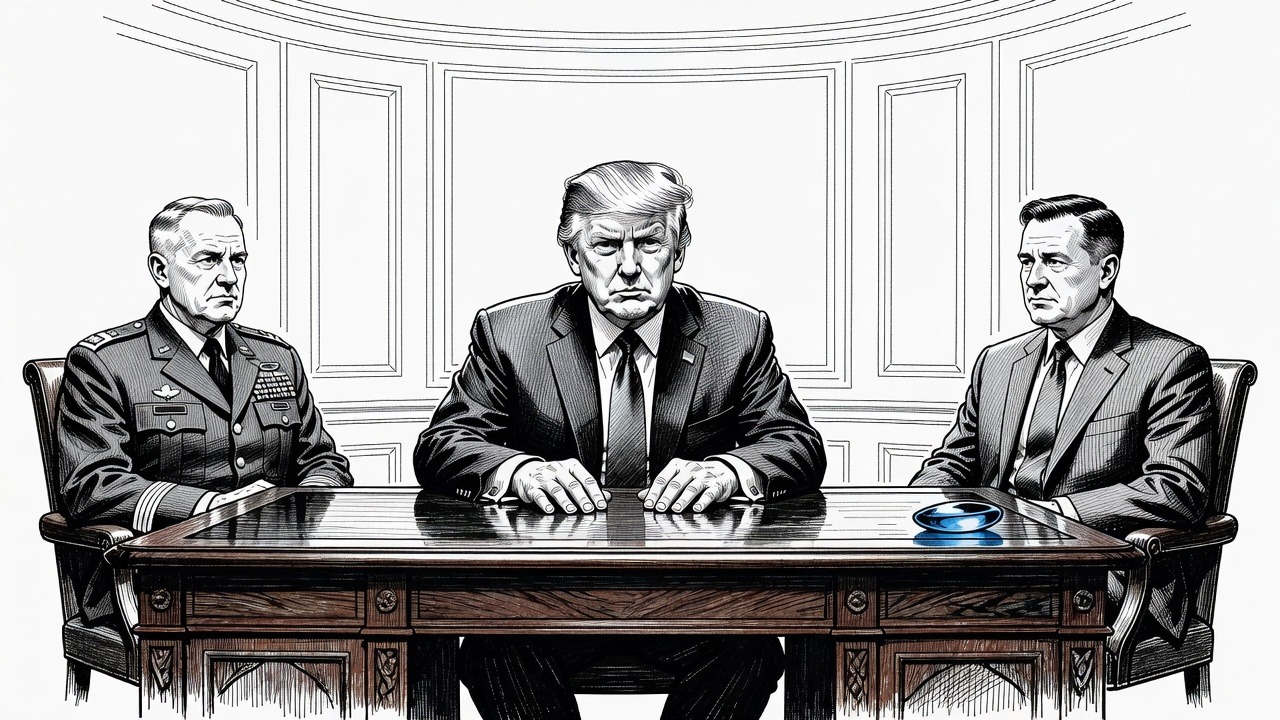
Consider the sentence at the center of this story: the President of the United States expects to decide "soon" whether to bomb a country of 90 million people or negotiate with it. Not Congress. Not the public. One man, on a timeline he is keeping to himself, while Central Command waits for a phone call.
This is how a republic drifts into war without anyone voting for it.
Start with what we were told last summer. After the June 2025 strikes on Fordow, Natanz and Isfahan, Trump said Iran's nuclear program had been "obliterated." Now the same administration is preparing to resume major operations and offering $20 million to anyone who can tell Washington about Iran's nuclear scientists, staff and technology. Both cannot be true. Either the program was destroyed and this is theater, or it wasn't and the president sold the country a victory that didn't exist. A bounty program built to find a program you've already destroyed is a confession.
The bounty deserves its own scrutiny. Rewards for Justice was built to hunt terrorists. Pointing it at scientists and technical staff, people whose crime is their profession, blurs the line between counterproliferation and targeted killing. Israel has already assassinated Iranian nuclear scientists, and Washington is now inviting informants to supply the same kind of names. Whatever one thinks of Tehran's regime, we should say plainly what is being purchased.
And remember how we got here. Iran's nuclear activity was under the most intrusive inspection regime ever negotiated. The IAEA repeatedly certified compliance with the 2015 deal. Trump tore it up in 2018 on the promise of a better one. What followed was the opposite: Iran enriched to 60 percent, inspectors lost access, and the hawks who cheered the withdrawal now cite the resulting crisis as proof that only force works. They broke the fire alarm and are now pointing at the blaze.
The strategic logic of bombing is also weaker than its advocates admit. Airstrikes can destroy buildings. They cannot destroy knowledge, and they hand hardliners in Tehran the argument they've always wanted: that Libya gave up its program and got a dead dictator, while North Korea kept its bombs and got summits. Every strike teaches the same lesson to every government watching. If the goal is an Iran without a weapon, repeated bombing may be the surest way to convince its leaders they need one.
Then there is the constitutional farce. Congress holds the war power. It has not authorized a campaign against Iran. When Senate Democrats forced a war powers vote last summer, it failed, and too many members preferred to go home and issue statements rather than own a position. Democrats who are loud about executive overreach on immigration and tariffs have often gone quiet when the overreach involves aircraft and missiles. That silence is a failure of nerve. If you believe this war is a mistake, vote against it on the record. If you believe it is necessary, make the case to the country and vote for it. What no one should accept is a war by presidential mood.
The Iraq precedent should hang over every briefing. We were told then that secret intelligence and urgent threats justified action, and that the public needn't ask too many questions. The people who paid for that certainty were not the ones who sold it. They were soldiers, civilians, and taxpayers still funding the aftermath.
Diplomacy is not weakness. It is slower, less cinematic, and harder to turn into a prime-time address. It is also the only approach that has ever put inspectors inside Iranian facilities. If Trump truly wants a deal, he should say what he'd accept and let Congress weigh in. If he wants a war, he should ask for one. Anything else is a man holding a country's future like a cliffhanger.
How it may affect me
Escalation with Iran can quickly move global oil prices, raising gasoline and shipping costs. It also puts U.S. troops and personnel across the Middle East at greater risk of retaliation. Travelers should watch State Department advisories for the region.