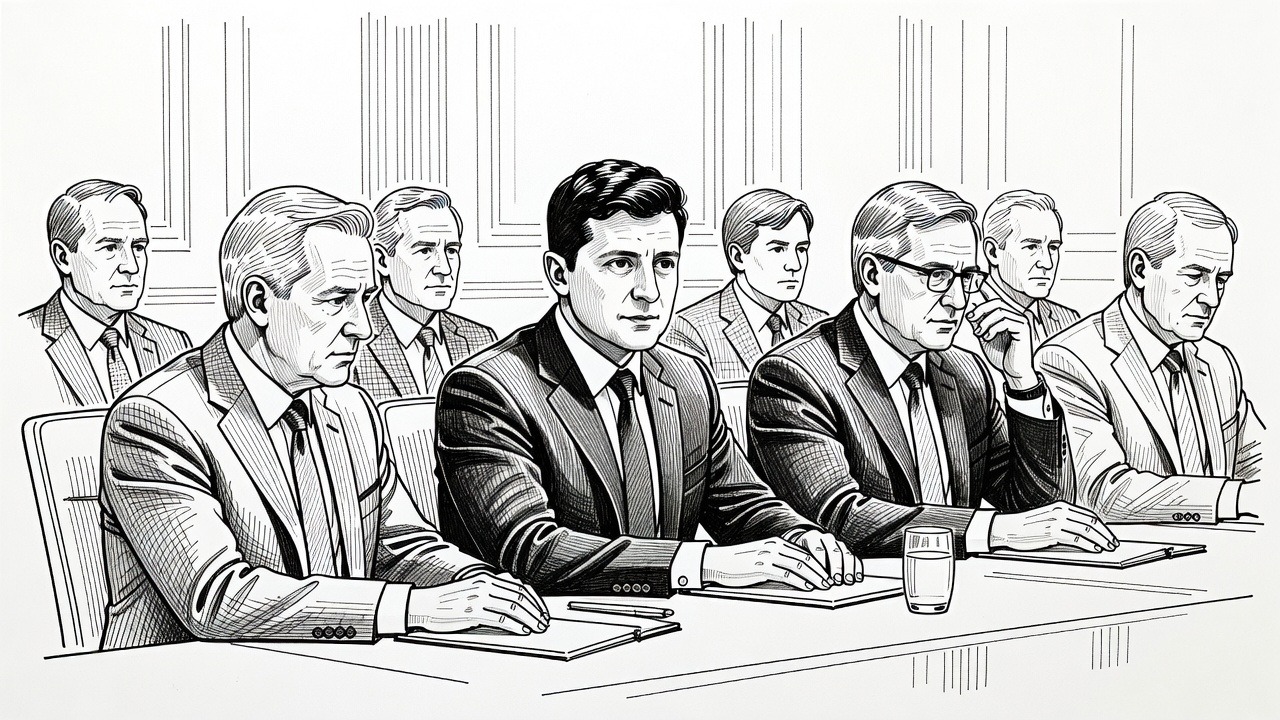
Republicans are about to spend their last weeks in the majority doing what the voters just told them to stop doing: handing out lifetime jobs as if the election hadn't happened.
Majority Leader John Thune calls confirming judges the lame-duck priority. Sixteen nominees are waiting, three more district picks have been announced, and the Judiciary Committee is moving hearings along at speed. Dick Durbin says two Texas nominees are being rushed despite questions about their qualifications. A party that just lost control of the chamber is using its remaining time to lock in judges who will outlast everyone involved in this fight.
We have heard the principle behind this before, and it was the opposite one. In 2016, Mitch McConnell held a Supreme Court seat open for nearly a year and told the country the people should have a voice. In 2020, with votes already being cast, he confirmed Amy Coney Barrett in about a month. The only rule that survived both episodes is that Republicans get the seat. The voters' voice counts when it helps them and is an inconvenience when it doesn't.
That is why Sheldon Whitehouse's talk of a "reset" should make Democrats a little nervous. A reset sounds like a return to the old gentlemanly Senate, and that Senate is gone. It was dismantled by the party now sprinting to fill vacancies before the gavel changes hands. Democrats have spent a decade honoring norms that Republicans treated as optional. The result is a federal bench shaped by a party that lost the popular vote in most of the elections that mattered.
A new majority of 54 to 56 seats, if the projection holds, is a mandate, and Democrats should use it. Judiciary Committee hearings should be real examinations, not the rubber-stamping Republicans prefer. Nominees should be asked plainly how they see voting rights, labor protections, reproductive freedom and the limits of presidential power. Durbin's questions about the Texas nominees are the standard to hold on to. If a nominee can't survive an honest hearing, the answer is no, and no is not obstruction. It is the Senate's constitutional job, and it was a job Republicans practiced with enthusiasm when the White House belonged to the other side.
There is a harder point for my own side. Democrats cannot treat the coming slowdown as a clever tactic and then fail to follow through when it counts. If Justice Alito, 76, holds out through the current term, as he says he will, and a vacancy opens later, Trump will need Democratic votes to fill it. That is real leverage, and the party should say now how it intends to use it. Nobody should hear that the Senate will consider a nominee on the merits and then watch Democrats wave through a movement-conservative jurist because the stakes of saying no felt uncomfortable. Republicans never worried about that discomfort. The fair standard is the one McConnell set: a president whose party has just been rebuked doesn't get to reshape the Court as if nothing happened.
The Right will call this hypocrisy, and some of it will be fair, because Democrats ended the filibuster for lower-court nominees in 2013. But that was a response to blanket obstruction, and Republicans then used the opening to go much further. Whatever Democrats did, the voters who just handed them the Senate understand what the party has to do with it. They want the courts to stop being a vehicle for minority rule.
The courts decide whether workers can organize, whether voters can cast ballots without obstruction, and whether a president answers to the law. These are not abstractions to the people who live with the rulings. Democrats now hold the one lever that can slow the machine, and they should pull it.
How it may affect me
Federal vacancies mean fewer judges to hear cases, so litigants can face longer waits. Who ends up on the bench also shapes lifetime rulings on workplace rights, voting access, consumer protections and civil liberties, so the outcome of this fight will reach well beyond Washington.