Nobody was hurt, and no bomb was found. That is the good news, and also the whole point of a hoax: it works whether or not there is a bomb.
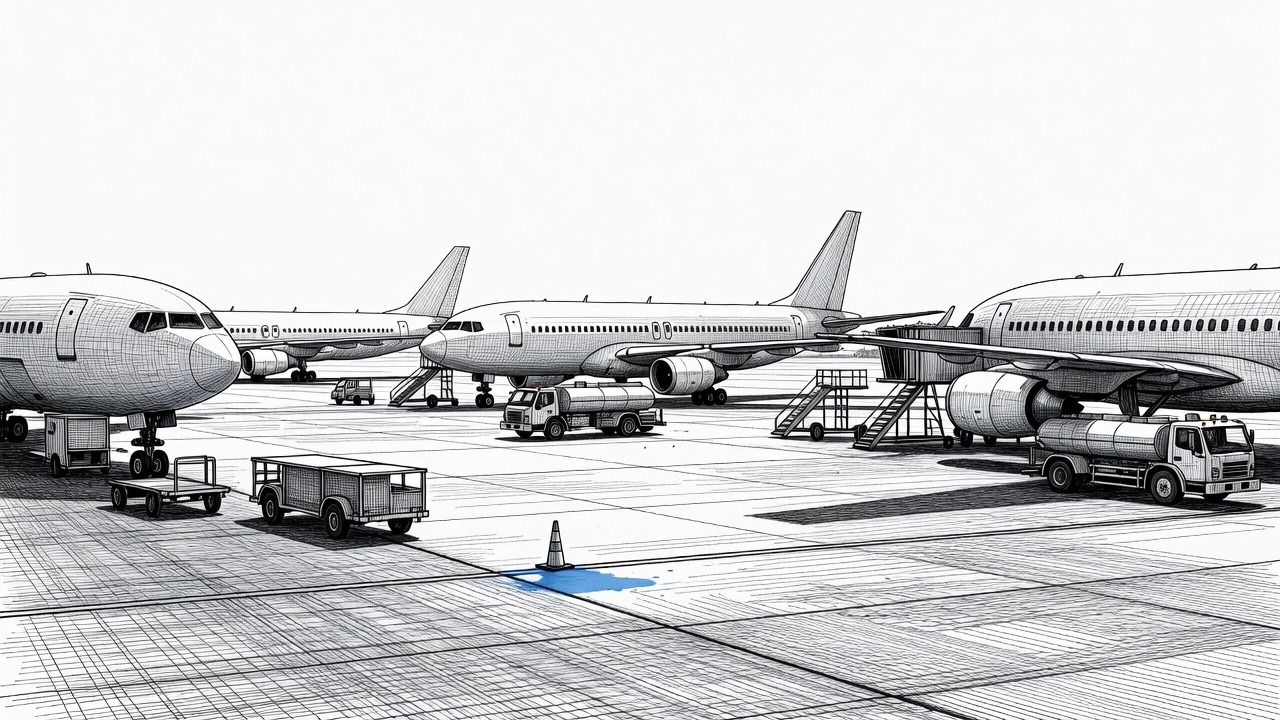
More than two dozen threats against flights, airports and broadcasters in a single week produced searches, diversions and evacuations across several countries. Each one cost real people real time, money and nerves. Each one also showed how little it takes to make a continent's infrastructure flinch. Someone with an email account and a grudge, or a strategy, can make Europe's airspace stutter. The question worth asking is not only who is doing it, but why the system is so brittle and who pays when it bends.
Start with the part we don't know. Authorities have not said who is responsible or whether the incidents are connected. An email claiming a link to the aviation threats is unverified. That should discourage the reflex, already warming up in certain op-ed pages, to announce a culprit and demand a response before the evidence exists. Hybrid warfare is a real concept, and it is plausible that hostile states probe European systems this way. But "plausible" is not "proven," and the history of security panics is a history of confident attribution followed by quiet correction. A bored teenager, a copycat, a criminal crew and a foreign intelligence service all call for different answers.
The answer I fear most is the one this kind of episode reliably invites: more surveillance, more powers, more exceptions, sold as protection. Every hoax is an argument for monitoring everyone. Europeans should be suspicious of that pitch, because it punishes the many for the acts of the few and rarely catches the few. Cheap anonymous threats are best answered by competent, targeted police work, not by treating every traveler and every inbox as a suspect.
Now look at who actually absorbs the damage. It isn't the executives. It's the passenger stuck on a tarmac in Copenhagen, the family missing a connection out of Prague, the baggage handlers, gate agents and security screeners who run toward the disruption and then clean it up for wages that don't reflect it. European aviation has spent years squeezing staff, outsourcing ground services and running on thin margins, then expressing surprise when a shock turns into a pile-up. Resilience is not free. It means enough trained people, enough slack in the schedule, and clear protocols that distinguish a credible threat from noise without grounding half a network.
Then there is the question of cost. Airlines generally treat security threats as "extraordinary circumstances," which can excuse them from cash compensation for delays. Maybe so, in law. But the principle deserves scrutiny: when risk is socialized onto passengers while the industry keeps its profits, that is a policy choice, not a law of nature. If governments want carriers to cooperate with aggressive threat responses, then governments and carriers should build a fund or a standard that makes travelers whole, rather than leaving them to fight a call center.
Finally, the broadcasters. Threats against media outlets sit in the same wave, and that should not be buried under the aviation story. Intimidating newsrooms is a way of making a free press expensive to run. If there is a political motive behind any of this, it matters, and it should be investigated with the seriousness that press freedom deserves, neither dismissed as a prank nor inflated into a pretext.
The lesson is not that Europe should be afraid. It is the opposite. Fear is the product being sold here. The strongest reply is boring and public: investigate patiently, name no one without proof, staff the system properly, protect passengers and workers from the fallout, and refuse the bargain that trades our liberties for the illusion of safety.
How it may affect me
If a flight of yours is delayed or diverted by a security threat, you may not get cash compensation under EU rules, since airlines can cite extraordinary circumstances. You are still generally entitled to meals, refreshments, hotel accommodation if needed, and either rerouting or a refund. Keep receipts and ask the airline for written confirmation of the cause.