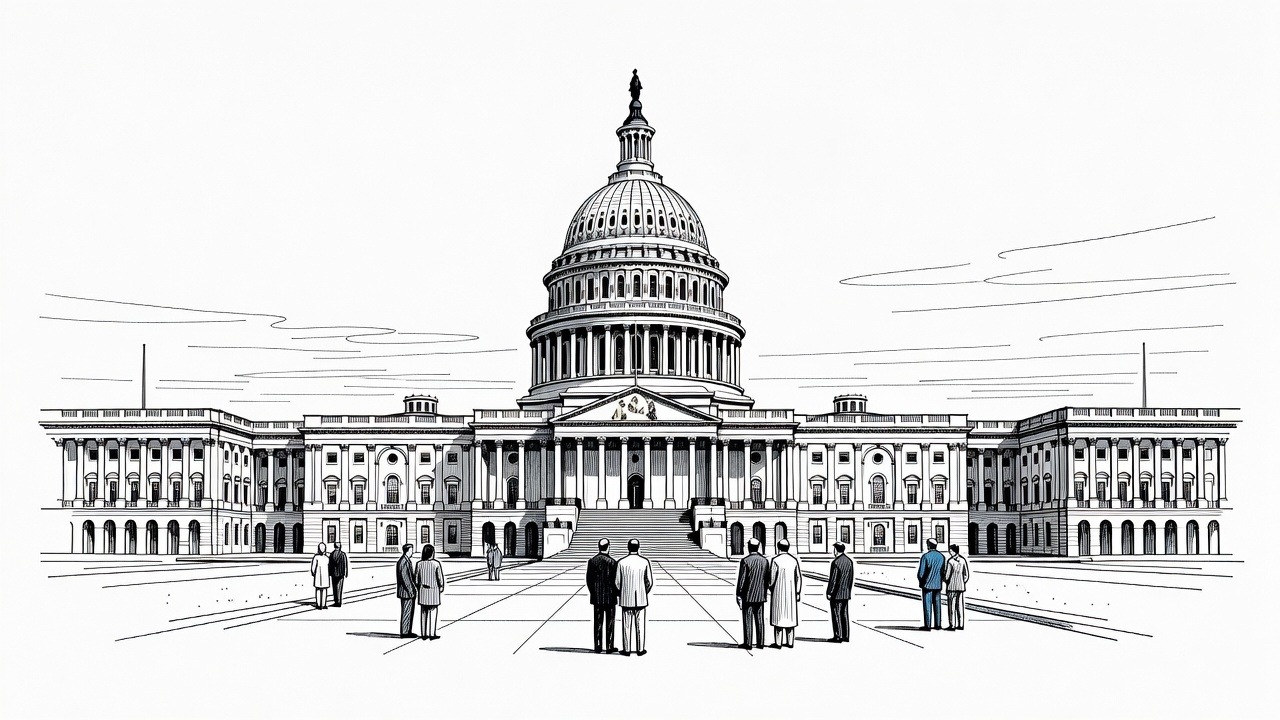
Republicans have already written the first line of their defense. Rep. Brian Mast says Democrats are pursuing impeachment "without evidence." It is a neat trick, because for two years the people best positioned to gather evidence were Republican committee chairs who showed no interest in looking.
That is the real story behind the Democratic debate over Pete Hegseth, Howard Lutnick, Marco Rubio, Stephen Miller and Tom Homan. Congress is supposed to be a check on the executive, and for the past stretch it has behaved like a loyal subsidiary. The Signal chat, the boat strikes, the questions about who knew what before a China trip: these are matters of national security and public trust, and a functioning legislature would have demanded answers from the start. Republicans didn't. Now they cry "politics" at the first sign of scrutiny.
But Democrats should not let that hypocrisy tempt them into the wrong response.
The members demanding another immediate vote on Hegseth have a point. His conduct is serious, and the instinct to punish it is sound. But the last attempt was blocked by Republicans, and a second doomed vote does not change that. It produces a news cycle, a fundraising email and another Republican talking point about Democratic obsession. It doesn't produce a single document, a sworn witness or a fact the public didn't already have. Impeachment as a gesture is a way of feeling powerful while avoiding the work.
Adam Smith's call for deliberation is therefore right, provided it isn't a polite word for timidity. We have seen the alternative. House Republicans impeached Alejandro Mayorkas over a policy disagreement they dressed up as a constitutional crisis. They ran a Biden impeachment inquiry that fell apart once its star witness did. The lesson is not that oversight is illegitimate. The lesson is that accusations without a record corrode the one tool meant for real abuses. If Democrats want to avoid becoming what they condemned, the order has to be subpoenas first, evidence second, and a vote only if the evidence demands it.
The discipline cuts the other way too. Several of these allegations are exactly that: allegations. The questions about Lutnick's knowledge of Jensen Huang and a suspected Chinese intelligence operative, and about what he and Rubio knew before the China trip invitation, are legitimate and should be investigated. No wrongdoing has been established. A serious investigation says that plainly and follows the facts, which is also what separates it from the theater Republicans always accuse their opponents of staging.
The priorities matter as well. Hegseth runs the most lethal institution on earth, and questions about how he handles classified information and lethal force deserve the hardest scrutiny. Miller and Homan shape immigration enforcement that reaches into workplaces, courtrooms and neighborhoods, and their decisions have consequences for families who cannot hire a lawyer to explain what is happening to them. Oversight that leads with those stakes will make sense to voters. Oversight that reads as a list of enemies will not.
Democrats also owe the public something beyond hearings. If they take the majority, they should say in advance what they are trying to establish, what findings would justify impeachment, and what would clear someone. Publish the standard before the investigation begins. That is the opposite of a partisan witch hunt, and it makes the "politically motivated" charge harder to sustain.
The Constitution did not create a legislature so its majority party could wave the president's appointees through. Accountability is not revenge, and it is not a campaign prop. It is a job that has gone undone, and Democrats should do it carefully, publicly and without apology.