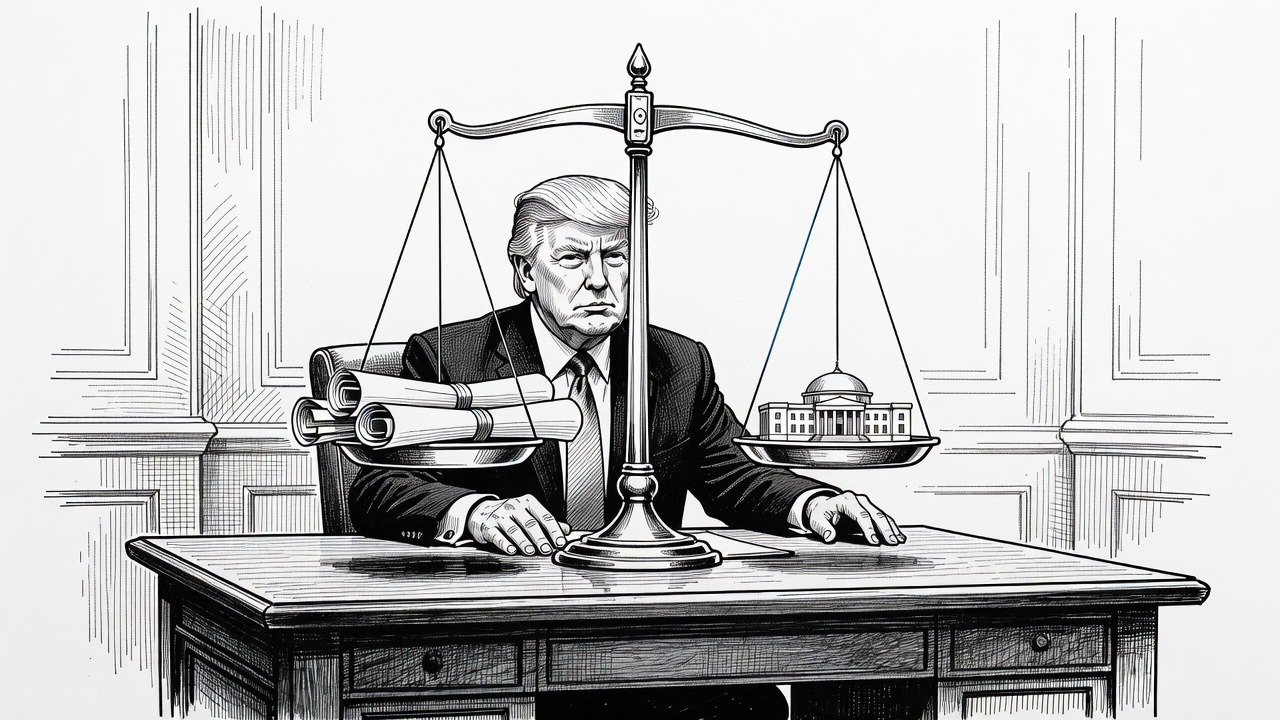
Wisconsin Republicans ran a candidate who wanted the election to be about taxes. Wisconsin voters, it seems, wanted it to be about the person who sends them the bill.
Tom Tiffany's pitch was familiar: let taxpayers keep more of their money, and don't build programs that require raising it. It sounds like a principle, but it is really a choice about who absorbs the cost. The federal tax and spending law Tiffany's party passed doesn't make the need for public services disappear. It moves the cost downhill, to states, counties and hospitals, and then asks governors to explain the shortfall. Crowley's argument that Tiffany belongs to Trump's project of tariffs, a war in Iran and a budget that shifts burdens onto states was not a cheap tactic. It was a description of what a Tiffany governorship would have had to manage.
The result also says something about Crowley himself. He is the Milwaukee County Executive, which means he has spent years governing the part of Wisconsin that Republicans use as a rhetorical punching bag while they depend on its sales tax, its jobs and its workers. He knows what it is to run a government with a hostile Legislature. In 2023 that meant making an ugly, imperfect deal to keep Milwaukee and the county from fiscal collapse. A Democrat who has actually had to make a budget work under those conditions is a better candidate than one who only knows how to denounce Madison from outside it.
That close primary against Francesca Hong matters too. It was not a family quarrel to be forgotten. It was an argument about whether Democrats should offer managerial competence or a more ambitious break with an economy that feels rigged against renters, parents and anyone trying to buy groceries. Crowley won, and he should not read that as permission to be timid. Voters rejected Trump's Wisconsin, but they have not been promised that the next four years will feel different. If Democratic control of the governor's office means only that Tony Evers' veto pen gets a new owner, the party will have won an election and wasted a mandate.
The Left should demand more than a firewall. Evers spent two terms as a brilliant blocker, and he deserves credit for it. Republican legislators who spent years gerrymandering themselves into near-permanent power were forced to negotiate with someone they could not simply outvote. But blocking is not a program. Wisconsin's schools, child care, roads, public health systems and local governments have been starved by a politics that treats every dollar of public investment as theft. The new governor should make the affirmative case that a state is supposed to build things, protect people and share risks that no family can carry alone.
That means using the budget as a moral document, not just a spreadsheet. It means refusing to let federal cuts to health coverage and food assistance be quietly converted into local crises. It means defending abortion rights, public-sector bargaining and the fair maps that finally gave Wisconsin a Legislature more like the state it represents. And it means telling voters honestly what these things cost, then showing them what they get.
The Republican answer will be that Wisconsinites want lower taxes and less government. Some do. But "keep more of your money" is a thin promise to people whose real costs are rent, insurance, tuition and child care, none of which are cut by a rebate. Voters are not stupid. They can tell the difference between a tax cut and a better life.
Crowley won because enough of them could. Now he has to prove them right.
How it may affect me
Democratic control of the governor's office means Republican legislative bills on taxes, elections, abortion or public-sector rules can still be vetoed. It also puts the state's response to federal Medicaid and food-assistance changes, and its next two-year budget, in Crowley's hands. Watch the budget proposal for school funding, child care and local aid.