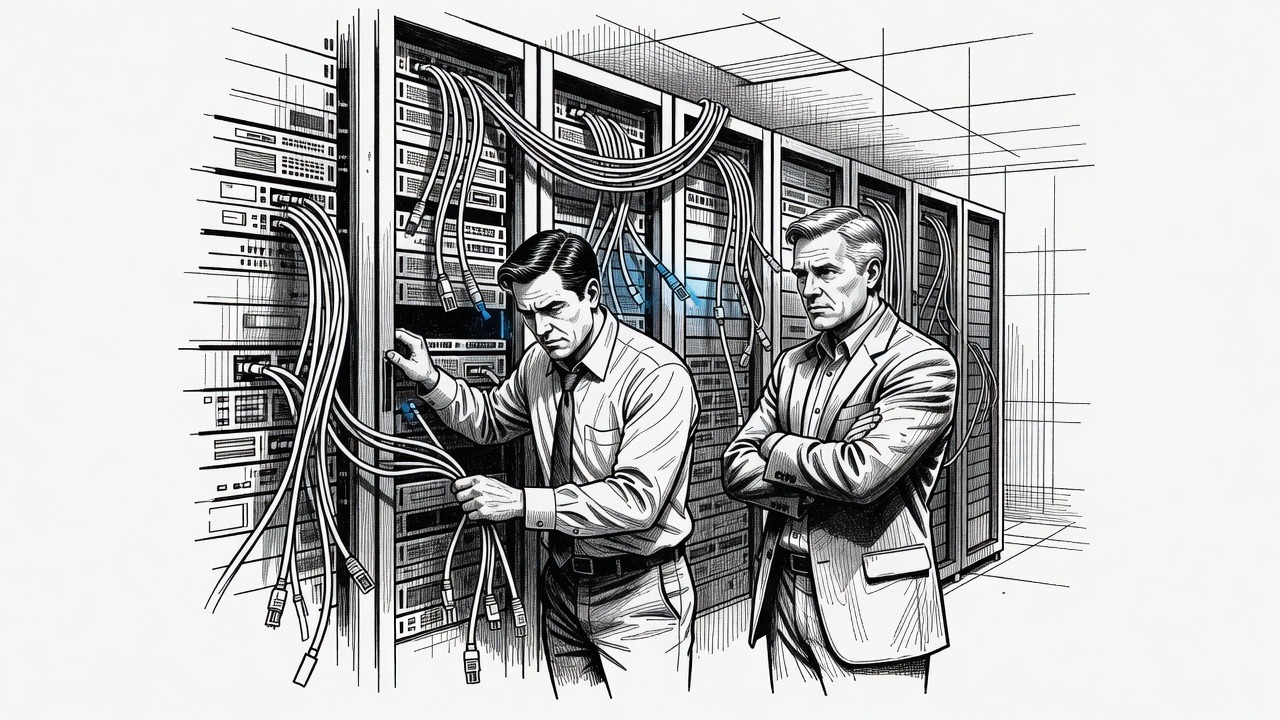
If the number Binance is using holds up, a North Korean hacking crew may have just pulled roughly $6.3 billion out of the world's largest crypto exchange. The company's first account of the breach is almost insulting in its simplicity: a compromised laptop on a DevOps engineer's desk. Partners have frozen about $3 billion. Withdrawals are paused. Customers, Binance says, will be made whole out of the SAFU fund and the company's own money, not out of anyone's taxes. Blockchain firms TRM and Chainalysis's chief executive say the job looks like TraderTraitor, the North Korean unit American agencies have been naming, in public, for years.
Read that again before anyone reaches for the word "incident."
Pyongyang does not do this for sport. It does this because sanctions closed the respectable doors and left a digital one ajar, and because nobody has made the theft hurt more than it pays. Treasury, the FBI, and years of UN reporting have described the model in plain language: state units steal crypto, hop it through wallets and brokers, and feed a nuclear and missile program the rest of the world claims to be containing. When the haul is denominated in billions, "containing" is a press-office word. The accurate word is subsidy — involuntary, recurring, and still somehow surprising to the people paid to stop it.
The laptop is the tell. TraderTraitor's craft, as far as the public record goes, has never required movie magic. It requires a person: a fake recruiter, a poisoned tool, an endpoint that should not have been a bridge to customer funds. If that was enough to put billions in motion, Binance did not have a control environment worthy of the money it custodies. The pledge to cover losses is the right private answer. Users are creditors of a business, not wards of the Treasury, and a fund built for exactly this failure is how a market is supposed to work. It is not how a country deters a hostile state. The regime's bookkeepers do not experience a frozen wallet and a blog post as defeat. They experience whatever they still hold as revenue.
Washington's usual argument now splits into two useless halves.
One half will decide the moral of a state-sponsored heist is that American crypto firms need another layer of forms. Binance already lived through the 2023 reckoning — guilty pleas, a founder removed, penalties measured in billions — precisely because it had treated compliance as optional. That reckoning was supposed to be the wall. It did not stop an engineer's machine from becoming an entrance. Supervising the victim more intensely is not the same thing as pricing the thief. North Korea does not file with the SEC.
The other half, including a faction that calls itself hawkish, will treat the episode as proof that digital assets are a toy, score a point, and move on. That is laziness dressed up as skepticism. Banks, payment networks, and defense contractors have all been hit by the same government. Voluntary exchange did not invent state theft. What crypto did was hand a sanctioned regime a settlement rail that moves faster than a wire and slower than our policy. The adult distinction is simple. Custody of other people's money demands competence, and a firm that fails it owes its customers, not the taxpayer. A nuclear adversary that industrializes theft demands deterrence, and designation lists the crews route around by the following week are not deterrence.
Seriousness would look boring and mean. Secondary sanctions that actually stick to the brokers and front companies still willing to cash out the haul, in friendly jurisdictions as well as hostile ones. A standing campaign against the units doing the stealing, not a biannual attribution slide. And a rule spoken out loud to every exchange that wants American customers: if your security is a laptop and a hope, you do not get to call yourself essential when the bill arrives, and you do not get a quiet rescue if the insurance fund ever comes up short. Publish the rest of the technical story, including the breach points Binance says it has found and has not yet named. Freezing half the money is not the ending. It is the part we are invited to applaud so we never ask why the other half was reachable — or why, after a decade of the same crew and the same method, anyone in charge still sounds shocked.
How it may affect me
If your money is on Binance, plan on withdrawals staying offline for about one to two days. Do not deposit more while cash-out is frozen, and ignore any message asking you to "verify" a wallet, seed phrase, or urgent transfer — hacks like this are followed by impersonation scams using the company's name. Binance says losses will be covered by its SAFU fund and company money, not a taxpayer backstop. Coins left on an exchange are a claim on the exchange until you withdraw them.