Read the three statements in this story together and notice what is missing: an owner of the decision.
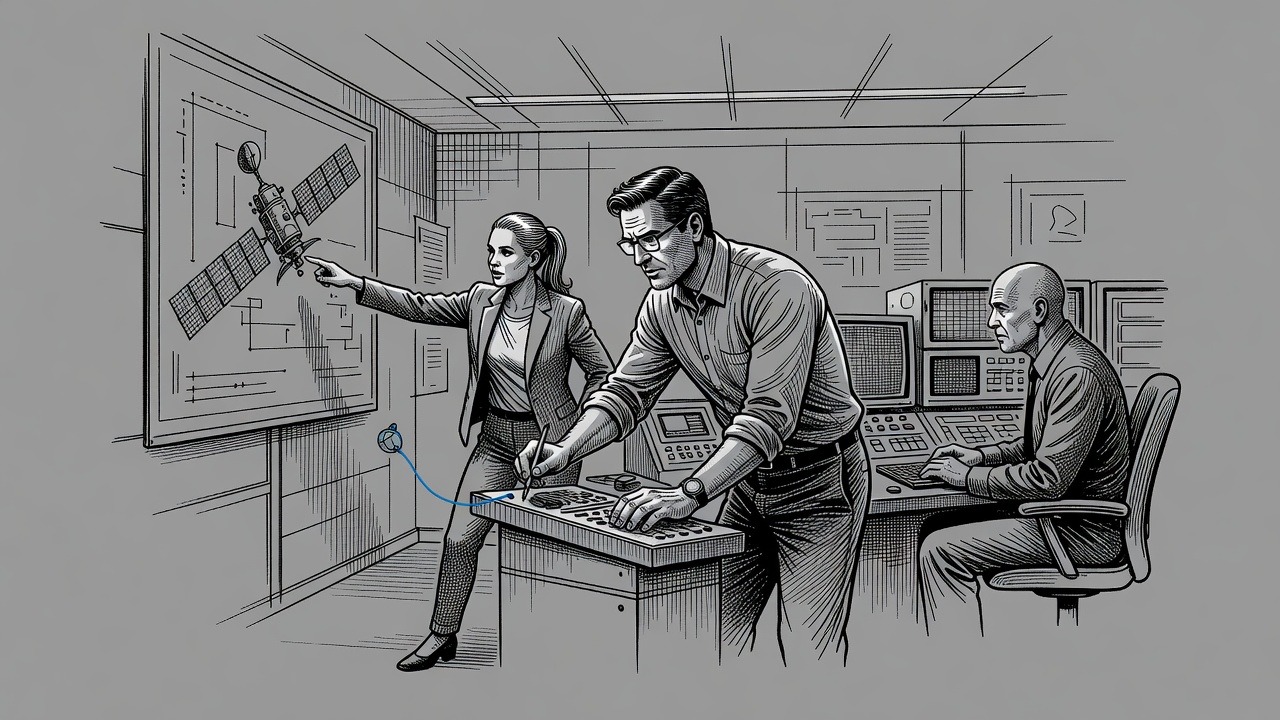
Zelenskyy says restrictions on Starshield are keeping Ukraine from using interceptors against Russia's jet-powered Shahed drones. U.S. representatives reportedly blamed technical problems. Trump says he restricted nothing. Musk says Starshield belongs to, and is controlled by, the U.S. government. Each statement points away from the person who made it. Meanwhile Russia hit more than 15 Ukrainian energy sites.
I can't tell you which account is true, and neither can anyone outside the room. That is the scandal. A system that shapes whether drones are shot down over a country's cities sits in a fog of private contractors, classified programs and presidential shrugs, and nobody is accountable for it.
Give the skeptic his due. Zelenskyy has every reason to publicize a grievance, and "technical problems" may be exactly that. A government is entitled to control how its military satellite network is used abroad. But if the problem is technical, it is a failure in a system Ukrainian air defense now depends on, and the people who sold us that dependence owe an explanation. If it is a policy choice, someone with authority made it and the president says he didn't. Either answer is damning. "Trust us" is not one.
This is what happens when public power is run through private hands. Starlink became a battlefield utility in Ukraine through an improvised mix of donations, contracts and one billionaire's moods. Walter Isaacson's reporting on Musk's refusal to extend coverage to Crimea in 2022 showed how much discretion one man held over a military operation. Starshield is supposed to be the grown-up fix, with government ownership and control. Musk's line that the government owns it is a sentence that works as a shield. It is true enough to deflect blame and vague enough to avoid saying who is actually deciding. Democrats should admit they helped build this arrangement by treating a few private firms as indispensable national infrastructure and never asking who answers to the public when they stumble.
The sanctions pause is clearer, and worse. Trump suspended enforcement of a package of economic measures against Russia, saying the delay served the national interest. Whose interest? He hasn't said, and nothing in the record explains what American interest is served by easing pressure on a state that is bombing power plants as the cold approaches. Maybe there is a negotiating theory behind it. If so, he should state it, defend it and let Congress test it. Sanctions are law and leverage. When they are switched on and off by executive order, without explanation, Moscow learns that American resolve can be waived at will, and Kyiv learns the same.
The human stakes are plain. An interceptor that can't connect is a drone that gets through. A grid hit fifteen times means hospitals on generators, water pumps that stop, and families in the dark. Russia's claim that Ukrainian strikes killed a woman in Belgorod belongs in the ledger too, because war kills civilians on both sides. But the moral difference between a state that systematically targets another country's energy system and one defending itself is not a close call, and American policy should not behave as though it were.
There are concrete demands. Congress should require a plain answer on who decides how Starshield is used for Ukraine's defense, and what, specifically, the technical problem is. It should insist that any sanctions waiver come with a written rationale and a vote of accountability. And Democrats, who rightly say they stand with Ukraine, should stop treating this as a story about Musk's temperament or Trump's grudges. It is about whether a democracy can run a war-support program in which every official says the decision was someone else's.
A country that arms and connects an ally, then cannot say who is responsible when the connection fails, hasn't made a policy. It has made an alibi.