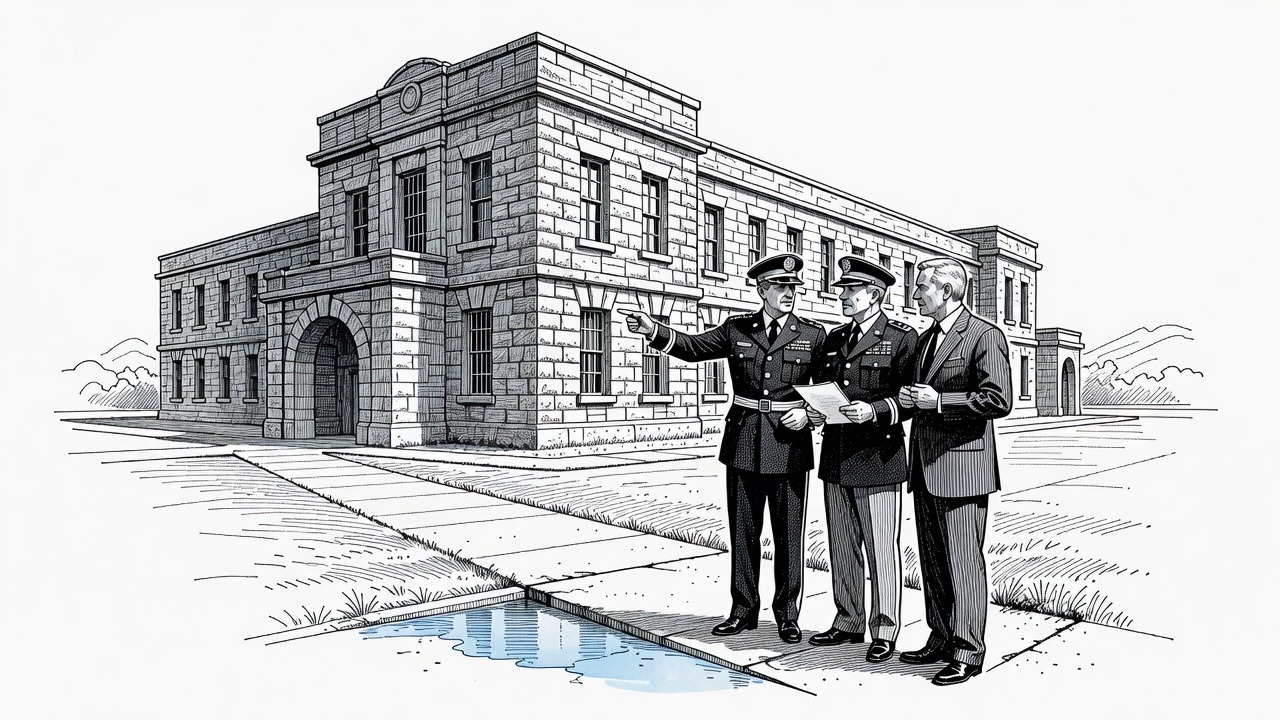
Bank of America has admitted that it willfully violated the Bank Secrecy Act. Read that again, because the word "willfully" is doing a lot of work. It does not mean a clerical slip or an unlucky system glitch. It means the bank knew, or chose not to know, and kept moving money anyway. Over several years it failed to promptly report more than $5 billion in suspicious transactions, including, according to Treasury, alleged Chinese money-laundering networks, narcotics proceeds, fraud and border-related activity.
The punishment is $1.2 billion, plus a promise to hire reviewers and try harder.
I'll give the other side its due. This is a large number, and the bank admitted wrongdoing, which regulators often fail to extract. The penalty is also non-deductible, so shareholders can't hand part of the bill to the taxpayer. If Washington is serious about dirty money, cartel finance and Chinese laundering networks, fining the biggest banks is the right place to start.
But look at the arithmetic. Bank of America earned roughly $30 billion in net income last year. This penalty is about four percent of one year's profit, a charge it can announce alongside quarterly earnings and then forget. And this is not a first offense in spirit. The OCC says the bank hadn't fixed deficiencies cited in a 2024 cease-and-desist order. It was told to fix the problem, and it didn't. Now it's being told again, with a larger invoice.
When a bank's compliance failures are priced like a parking ticket, compliance becomes a line item to be weighed against revenue. Every dollar of suspicious flow that goes unreported is a customer kept, a fee collected and a relationship not interrogated. Fraud victims, fentanyl-ravaged towns and border communities live with the consequences. Executives, meanwhile, keep their bonuses and their jobs. Treasury's announcement names a corporation, never a person. A bank cannot willfully do anything. People inside it made decisions, and no one is being asked to answer for them.
Compare that with how the system treats ordinary people. A small-business owner who structures cash deposits to dodge reporting can have the money seized and a criminal case opened. A worker sending money home can be flagged, frozen and left to prove their innocence to a customer-service script. The compliance burden falls hardest on those with the least power. When an institution with a trillion-dollar balance sheet fails at the same job, we get a settlement and a press release.
Then there is the politics, which the administration would rather we skip. This same government has been shrinking the enforcement apparatus that produces cases like this. It has paused enforcement and cut staff at the Consumer Financial Protection Bureau, exempted domestic companies from beneficial-ownership reporting under the Corporate Transparency Act, and pardoned crypto executives whose businesses were accused of the same kinds of anti-money-laundering failures. You cannot claim to be defending national security from Chinese laundering networks while dismantling the tools that expose shell companies and rewarding those who flouted the rules.
This penalty is a reminder of what real enforcement looks like, and a warning about how rare and how weak it is. If national security is the justification, then national-security consequences should follow. That means individual accountability for those who ignored the alerts, and clawbacks of compensation from the executives who oversaw the failures. It also means real limits on a bank that has failed repeatedly to fix its controls, such as caps on growth or restrictions on new business lines until it proves compliance. Banks respond to what threatens their expansion, not to what they can write off in a quarter.
Until that happens, $1.2 billion is not a deterrent. It is the price of doing business, and the bank can afford to pay it.