Consider what Donald Trump has told the world. The United States will not strike Iran before Nov. 3. Not because the military objective has been met, or because diplomacy has produced a settlement, but because that is Election Day minus a few weeks. Whether bombs fall on a country of 90 million people has been placed on the campaign calendar.
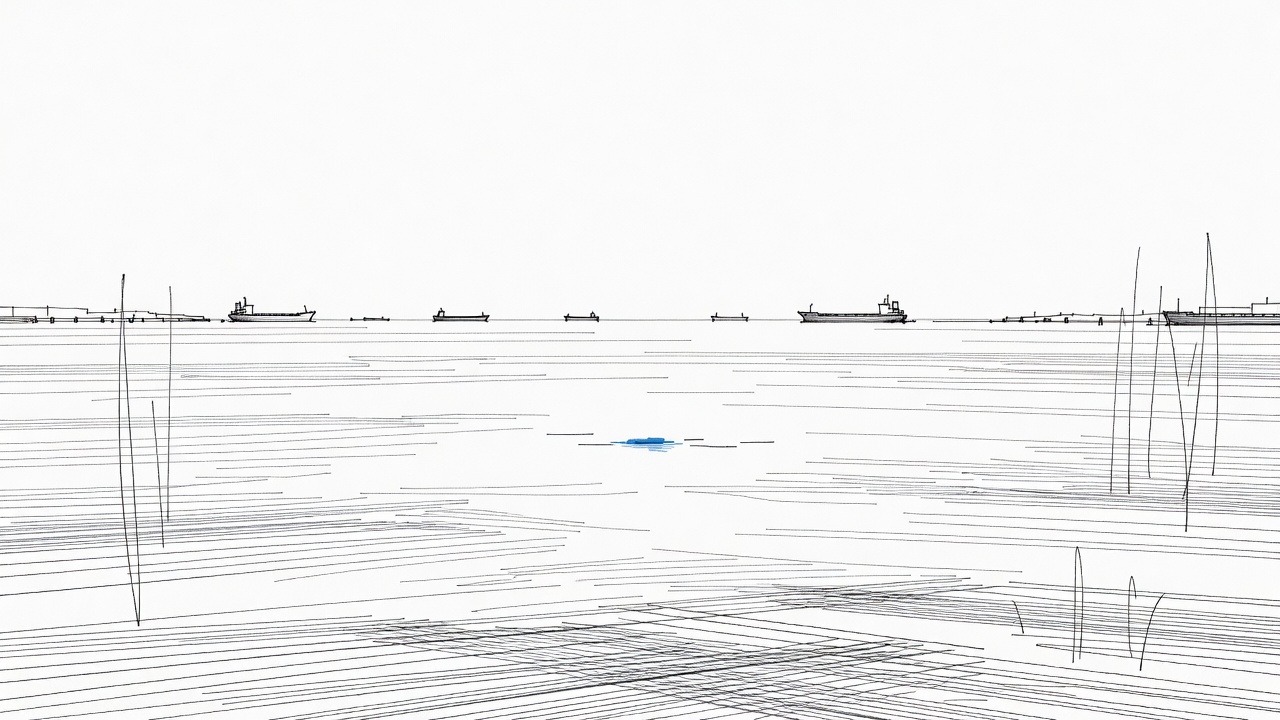
The pledge is being described as restraint. It is better understood as a confession. If strikes can be paused for the midterms, they can be resumed after them. A war that can be switched off for political convenience was never being run on a strategic timetable. Tankers are reportedly under attack in the Gulf and the Strait of Hormuz, and sailors who will never appear in a poll are working in that water. Their risk does not pause for the electoral map.
Then there is the messenger. The Kremlin says Vladimir Putin carried Iran's proposal to Trump after meeting President Pezeshkian in Turkmenistan. The details were not disclosed, and the White House has not confirmed the exchange. But look at who is being handed the role of indispensable intermediary: the man who has spent years bombing Ukrainian cities, now cast as peacemaker in a Gulf crisis. Moscow gains twice. It gets diplomatic relevance and a seat at the table. And any disruption in Hormuz that tightens oil markets pads the revenue of a petrostate at war. An American administration that lets Putin carry its mail is not conducting statecraft. It is outsourcing it to a man with a stake in the outcome.
Iranian Foreign Minister Araghchi says indirect talks continue and that Tehran is reviewing a U.S. response to its peace framework. Good. Talks are what should be happening. But notice how little the public knows. Neither the Iranian proposal nor the American response has been described. We learn of these exchanges through the Kremlin's spokesman. Marco Rubio says protected oil shipments continue; Iranian commanders say they control the waterway. Both cannot be fully right, and Americans are expected to take the word of officials who have every reason to project confidence while the shooting goes on.
The constitutional problem is plain. The power to take the country to war belongs to Congress, not to a president who turns it on and off by announcement. Whatever one thinks of Iran's government, which has given the world ample reasons for distrust, a conflict this consequential cannot be managed as a presidential mood. If there is a diplomatic path out, Congress should say so, and put its own judgment on the record about whether this fight should resume at all.
This is also a test for Democrats, and a more uncomfortable one. It is not enough to wait for the midterms and run against the chaos. If Trump is treating war as a campaign variable, Democrats should be forcing votes on war powers now, demanding that any framework be briefed to Congress, and saying plainly that no one voted for an open-ended conflict in the Gulf. Silence on the left would repeat the old failure of letting a president's war drift because opposing it looks risky.
The people who pay for this are not the strategists. They are the crews on those tankers, the service members awaiting orders after Nov. 3, and families who will see the effect at the gas pump and the grocery store when oil markets convulse. A government that cared about them would end this through open, accountable diplomacy. It would not depend on Putin's good offices and an Election Day truce.
How it may affect me
Disruption around the Strait of Hormuz can move global oil prices quickly, which feeds into gasoline, diesel, shipping and airfare costs. Escalation or a breakthrough in talks could shift those prices in either direction. Watch energy markets and fuel prices, particularly around Election Day.