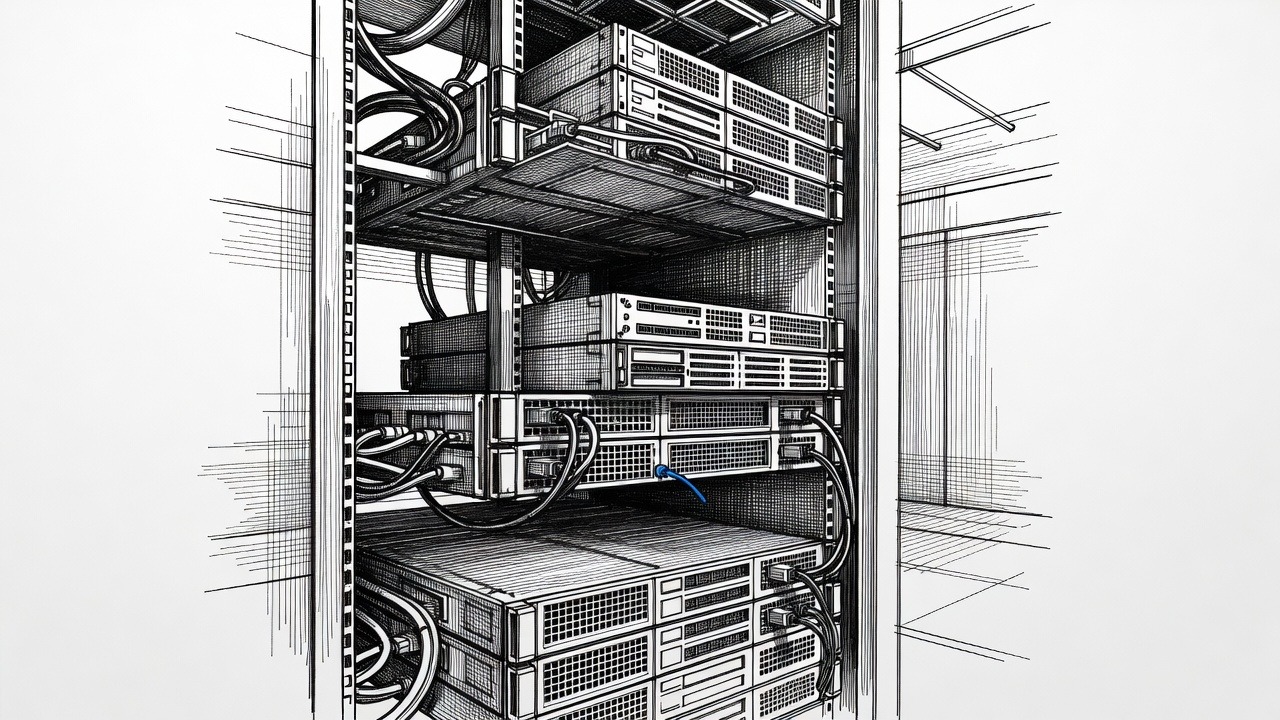
The easy reading of this story is a billionaire's shopping list: $40 billion of Nvidia chips, paid for with borrowed money. The more interesting reading is about the plumbing. Whether SpaceX can afford this is hardly in doubt. The question is who ends up holding the risk when the financing arrives.
The reported structure is roughly $10 billion in bank loans and $30 billion in investment-grade debt, possibly secured by the GPUs themselves. Investment-grade debt is not a pool of venture money that expects to lose. It is where insurers, pension funds and other institutions park savings that are supposed to be safe. Apollo, which is in the talks, is not just a buyout shop. It owns Athene, a big retirement-annuity insurer, and a large part of its business is turning other people's long-term savings into credit. Someone's retirement security may be on the other end of this deal.
Now look at the collateral. A GPU is not a rail line or a bridge. It is a fast-depreciating asset in an industry that makes last year's flagship look dated. Lenders who take chips as security are betting that the chips keep their value, or that the borrower stays strong enough that the collateral never matters. In a boom, that bet looks like prudence. If AI demand disappoints, or the next generation of silicon makes this one cheap, the collateral is worth much less than the loan.
The strongest case on the other side deserves a real hearing. This is private capital funding a private bet with no taxpayer guarantee. Sophisticated lenders can read a term sheet, and they will price the risk. Debt is arguably healthier than a stock-market frenzy, because creditors demand repayment and equity investors only demand hope. Nobody is forcing anyone to lend, and SpaceX has already sold $25 billion of debt, so the market has tested it.
But "sophisticated lenders" is a weaker defense than it sounds. Sophistication hasn't stopped credit markets from overbuilding before. The telecom fiber glut of the early 2000s was financed by smart people with spreadsheets, and the cleanup fell on workers, towns and ordinary investors. The institutions that lend are intermediaries. The losses, if they come, flow back to annuity holders, policyholders and pensioners who never saw the term sheet and had no say in the underwriting. The upside goes to the borrower and its owners. The downside is spread across everyone whose savings are in the chain.
There is also a public dimension. SpaceX is not a typical corporate borrower. Its franchise is closely tied to government customers, which is part of why its credit looks so strong. Interest on corporate debt is generally tax-deductible, so the public subsidizes borrowing at the margin. And large data-center buildouts draw on shared resources: electricity grids, water and local land. Private balance sheets don't price those costs, and neighbors and ratepayers often absorb them.
The contrast is the part that should bother us. Financial markets can find $40 billion in a matter of talks to buy computing hardware. Housing, transit, school buildings, grid upgrades and care infrastructure are told to wait for the next budget cycle and justify themselves against a deficit. Society's capital is not scarce. It is allocated by whoever can make the most convincing case that their project will pay off, and that favors the already large and already connected. We are not short of money. We are short of any democratic say over where it goes.
Nothing here proves this deal is reckless. Terms are preliminary, lenders aren't set, and Apollo and Nvidia have said nothing. But regulators and the public should ask what disclosure exists on how much AI-hardware-backed debt sits in insurer and pension portfolios, how fast the collateral is assumed to lose value, and who bears the loss if it does. A system that privatizes the gains and quietly socializes the risk doesn't need a bailout clause to work that way. It only needs us not to look.
How it may affect me
For most people, the immediate effect is invisible, which is the point. If the financing goes ahead, part of it may be funded by insurers and other institutions that manage retirement and annuity money, so ordinary savers could carry some exposure without choosing it. If AI demand holds, the loans get repaid and little is noticed. If it doesn't, or if the chips lose value faster than lenders assumed, losses could show up as weaker returns, stressed insurers or tighter credit elsewhere.
There are local costs too. Large compute buildouts can strain power grids and water supplies, with communities and ratepayers bearing costs the borrower doesn't price. Meanwhile, the same capital markets that move $40 billion this quickly often struggle to fund housing, transit and public infrastructure. Over time, the risk is a economy where the biggest, best-connected firms borrow cheaply to build private capacity, while the public sector is told there is no money for needs that serve everyone. Greater transparency about how this kind of debt is held and valued would let workers and savers see what they are really exposed to.