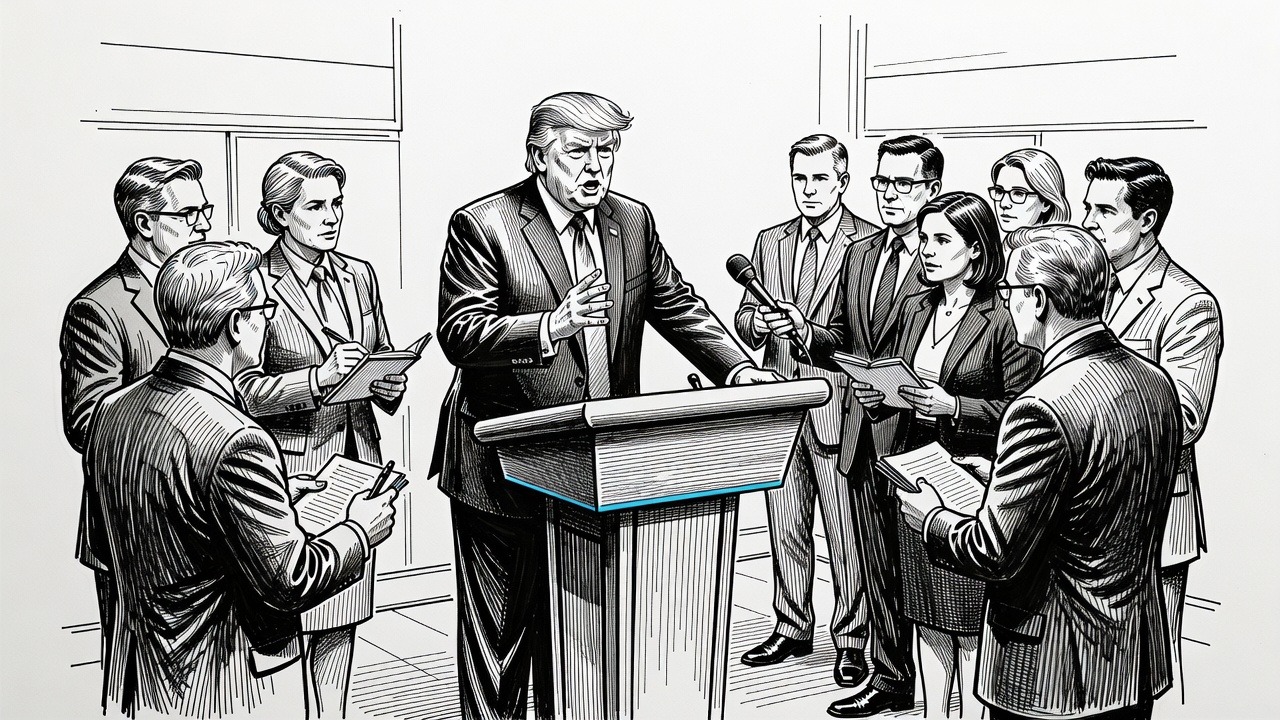
The most revealing line from Trump's Syracuse rally was not about crime or Mike Tyson. It was the promise that Bruce Blakeman would lower utility bills with federal help and more domestic energy. It is the strongest card Republicans hold in New York, and the Democratic reply, that this was merely a rally to boost Blakeman, concedes the ground without a fight.
Upstate voters are not imagining their bills. Anyone who has opened a winter statement from NYSEG or National Grid knows the grievance is real. Republicans also have a fair point about gas. New York spent years obstructing pipelines, and Hochul herself eventually reversed course on a Williams pipeline the Trump administration wanted, at a moment when the White House was also easing its pressure on offshore wind. She denies any trade. Either way, it looks like a governor who discovered the limits of her climate timetable only after prices became a political threat.
But the Trump-Blakeman remedy does not match the diagnosis. A large share of a New Yorker's bill is not the price of the fuel. It is the cost of poles, wires and pipes, plus the profit that regulated monopolies are allowed to earn on them. The Public Service Commission approves those rates, and the utilities that file the requests rarely ask for less than they hope to get. More drilling in Pennsylvania does little about that. Neither does a president who has cancelled clean energy grants and tried to freeze wind projects, the cheapest new power available, just as data centers and chip plants, including the federally subsidized Micron project outside Syracuse, are about to demand much more electricity.
The rally also showed what Trump's version of affordability looks like in practice. It is a promise of lower prices delivered by supply, with no mention of who owns the grid and who profits from it. Trump has never challenged the monopoly utility model. His coalition includes the industries that benefit from it. A candidate who actually wanted to cut bills would talk about trimming guaranteed returns for shareholders, public financing of grid upgrades at lower borrowing costs, and expanding public power through the New York Power Authority. Blakeman, a county executive who has run on tax cuts and tough enforcement, has not.
That should worry Democrats as much as Republicans. Hochul's weakness is not that she is too green or too liberal. It is that she has governed utilities as a manager rather than a regulator, letting rate cases pass and then expressing disappointment. Voters can tell the difference between a governor who is angry on their behalf and one who appoints the commissioners and could do something. The party that complains about corporate power should be the one with a plan to rein it in.
The celebrity stagecraft will fade. Tyson on stage, the endorsements in the 21st and 22nd Districts, and the shots at Albany are the standard material of a midterm rally. The utility pledge is what could actually move votes, because it addresses a monthly bill that people feel. If Democrats treat it as noise, they will leave a real grievance to a candidate whose party offers no real way to fix it. The better response is to say plainly why the bills are high, who gets paid, and which levers the next governor actually controls.
How it may affect me
Utility rates are set by the state Public Service Commission in rate cases, not directly by the governor, though the governor appoints its commissioners. So a campaign promise is unlikely to change your bill quickly, whoever wins. The most direct lever is pending rate cases, where utilities request increases and the PSC takes public comments. If your provider has one open, you can file a comment.