The administration's lawyers say access to the White House is a privilege. That argument undermines their own case.
A privilege can be extended or withdrawn for almost any reason, but not for every reason. The government cannot hand out benefits on condition that you surrender a constitutional right, and it cannot hand them out according to whether it likes what you say. The president announced these restrictions by saying three news organizations had published false and negative coverage. That is not a decorum rationale or a national security rationale. It is a verdict on content, delivered by the party being covered. The Justice Department's later references to decorum and national security look like paperwork filed after the decision was made.
Judge Timothy Kelly's temporary order rested on due process: the reporters got no notice and no chance to respond. That is a sound, narrow ruling, and it is also a weak one. A procedural defect can be cured with a procedure. The White House could send a letter, offer a perfunctory hearing, and exclude the same reporters for the same reasons. The question that matters is not whether the administration followed the right steps but whether it may punish coverage at all. The First Amendment claim is the real case, and the court should say so.
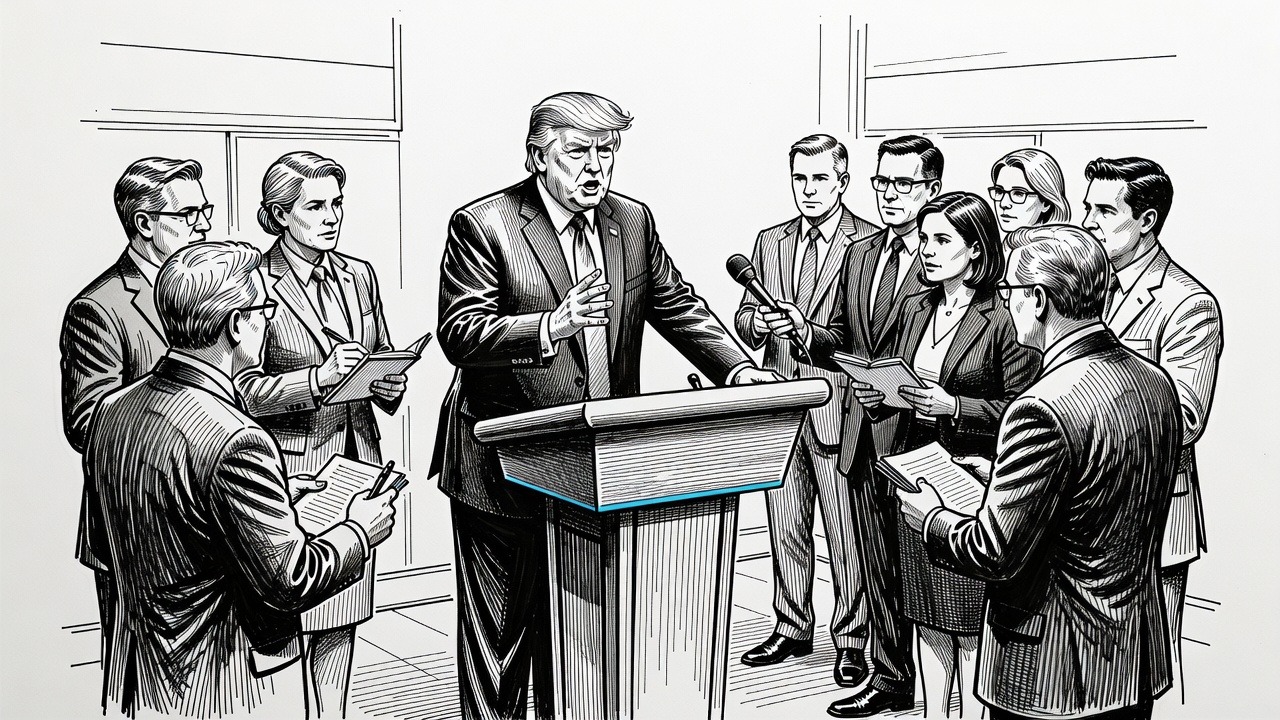
The detail that deserves attention is what the administration has and hasn't restored. The reporters are back in the White House complex, but they are still shut out of the rotating pool for Air Force One and the Oval Office. That is where the story is made. A press credential that lets you stand in a driveway is not access. This is how a government retreats while appearing to comply: it returns the lobby and keeps the room.
There is precedent for this fight, and it is not encouraging. When the Associated Press was barred from similar spaces over its refusal to adopt the "Gulf of America" naming, a district judge found likely viewpoint discrimination. A D.C. Circuit panel then stayed that ruling in part, treating the Oval Office and Air Force One as limited, nonpublic spaces where the president has wide latitude. Judges have shown they will protect reporters' presence in the building more readily than their presence near the president. The administration is clearly betting that line holds.
The best conservative reply deserves a straight answer. Presidents have always curated their press. Reporters have no constitutional right to a seat on Air Force One, and the Obama and Biden White Houses both played favorites with interviews and access. All true. But choosing whom to interview is different from banning outlets from a shared, public-funded press apparatus because of what they printed. Nonpublic-forum doctrine permits reasonable, viewpoint-neutral limits. It does not permit the officeholder to name the offending coverage as the reason. If the government can do that, the "privilege" is a loyalty test.
The left should resist the temptation to turn this into a story about noble journalists. The pool system is a club. It has long favored large networks, wire services and legacy papers, and it has kept out smaller, local and independent outlets that lack the money or standing to be included. The administration has used that resentment, taking control of pool composition from the White House Correspondents' Association and promoting friendly new-media outlets. Critics of that clubbiness are not all acting in bad faith. But the remedy for an exclusive press corps is a broader one, with clear, public, content-neutral criteria. A system where the president picks winners and losers by coverage is not a correction. It makes the club's gatekeeper the person it is supposed to hold to account.
There is also a question of who can fight back. These three organizations have lawyers, reputations and the means to sue within weeks. A small regional outlet or independent reporter that was punished the same way would likely absorb the loss quietly or soften its coverage. Retaliation works best against those who can't afford to challenge it, and the practical lesson reaches far beyond the plaintiffs: access follows tone. The public pays for the White House, and its picture of what happens inside depends on who is allowed to look.
If Judge Kelly grants the preliminary injunction, the order should cover pool access, not just badges, and it should rest on the principle that the president may not use access as a reward for flattery. Anything narrower would invite the administration to repair its paperwork and continue.
How it may affect me
Most of what you see and read about the president's meetings, travel and unscripted remarks comes through the small press pool, which reports on behalf of everyone else. If outlets can be removed from the pool over their coverage, fewer independent accounts of those moments will reach you, and more of what you see will come from the White House's own video and friendly outlets. When a story matters to you, check whether it comes from direct reporting or from material the administration supplied.