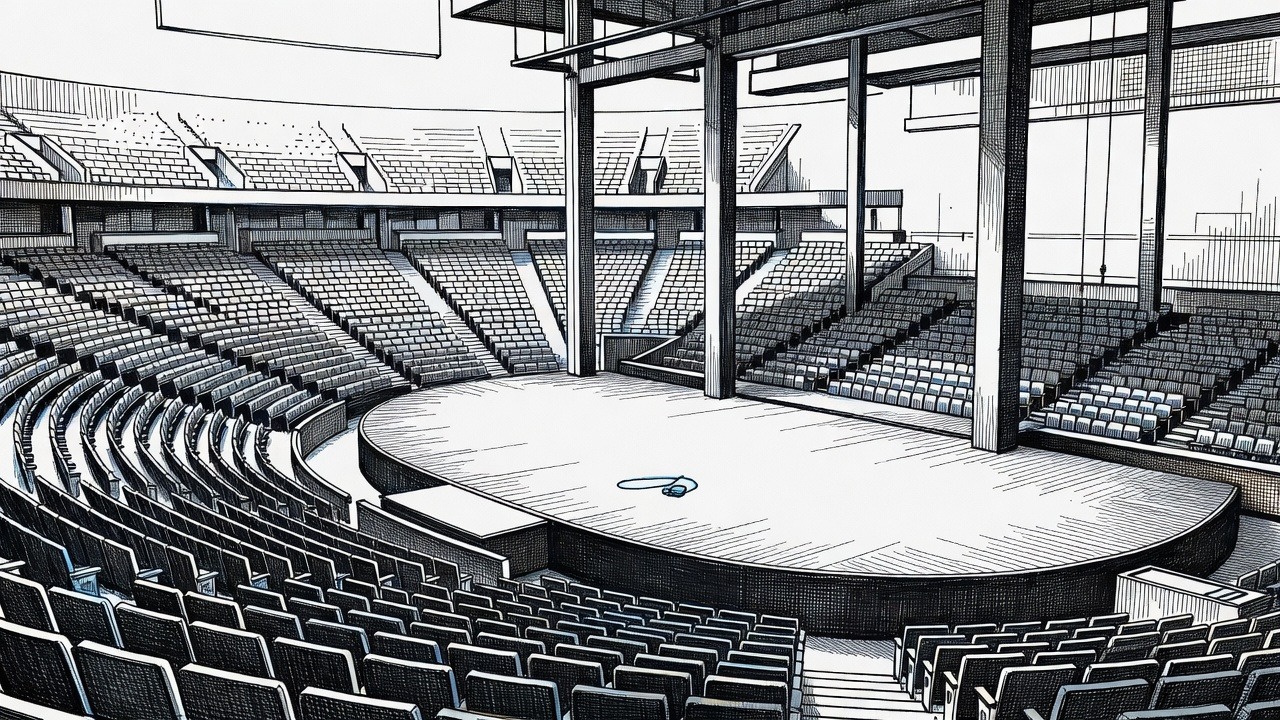
Nobody in Tulsa was hurt on Friday night, and nothing was found. Police swept the BOK Center with bomb dogs and venue security and turned up no credible threat. The show was still canceled, and Ella Langley said it was on the advice of the police, the venue and her own security team. Everyone involved acted reasonably, and that is what makes the episode so bleak.
Consider the arithmetic they faced. A phone call costs the caller nothing. Canceling costs a tour a night of revenue and thousands of fans a plan. But being wrong in the other direction means a body count. No promoter, officer or arena manager will ever be blamed for canceling, and all of them would be blamed forever for staying open. Within that logic, a single anonymous voice can close a public building. The sweep that found nothing couldn't settle the question, because a sweep can't search for a person who might be carrying a gun.
That last point is the one coverage of these incidents usually skips. The caller threatened gunfire as well as bombs, and the gunfire half of the threat is believable only because of the country we live in. Country music crowds know this better than most. The Route 91 Harvest festival shooting in Las Vegas in 2017 killed nearly 60 people at a country concert. A hoax works only when the audience can imagine the real thing, and Americans have been trained to imagine it. Whoever made this call, the real offender is a society that has made the threat plausible enough to cancel a show over.
As usual, the cost of that plausibility falls unevenly. Langley will recover from a lost night. The people who staff an arena on show night are different: bartenders, ushers, stagehands, parking attendants and security guards, many paid by the shift. A canceled event can mean a lost paycheck for them, and no one is going to issue them a refund. Fans who drove in or booked hotels carry their own sunk costs. The ticket price may come back, but the rest of the bill goes to the people least able to absorb it. Safety decisions get made in the language of liability and insurance, and the people with the least say bear the most direct loss.
The obvious response, and a fair one, is that canceling rewards hoaxers, and that the answer is to catch and prosecute them hard. The FBI is involved, and if the caller is found, charges should follow. Deterrence matters. But prosecution works after the fact and only when the caller is caught. Meanwhile the incentive stays in place: any grudge, prank or act of cruelty can pick a venue and shut it down for the price of a phone call. Telling promoters to ignore threats isn't realistic when the downside of ignoring one is a massacre.
So the burden shifts again, onto the shared public spaces where people gather. Concerts, schools, houses of worship and malls each have to buy their own security and carry their own risk. Some can afford it and some can't. A stadium tour has a private security team and an advisory network. A small-town fair or a community theater doesn't, and when it gets a call it will either close or gamble.
We should recognize the Tulsa cancellation as a sign of how much ordinary life now depends on nobody ever making the call, rather than as a security success. Langley was right to put people first, and the police were right to take the threat seriously. A country in which that is the only safe answer has already lost something, even on a night when nobody was hurt.
How it may affect me
If you held Tulsa tickets, the BOK Center says refund details are coming, so watch for them from the original seller rather than acting on social media posts. If you bought through a resale site, check its buyer guarantee, since fees and refund terms can differ from face-value tickets. Langley's Oct. 10 Lubbock date is still scheduled, but events can change quickly, so check the venue's official channels before traveling.