Three years on, the argument over who warned whom before Oct. 7 has the feel of a whodunit. Did the Emiratis call? Did the Egyptians? Did Sinwar's message reach the right desk? Those questions matter, but the story's real scandal is something else. After the deadliest day in Israel's history, the one man with the power to create an authoritative answer has declined to do so.
A state commission of inquiry is not a luxury. It is how a democracy turns grief into knowledge. It has subpoena power and independence from the people it examines, and its findings are public. Without one, every claim in this story is just a claim. Netanyahu says he received no warnings and calls contrary accounts false. A former Palestinian Authority official says he passed along a message from Yahya Sinwar. A person close to an Emirati adviser says the Emirati leader warned the prime minister. An Egyptian official says Cairo's intelligence chief told Israeli security leaders that Gaza was nearing an explosion. Some of this is secondhand and some of it is anonymous, and a skeptic is right to say so. But that is the argument for a commission, not against one. A government that wanted the truth to come out would not leave the public to weigh competing leaks during an election campaign.
The prime minister's preferred account is that the security agencies failed. There is likely truth in that, and progressives should not exempt the security establishment from scrutiny. A former intelligence official concedes that the information in hand was not understood as pointing to an attack of this scale. That is a damning admission about an apparatus that absorbs enormous public resources and public trust. Intelligence services do fail by falling in love with their own assumptions.
But "the agencies failed" cannot be the whole story, and it is convenient that the man who sits atop the agencies finds it so persuasive. Assumptions about Hamas, such as that it could be contained, deterred, or managed rather than confronted politically, were not invented by analysts in a vacuum. They were shaped by the policy environment that elected leaders built and defended for years. The Egyptian warning, as reported, is revealing in its phrasing. It was not a tactical alert about a date or a location. It was a judgment that Gaza, a densely populated strip under blockade, was near a breaking point. That is a political assessment, and it concerns the kind of conflict-management strategy that treats a besieged population as a problem to be quieted rather than a political reality to be resolved. If leaders heard that and carried on, the failure was not one of data. It was a failure of choices.
That is why the commission matters, and why blaming it on the "deep state" and the generals is the oldest trick available to a leader in trouble. It individualizes a systemic failure, hands the public a set of scapegoats, and keeps the question of political responsibility off the table. Accountability should flow in both directions. The generals should answer for what they missed, and the cabinet should answer for what it was told and for the policies it built. A commission can examine both. A campaign cannot.
The usual defense is that a commission would be a political weapon, staffed or shaped by institutions the government distrusts. That concern deserves a serious answer, and design could address it: transparent selection, cross-party buy-in, a clear mandate. But the objection proves too much. If every institution capable of investigating the government is deemed hostile, then no investigation is ever acceptable and power becomes self-auditing. Democracies do not work that way. The people who run a system do not get to decide whether the system's worst failure was theirs.
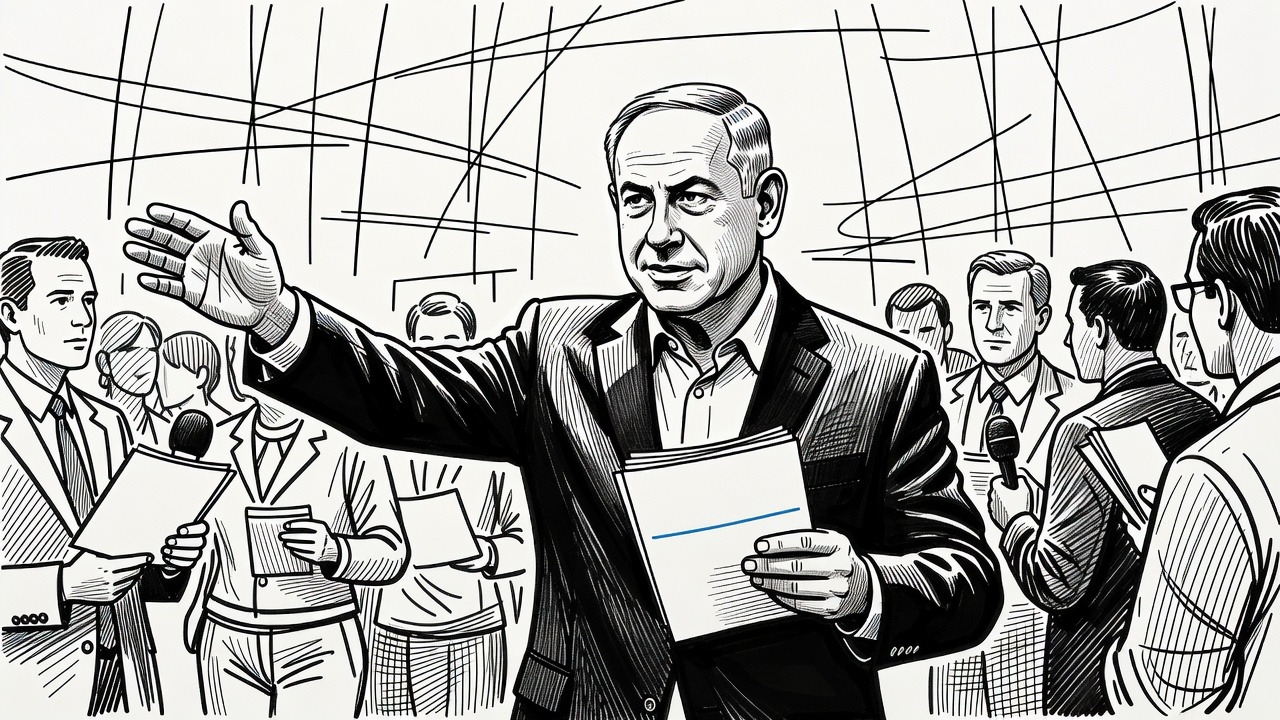
The bereaved families who confronted Netanyahu at a memorial this week are not a campaign prop. They have the least power in this story and the most standing. They are asking a basic question that any citizen is owed: what did the state know, and what did it do? Meanwhile, the larger costs of that unanswered question have fallen on people with even less say, including Palestinians in Gaza, who have lived through the war that followed. A country that cannot honestly audit how it failed is poorly placed to judge what it should do next.
How it may affect me
For Israelis, the immediate effect is that the biggest security failure in the country's history is being litigated by leak, innuendo and campaign rhetoric rather than by an independent body with the power to compel evidence. Voters will choose a government without an authoritative account of what the last one knew. Bereaved families are left without the closure that a credible, public inquiry can offer, and trust in both the political leadership and the security services may erode further.
Over the longer term, the lack of an inquiry risks leaving the same flawed assumptions in place. If the failure is blamed only on analysts, the policy thinking that shaped their judgments, about containment, deterrence and the treatment of Gaza, may never be examined. That raises the chance of repeating the mistake. It also sets a precedent that leaders can avoid scrutiny of national disasters by controlling the investigative process.
For Palestinians and the wider region, the stakes are indirect but real. Decisions about war, blockade and negotiation will keep being made on the basis of a contested and incomplete record. A fuller public reckoning could make future warnings more likely to be heeded and acted on politically rather than only militarily. Without it, civilians on both sides remain exposed to leaders who face little consequence for ignoring what they are told.