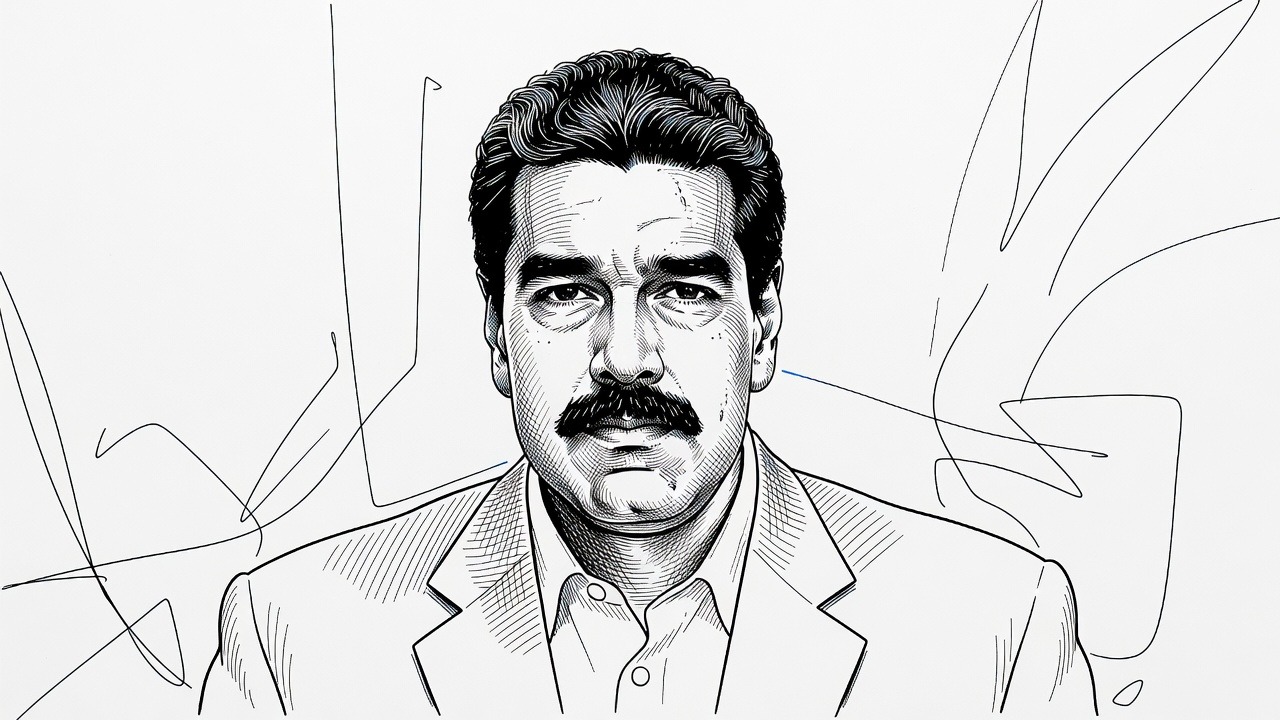
There is a clause in the U.S. torture statute that deserves more attention than it is getting. Section 2340A reaches torture committed abroad by a foreign national when the accused is "present in the United States." That is the legal hook for the new conspiracy count against Nicolás Maduro and Cilia Flores. The two are present in the United States because American forces seized them in Caracas in January. The prosecution's jurisdiction rests on the very act that makes it so uncomfortable to cheer.
I want to be clear about where the Left should not hide. The allegations are not an invention of Washington. Venezuelan human rights groups, Foro Penal, and a UN fact-finding mission documented beatings, electric shocks, asphyxiation and sexual violence in the country's detention centers for years. The UN mission concluded that crimes against humanity had been committed and pointed to the state's chain of command. Many of the victims were not CIA assets or oligarchs. They were students, union organizers, shantytown protesters, and soldiers' relatives. Chavismo began by claiming to speak for the poor. It ended by electrocuting them. A left that treats this as imperial propaganda has lost any claim to be a left.
So the torture count is the most serious charge Maduro faces, and it is a better case than the one that came first. The narcoterrorism theory, built around a "Cartel of the Suns" that analysts have long said is more a slang term for corrupt officers than a command structure, always looked like a pretext in search of a courtroom. Torture is different. It is a crime with identifiable victims, with a sizable public record behind it, and with a place in the left's own tradition. When Spain sought Pinochet's extradition from London in 1998, progressives understood that the point of universal jurisdiction was that heads of state do not get to torture behind their titles. By that logic Maduro's immunity argument is weak. It was weak for Noriega too, whom U.S. courts treated as a defendant rather than a sovereign because Washington did not recognize his government. The same reasoning probably applies here, since the U.S. refused to accept Maduro's claimed 2024 victory.
But the Pinochet comparison also exposes the problem. Pinochet was arrested on a warrant, held under the authority of a court, and fought extradition through British judges. Maduro was taken by soldiers. Courts have long held that how a defendant arrives does not bar trial, and that is probably how this one will go. Legal permissibility is a low bar, though, and it is not the same as precedent a sensible person wants to live under. If a president can be removed by force, then indicted for crimes that justify the removal, the order of events starts to look like a rationale assembled afterward. The next government that wants to "arrest" a rival leader will cite this case, and not every such leader will be a Maduro.
Then there is the question the indictment's wording quietly avoids: whose torture counts? The charge emphasizes more than a dozen Americans. That is natural, since those are the victims over whom U.S. prosecutors have the clearest claim. But the number of Venezuelans who passed through the same cells is in the thousands. A prosecution that vindicates the Americans while leaving the Venezuelans as background is justice with a passport requirement.
The larger problem is what has happened to the machine itself. Removing the two people at the top does not dismantle a security apparatus of intelligence officers, military counterintelligence, prison guards and prosecutors who processed detainees. As I understand it, Washington has since dealt pragmatically with the surviving leadership in Caracas, with oil and stability at the front of the conversation. If so, the message to Venezuelans is bleak. Torture is a crime when it can be pinned on the departed leader, and a manageable detail when the people who carried it out are useful. A serious human rights policy would make cooperation with Caracas depend on opening the prisons to independent inspectors, naming perpetrators below the top, and compensating victims. A prosecution in Manhattan does none of that.
Hypocrisy also hangs over the whole venture, and the Left should say so without turning it into an excuse for Maduro. The United States prosecutes a foreign leader for electric shocks and forced injections while having never held to account the officials who designed its own post-9/11 interrogation program. That does not make the Venezuelan allegations any less true. It does mean the credibility of the United States as a champion of the anti-torture norm is thin, and a trial that looks like an instrument of power will persuade fewer people than one that looks like law.
The best result for the victims, for the Left, and for the rule of law is a trial conducted so scrupulously that its verdict cannot be waved away as victor's justice: full disclosure, real testimony from Venezuelan survivors, and a judge who takes the immunity and abduction arguments seriously rather than treating them as formalities. Maduro should answer for what was done in those cells. How he arrived in the dock will determine whether this case is remembered as accountability or as a precedent for the powerful to use against whomever they like.