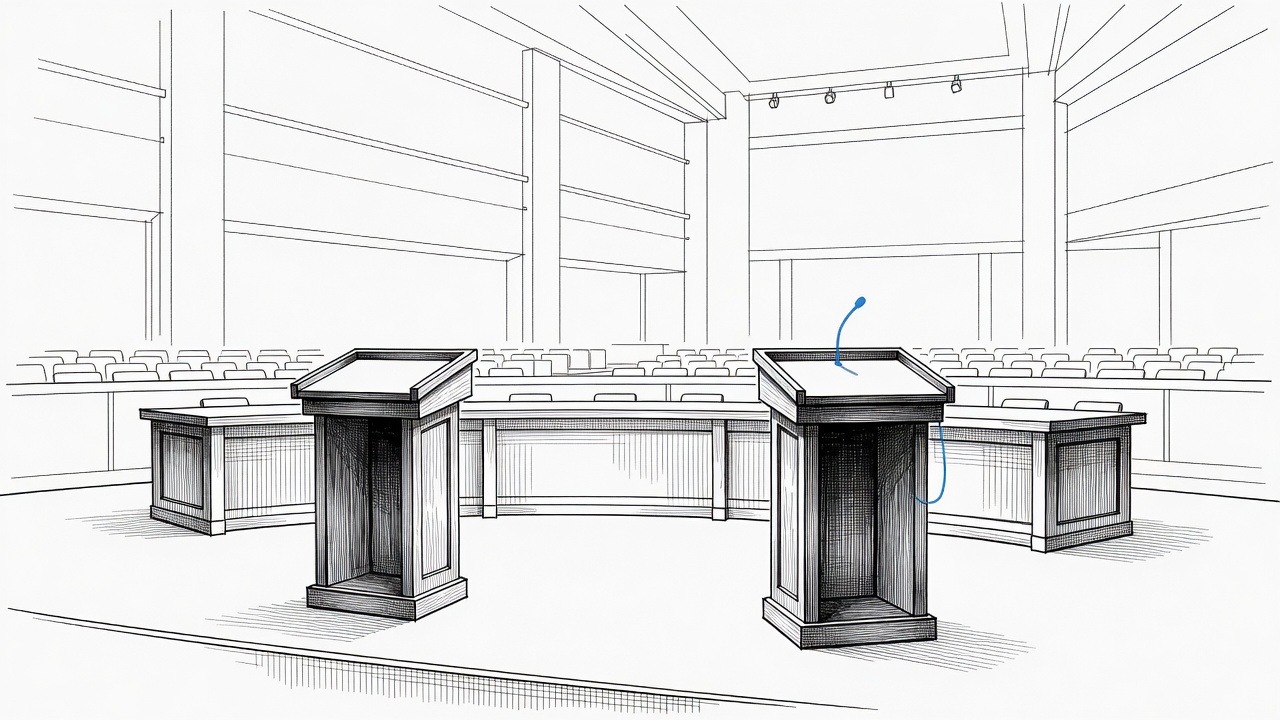
The most revealing moment of the Grand Rapids debate wasn't a clash. It was the agreement. Mike Rogers, a Trump-endorsed Republican, and Abdul El-Sayed, a Bernie Sanders-aligned Democrat, both back a temporary pause in the gas tax. Both are skeptical of the tariff fight with Canada. When a hard-right and a hard-left candidate converge, it's worth asking whether they've found a real consensus or just the cheapest applause line available.
The tariff skepticism is the real one, and it isn't cheap. Michigan's auto industry runs across the Detroit River and back several times before a car reaches a showroom, and the workers whose jobs depend on that supply chain have no say in a trade war conducted by social-media post. Candidates of both parties should say so.
The gas tax pause is the cheap one. The federal tax is 18.4 cents a gallon. A driver burning 500 gallons a year would save at most about $90, and only if retailers pass the whole cut along, which is not guaranteed. In exchange, the country takes money out of the Highway Trust Fund, which pays for the roads Michiganders spend half the year cursing. The benefit scales with how much you drive and how big your vehicle is, so it tilts toward people who need it least. A Democrat who wants to be taken seriously on living costs shouldn't reach for a Republican gimmick just because gas is expensive. If the goal is relief, a direct rebate would reach more people more fairly. If the goal is to look like you feel their pain, a tax holiday will do.
El-Sayed's other energy idea, considering federal controls on domestic oil prices, deserves the same scrutiny. The impulse is sound. Oil companies enjoy windfalls when prices spike, and families pay for them at the pump. But price controls have a poor record, going back to the 1970s gas lines, and they ignore the better tool, which is taxing windfall profits and returning the money to households. Rogers' diesel rebates and export pause have the opposite flaw. They are targeted but improvised, and an export pause is an invitation to retaliation. Neither man offered a plan to make Michigan less exposed to oil prices in the first place, which would mean cheaper electric options, transit, and a grid that doesn't punish people for trying to leave the pump behind.
The real argument was on healthcare and Israel, and that is where voters got an actual choice.
El-Sayed defends Medicare for All. Rogers says it would end private insurance and raise taxes. Rogers is mostly right on the mechanics, and El-Sayed's reply that families could keep private insurance papers over the central trade-off. Single-payer works because it replaces the insurance middleman and the premium-and-deductible system, not because it sits beside it. The honest case is stronger than the hedge. Michigan autoworkers have spent decades trading wage gains for health benefits that vanish when a plant closes or a strike drags on. Taking healthcare out of the employment relationship is the whole point, and a campaign that believes in it should say so plainly rather than promise that nothing will change. Voters who feel they are being sold a program that leaves everything as it is will punish a candidate who later admits it doesn't. Better to win that argument now, against an opponent defending a system that leaves millions underinsured.
On foreign policy, El-Sayed opposes taxpayer-funded military assistance to foreign governments, Israel included, and calls for diplomacy with Iran. Rogers wants to block an Iranian bomb and send defensive weapons to Israel. A few years ago, El-Sayed's position would have been treated as the end of a Democratic career in a statewide race. Today it reflects a real shift among Democratic voters, and Michigan has one of the country's largest Arab American communities. But his position is a stance, not yet a policy. Whether aid should be conditioned, cut, or restructured, and what he would do about the gap between his view and the longstanding bipartisan consensus, are questions the debate format was never going to settle.
The moderator had to step in repeatedly to stop personal sniping, which suggests the candidates were more comfortable with insults than specifics. That's the part of the night voters should hold against both. This seat will decide the Senate majority in a state where one recent Senate race came down to a fraction of a point. The better campaign will be the one that stops using the gas pump as its stage and starts explaining, in detail and with honesty about the costs, how it plans to make ordinary Michigan households less exposed to prices they cannot control.
How it may affect me
A gas tax pause would save drivers at most 18.4 cents per gallon at the federal level (24.4 cents for diesel). For a typical driver using about 500 gallons a year, that is roughly $90 at best, and only if retailers pass the full cut along. Any such pause would require Congress to act, and it would reduce money for highway and bridge repair unless lawmakers backfilled it elsewhere. Medicare for All is not on the near-term horizon. A single Senate seat cannot enact it, so nothing about your current insurance would change soon. Which candidate wins will matter more for how Michigan's trade, energy and healthcare interests are represented in a closely divided Senate.