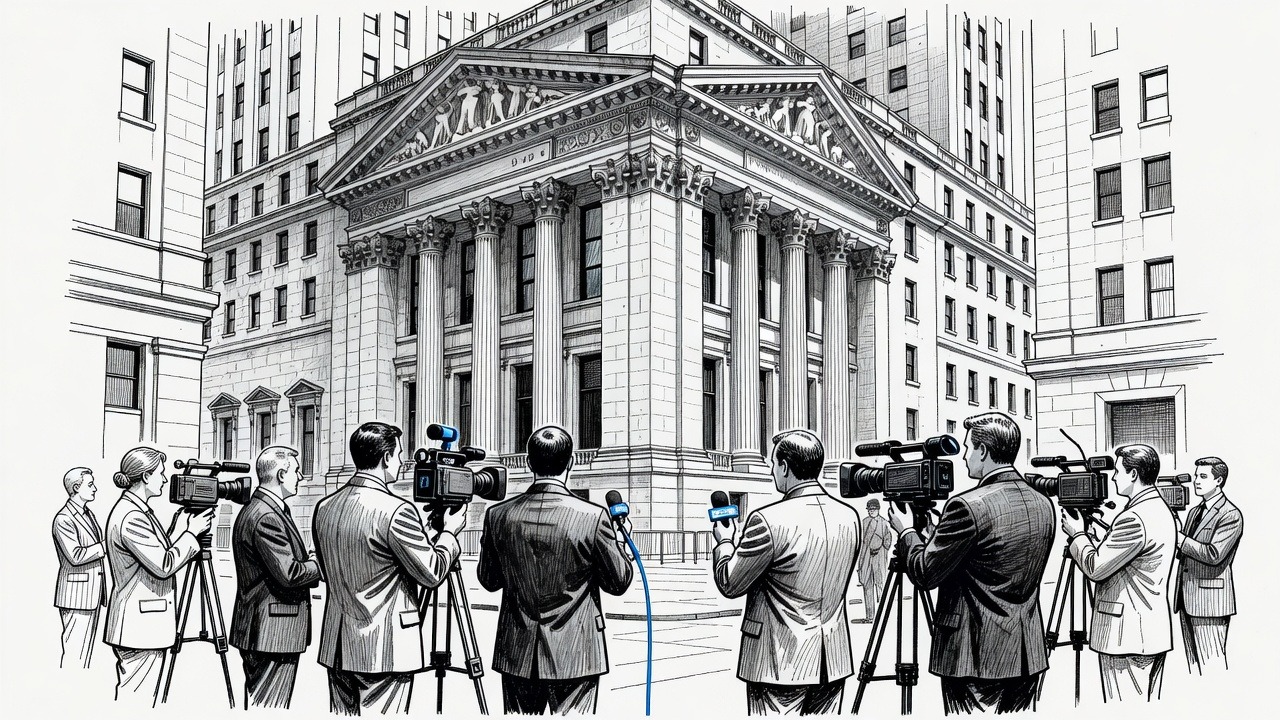
The most revealing detail in this story is not the First Amendment argument. It is the Justice Department's explanation: the FCC moved up the license reviews because Disney had not adequately answered a question about its diversity, equity and inclusion practices. Take that at face value and it is still damning. A license renewal is the closest thing a broadcaster has to a right to exist. The government is using it as a subpoena with a death penalty attached.
This is how modern regulatory coercion works. Nobody needs to revoke anything. The FCC chair says no decision has been made, and that may be literally true. But the process is the punishment. Eight stations must file renewal applications years ahead of schedule, with lawyers billing and executives waiting. ABC says the process is already shaping editorial choices on "The View" and around a Jimmy Kimmel interview. If that is accurate, the government has achieved its goal before a single license is touched. A threat that never has to be carried out is the cheapest form of censorship there is.
The government's procedural point is that ABC should exhaust the FCC's own appeal process first. That sounds reasonable until you ask what a chilling effect is. It is harm that happens while you wait. Telling a network to finish the administrative maze before seeking relief is telling it to let the pressure work. Judge AliKhan's skepticism about using renewals to extract information for a separate anti-discrimination inquiry suggests she sees the mismatch. If the government wants answers about hiring practices, it has tools built for that. Using the license as leverage suggests the tool was chosen for its force, not its fit.
The progressive instinct here should be discomfort, not triumph, and not only because Disney is hardly a sympathetic underdog. For decades the left has defended the idea that the airwaves are a public trust, that broadcasters owe something to communities, and that regulators may ask hard questions of concentrated media power. That tradition is right. But a public-interest standard is only as good as the neutrality of whoever interprets it. Vague discretion is not a progressive or conservative tool. It belongs to whoever holds the office. Anyone who cheers regulatory muscle against media companies they dislike should remember that the muscle does not check ID at the door.
There is a structural lesson too, one that favors neither Disney nor Washington. ABC can afford Beth Wilkinson and a federal lawsuit. It is also a division of a vast conglomerate with other business before the government, which is exactly why corporate media leverage works so well. Consolidation gives the state a single pressure point. When a few giant companies control most of the news that reaches Americans, and each needs federal sign-off for mergers, licenses and spectrum, the independence of the press becomes a negotiation between the company's lawyers and the administration's appetite. Disney is not an obvious profile in courage; its own record of accommodating this president is part of the context. A press that is brave only when it is cheap is a fragile public good.
The lasting fix is not winning this one case. It is building a media system where no single license or merger decision can be turned into a political weapon: statutory limits on early or discretionary reviews, real insulation for the FCC from presidential demands, and public investment in local news so that independence does not depend on conglomerate balance sheets. Judge AliKhan's order for the government to identify other legal mechanisms is a small, sensible test of whether this is regulation or retaliation. If the government can't name a tool better suited to its stated purpose, the answer is already visible.
How it may affect me
For ordinary viewers, the immediate risk is quieter than a blackout: news and entertainment decisions may be made with one eye on Washington. If executives soften a guest list, cut a segment or avoid a topic to protect licenses, audiences get a diminished product without knowing why. Local stations are also the most direct source of weather alerts, school news and civic coverage in many communities, so prolonged uncertainty over their licenses is not an abstract concern. Longer term, the precedent matters more than this network. If early renewal reviews can be used to extract compliance on unrelated matters, every broadcaster, especially smaller ones without Disney's legal budget, has reason to avoid angering whoever holds power. Workers in newsrooms and writers' rooms bear the risk too, since editorial caution tends to arrive as lost assignments and quietly shifted priorities. The public interest in a press free from political reprisal is shared by everyone, whichever party is in office.