The most revealing sentence in this story is not about artificial intelligence. It is that Anthropic, OpenAI and Google agreed to appear after the council raised the possibility of subpoenas. These are companies that have spent years telling the public that AI may be among the most consequential technologies in human history, that they take its risks with great seriousness, and that they welcome oversight. Yet the invitation was not enough. It took compulsion.
That tells us how the AI industry's "responsible development" posture works. Voluntary commitments, safety frameworks and white papers cost little because the companies write them, interpret them, and revise them when convenient. A subpoena is different. Testimony under oath carries legal consequences for falsehood, and it does not let a firm choose which questions are comfortable. The gap between what executives say in a keynote and what they will swear to is the gap the public needs to see.
The strongest objection deserves a real answer. A city council is not an obvious place to regulate frontier AI. Models are trained and deployed across borders, and a patchwork of local rules could be confusing and costly. A hearing with 51 members can easily become theater, with lawmakers performing concern and executives delivering rehearsed reassurance. Cities also lack the technical staff of federal agencies.
All of that is true, and none of it makes the hearing pointless. The patchwork argument is most persuasive when there is a serious national framework to defer to. There isn't one. In its absence, "leave it to Washington" often means leaving it to no one, and the industry knows that. The argument that regulation should wait for a perfect federal standard has become a convenient way to guarantee there is no standard at all.
A city is also where AI actually lands. It lands in hiring systems that screen applicants, in how landlords evaluate tenants, in what students and teachers face in classrooms, in how city agencies buy software, and in how workers are monitored and replaced. These are municipal concerns because the people affected live in municipalities. New York has more standing to ask what happens to its residents than a company headquartered elsewhere has to answer with a blog post.
The hearing also puts a question to power that rarely gets asked in public: who decides? The people building these systems are making choices about deployment, safety testing, and acceptable risk that affect millions who never consented and cannot inspect the work. The companies hold the information. The public holds the exposure. Compulsory testimony is a small attempt to narrow that imbalance.
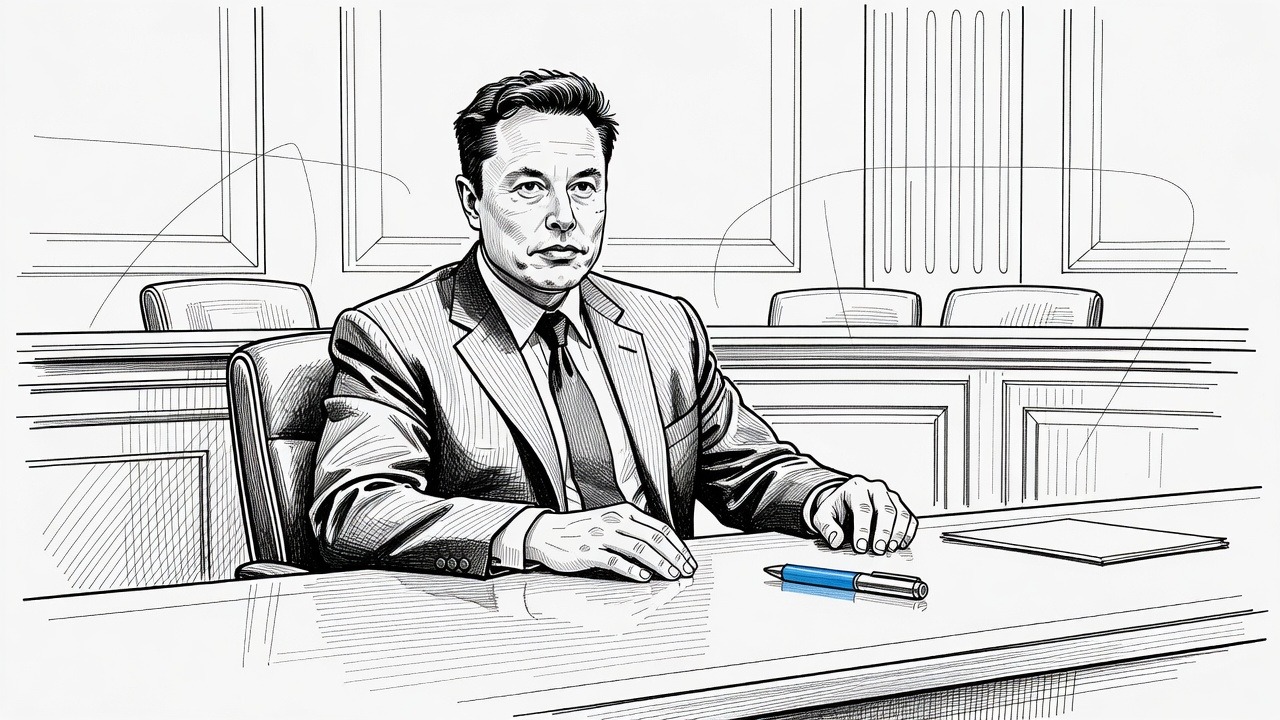
The Musk subpoena is the cleanest test of the principle. The council says it may seek enforcement in New York State Supreme Court if he does not comply. Whether a billionaire who treats regulators as an inconvenience will accept a city's authority is a question about democracy, not about one man's temperament. If the answer is that sufficiently rich people may ignore local government, then oversight applies only to those without the resources to resist it.
Progressives should hold their own side to the same standard, though. A hearing is not a law. Councils are good at generating headlines and less good at turning them into enforceable rules, and the companies know that a hearing can be endured, then forgotten. If this ends with a stern exchange and a press release, the industry will have learned that the price of scrutiny is an afternoon. The council should use the sworn record to ask specific questions about testing, incident reporting, labor displacement, data use and who is accountable when systems fail. It should then legislate where the city has real authority, such as procurement, employment practices and transparency, rather than attempting to regulate the entire technology.
The lesson reaches beyond New York. Voluntary self-governance lasts only as long as no one with power insists on something else. The council has shown that insisting works. The harder part is deciding what to do with what it learns.
How it may affect me
For ordinary New Yorkers, the practical stakes are less about science fiction scenarios than about everyday systems: who gets hired, who gets an apartment, how public agencies use automated tools, and whether workers are monitored or displaced by software they had no say in. Sworn testimony could create a public record about how these systems are tested and what companies know about their failures, which makes later rules, lawsuits and journalism harder to deflect. If the council follows with enforceable measures, residents could gain transparency and recourse where they now have none. If it does not, the likely result is that companies treat scrutiny as a public-relations cost while deployment continues, with workers and communities absorbing the risks. A successful subpoena enforcement against Musk could also strengthen the ability of cities to demand answers from powerful firms, while a failure could signal that local oversight has limits.