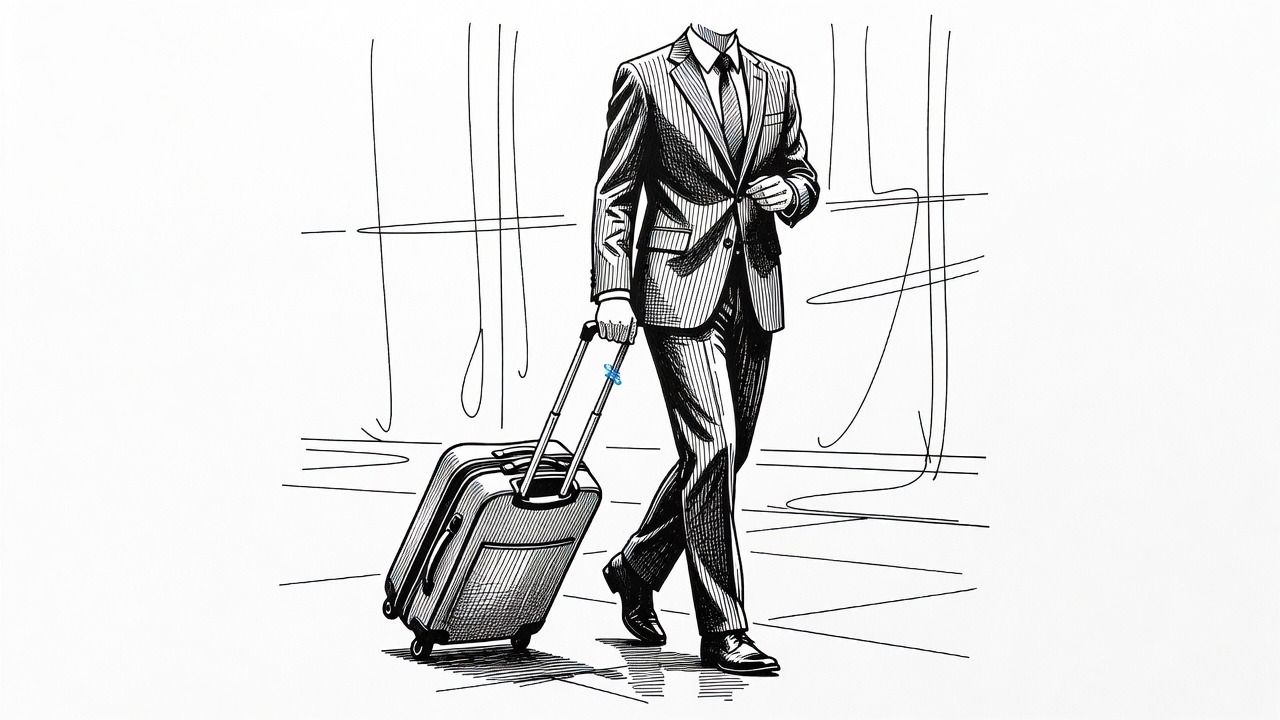
Forget the trench coat. If federal prosecutors are right, the operation was a realtor, a drive from Las Vegas to Seattle, photographs of a family near their home, and a WeChat note with a license plate.
Wanying Heather Zhang, an Irvine real estate agent, was arrested at Los Angeles International Airport on October 4 as she prepared to board a flight to Shanghai. She is charged with acting as an unregistered agent of a foreign government. The complaint says she met a Chinese government contact in Changsha in June, agreed to the assignment, and in September traveled with another person to record a relative of Taiwan’s president and that relative’s family. Security-camera footage and messages from her iCloud account are cited in the complaint. She is presumed innocent. That presumption is not a softener for commentators who find the story useful. It is the discipline that separates a republic from the regime it is accusing.
Still, the charge describes something Americans should be unwilling to shrug off. This is not, on the government’s telling, the theft of a weapons file. It is political surveillance of a family, conducted on American ground, for a government that claims Taiwan and does not recognize any decent limit on that claim. Taiwan’s president holds democratic office. Filming his relatives near an American home is a way of saying the office does not protect the people attached to it, and that United States soil is not the sanctuary those people thought they had rented with their address. Call it transnational repression if you need the category. The plainer name is foreign political policing.
The part conventional argument keeps missing is how little machinery that requires. An open society is an extraordinary advantage for a closed one. People move, sell property, drive interstate, and carry phones that already speak to contacts abroad. None of that is a crime, and none of it should become a pretext. It becomes a vulnerability only when a foreign state treats ordinary American life as a franchise for its own police work. Beijing does not need a glamorous illegal station if an unregistered errand can be run by someone who already belongs in the commercial landscape of Irvine. The cover is not a legend invented by a spy service. The cover is the country working as designed.
That is why the serious conservative distinction is not between being tough on China and being polite. It is between individual guilt and collective suspicion, and between limited government and a government too limited to perform its core job. You may be Chinese-American, sell houses, argue about Taipei, and distrust Washington. You may not covertly surveil people in this country as an agent of Beijing. Enforcing that line protects the innocent twice: it refuses the smear that ancestry is evidence, and it refuses the abandonment that tells targeted families their driveway is a foreign jurisdiction. Counterintelligence, bounded by a criminal complaint and a jury, is not the administrative state swelling. It is the state doing the thing it exists to do—denying other governments the power to govern people who live here.
Skeptics of American surveillance should not get lost in the irony. Cameras and a cloud account appear in this complaint as instruments of detection, and Americans are right to demand that those tools stay under law. The scandal alleged here is not that the FBI looked. It is that a foreign government may have been keeping its own quiet file on a family in the United States, compiled by a private hand and dispatched on a consumer app. A republic that worries about its own watchers, and will not worry about an authoritarian state’s, has confused the direction of the threat.
Zhang may be acquitted. The complaint may be thinner than the headline. What should not be acquitted is the principle underneath the charge. If tasks like the one alleged—meet a contact, film a home, send the plate, fly to Shanghai—remain cheap, they will be repeated, and not only against the relatives of presidents. Dissidents, students, and businesspeople already live with versions of this fear. The long consequence is a country that is formally free and informally edited by whoever abroad can hire a camera. Raising the cost, case by case, is how liberty stays a fact rather than a brochure.