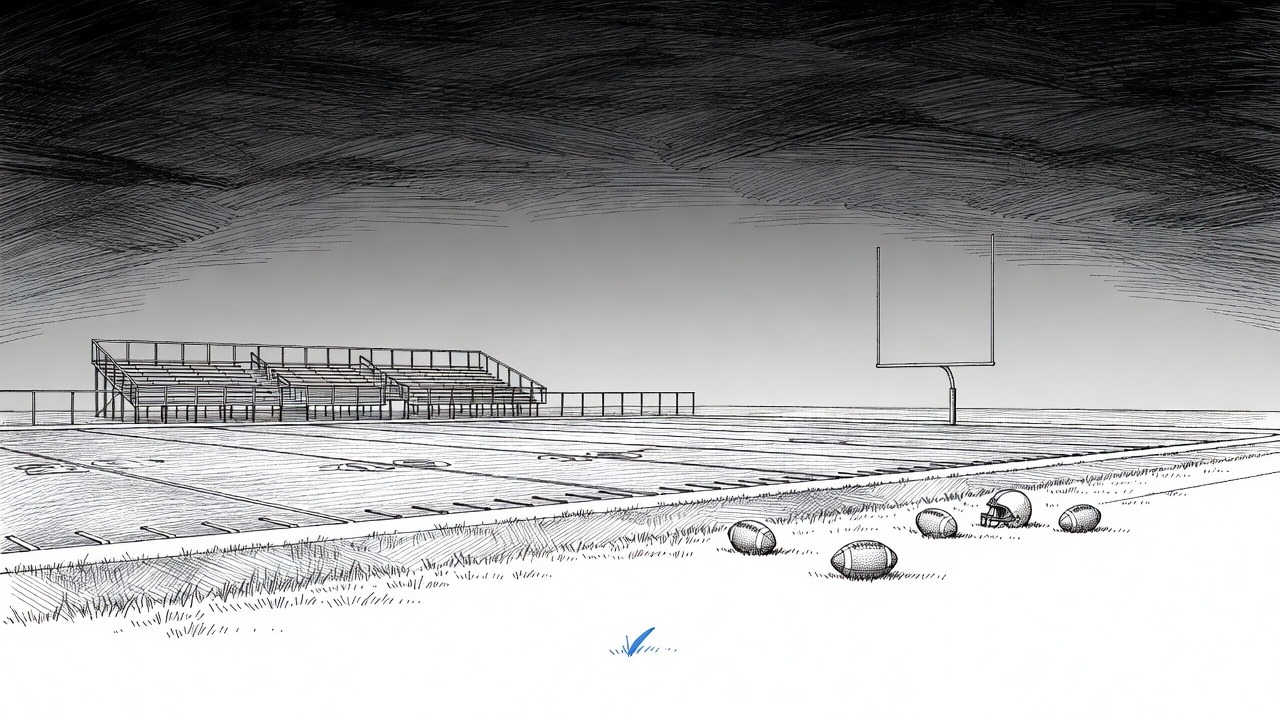
There is no dispute more banal than an argument over a parking space, and no place that ought to be more sacred than the sidelines of a youth football game on a Saturday evening. Yet at Leon Day Park in Baltimore, that trivial friction ended with a 12-year-old girl fatally shot—a child who had simply come to watch a game and instead became collateral damage in an exchange of gunfire between two armed adult men.
It is easy to categorize this horror as an isolated eruption of individual madness, but doing so obscures the broader institutional and social failure that produced it. This tragedy is the inevitable product of a society that has allowed private lethality to colonize and destroy the public commons. A public park hosting youth athletics represents one of our most vital civic goods: a shared space where working-class families gather, where children find structure and joy, and where community life is actively built. But that collective fabric cannot survive in an environment saturated with firearms, where any minor personal grievance can be instantly settled with a barrage of bullets.
We frequently hear rhetoric about the personal liberty to carry weapons, but we rarely account for who bears the brutal externalities of that culture. It is not the gun lobby or the politicians who weaken public-safety laws who pay the price; it is a 12-year-old girl in Baltimore who had her entire life ahead of her. When the threshold for deadly force drops so low that an argument over a patch of asphalt turns into a firefight, genuine freedom ceases to exist. A society that cannot guarantee children the basic right to gather safely at a neighborhood park has abdicated its most fundamental responsibility.
How it may affect me
For working-class families and children, the immediate consequence of violence in civic spaces is the erosion of safe public life. When neighborhood parks and youth sports become sites of deadly gunfire, parents are forced to weigh the benefits of recreation and community engagement against fears for their children’s basic physical safety. This dynamic imposes a severe psychological toll on kids, discourages volunteer-driven youth programs, and ultimately drives people out of the shared public square into isolated private spaces.