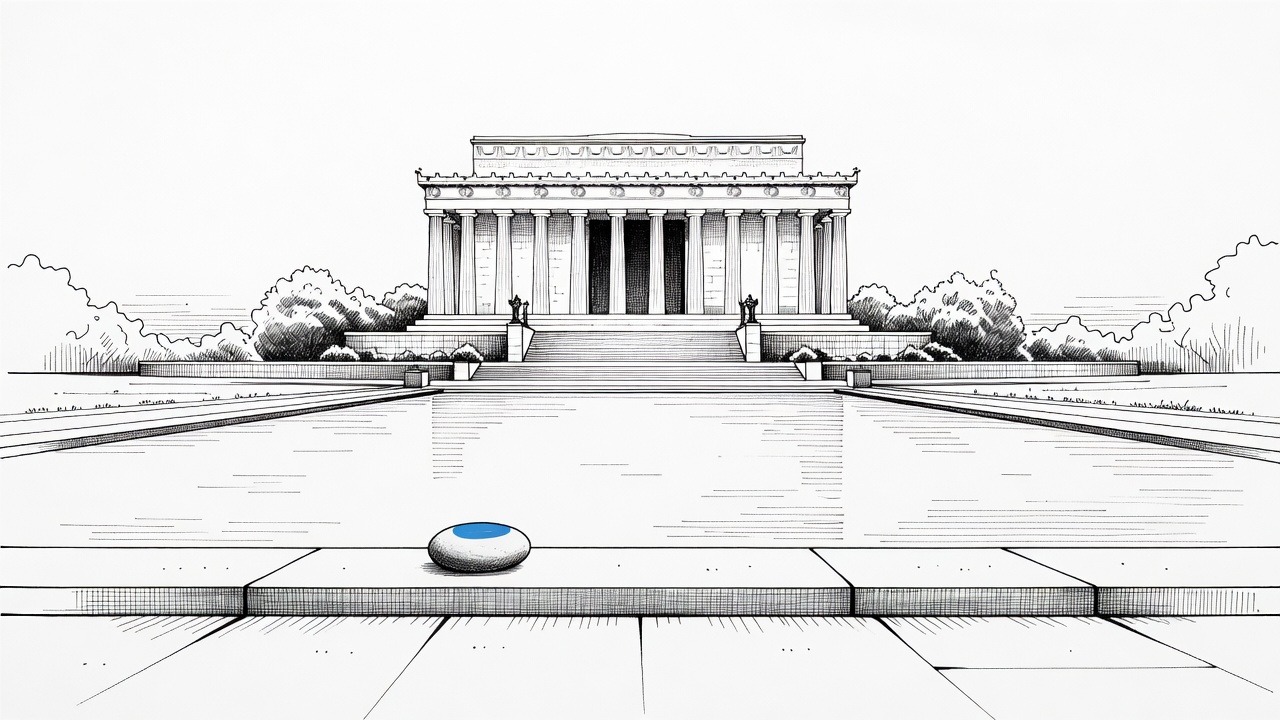
A felony vandalism case against a former Olympic canoeist is now dead for good, and the reason it should have died is simpler than the ruling that buried it. Prosecutors concluded that damage to the Lincoln Memorial Reflecting Pool liner came from a flawed installation or a government contractor, not from intentional damage by David Hearn. That is the fact that governs. You do not keep a felony hanging over a citizen because a national memorial was scarred and someone has to be the face of it.
Protecting the Reflecting Pool is not a culture-war hobby. It is a basic public duty. Deliberate vandalism of a national memorial ought to be charged and, where proved, punished. President Trump was entitled to say so, and to criticize U.S. Attorney Jeanine Pirro for seeking a dismissal he believed let vandals walk. A president who shrugged at damage to the Lincoln Memorial would be neglecting a core stewardship job, not showing restraint. Stewardship is still not a substitute for evidence. Pirro asked to drop the case because her own prosecutors' review pointed at contractor or installation failure rather than at Hearn. That is what a U.S. Attorney is supposed to do when the theory of the case collapses — including when the president who wants results does not like the answer. Rule of law is not "charge the available defendant." It is charge the person the facts support.
Judge Todd Edelman did not stop at the evidence. Prosecutors had asked to dismiss without prejudice, preserving a later indictment if new information emerged. He dismissed with prejudice, a permanent bar on reviving or refiling these charges, and he grounded that severity in an unusual risk that Hearn could face renewed prosecution because of presidential pressure. Hearn's lawyers are right that a case they say should not have been brought should not sit in a drawer as a political option. Finality for a man prosecutors no longer say intentionally damaged the pool is the just result for him. The rationale is a different matter. Courts exist to weigh proof and law, not to treat a president's public criticism of a charging decision as itself a due-process emergency. If genuinely new facts ever showed intentional damage, the dismissal prosecutors requested would have left a lawful path. Permanently closing that path because the judge feared pressure flowing from the president's criticism is a reach. Liberty here was already protected by the evidence. A precedent that executive criticism can justify stripping the government of any future charge in the case will not stay confined to one reflecting pool.
The failure that still has not been answered is the one prosecutors actually found. A government contractor or a flawed installation damaged a national memorial, a private citizen was hauled into felony court over it, and the White House and Pirro's office did not immediately respond when asked for comment. That sequence is the one worth anger: public property, a botched job, and accountability aimed at the wrong man. Contractor failure is not vandalism. It is also not a victimless paperwork error. Somebody accepted that installation. Somebody should have to explain it. Until that happens, the permanent dismissal protects Hearn — correctly — and leaves the institution that mismanaged the pool exactly where it prefers to be: unexamined.
How it may affect me
The immediate consequence is narrow and real: David Hearn cannot be prosecuted again on these charges. Dismissal with prejudice ends the open-ended threat prosecutors wanted to keep in reserve. For anyone else, the warning is still practical. A citizen can be charged with felony vandalism of a federal memorial, and the government's later account can be that a contractor or a bad installation did the damage. An unresolved felony is a burden on work, reputation, and ordinary planning long before a verdict. Finality in a case the government can no longer tie to intentional damage is a protection worth having.
What remains unsettled is the repair and the precedent. Readers may yet bear the cost, through taxes or diverted memorial and park funds, of fixing a liner prosecutors attribute to installation or contractor error. Nothing in this ruling assigns that bill or forces a public accounting of who signed off on the work. Possible later effects cut two ways. Embarrassment could bring tighter scrutiny of contractors on public monuments. Or the fight over presidential criticism and judicial finality could crowd out the procurement failure, leaving the next botched job just as likely to produce a culprit before it produces an invoice. Separately, if courts treat a president's criticism of prosecutors as reason enough to permanently bar charges, later cases with genuinely new evidence may be harder to bring — a shield when the target did not do it, and a constraint when the target did. The incentive ordinary people should notice is simpler: political heat around a monument can land on a person faster than it lands on the contractor who may have caused the damage.