Indirect talks through a third party are usually a sign that direct trust has collapsed, and this is no exception. After seven months of war, the U.S. and Iran are not negotiating with each other so much as negotiating through Doha, which is the only realistic channel available given the depth of mutual suspicion. That is not a criticism of Qatar's role; mediated diplomacy is often the only functional option when neither side will sit across the table from the other. The problem here is not the mechanism. It's the noise coming from Washington.
Trump rejected Iran's proposal, then said the U.S. had 'offered Iran nothing,' while separately denying that sanctions relief or asset release was on the table — even as U.S. officials were confirmed to be talking to the mediators. Those statements are not contradictory in a technical sense, but together they send an incoherent signal to the one party actually trying to build a framework: Qatar. Mediators need something stable to work with. Public denial paired with private engagement might be a deliberate negotiating posture — deny concessions publicly, probe them privately — but it also risks making the U.S. position illegible to the very channel meant to produce results. If the goal is a durable ceasefire, credibility with the mediator matters as much as leverage over Iran.
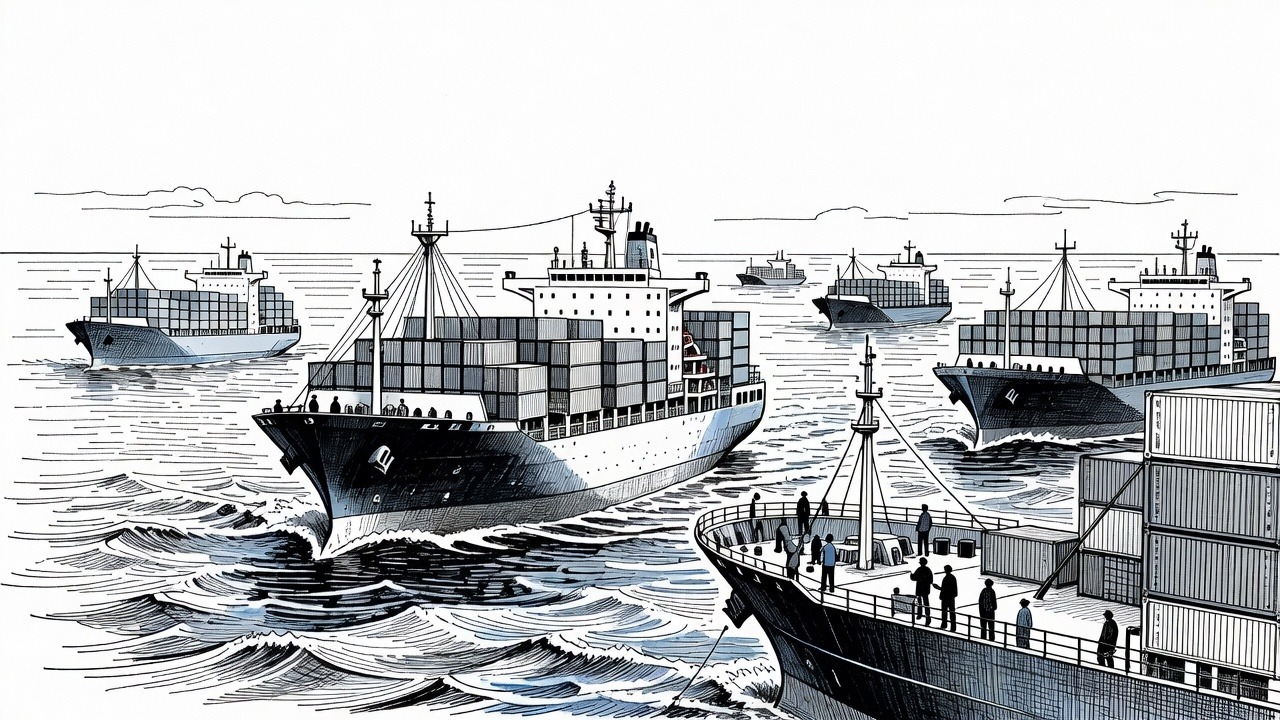
Iran's seven-point proposal, meanwhile, ties sanctions relief and frozen-asset release directly to reopening the Strait of Hormuz. That's a coherent negotiating strategy — trade the thing the world actually cares about (unobstructed oil shipping) for the thing Iran wants most (economic relief). But it also means global shipping remains hostage to a bilateral political dispute, and the maritime data backs that up: traffic through the strait is still below pre-war levels, months into a supposed diplomatic opening. The vessel fire from a suspected projectile strike, even with no casualties reported, is a reminder that 'talks are underway' and 'the strait is safe' are two different claims. Nothing in this proposal, or in Trump's response to it, has yet changed the physical risk on the water.
The honest read is that both sides are negotiating from public postures hardened for domestic audiences while probing quietly for terms neither wants to say out loud yet. That's normal in high-stakes diplomacy. But it's also slow, and slowness has a price that isn't paid by negotiators — it's paid by shippers, insurers, and anyone downstream of Gulf oil flows.
How it may affect me
In the near term, nothing changes for ordinary people except continued uncertainty: maritime traffic through Hormuz is still running below pre-war levels, which keeps shipping costs and insurance premiums for Gulf-transiting vessels elevated, and that tends to filter into fuel and freight prices over time. The vessel fire incident, even without casualties, is a reminder that the physical risk to tankers hasn't gone away just because negotiators are talking — so continued volatility in oil markets tied to Gulf security news is plausible as long as the strait remains contested.
Longer term, if the ceasefire framework actually converges — meaning both a proposal Iran is willing to accept and a U.S. position that isn't publicly disavowed one day and privately discussed the next — normalized shipping through Hormuz could ease some of the risk premium currently baked into oil prices. But given the mixed signals coming from Washington and the fact that Iran's core demands (sanctions relief, asset release, ending the naval blockade) remain unresolved, that outcome is not close, and readers should treat any near-term claim of a breakthrough with real skepticism until the mediator produces something both sides confirm rather than deny.