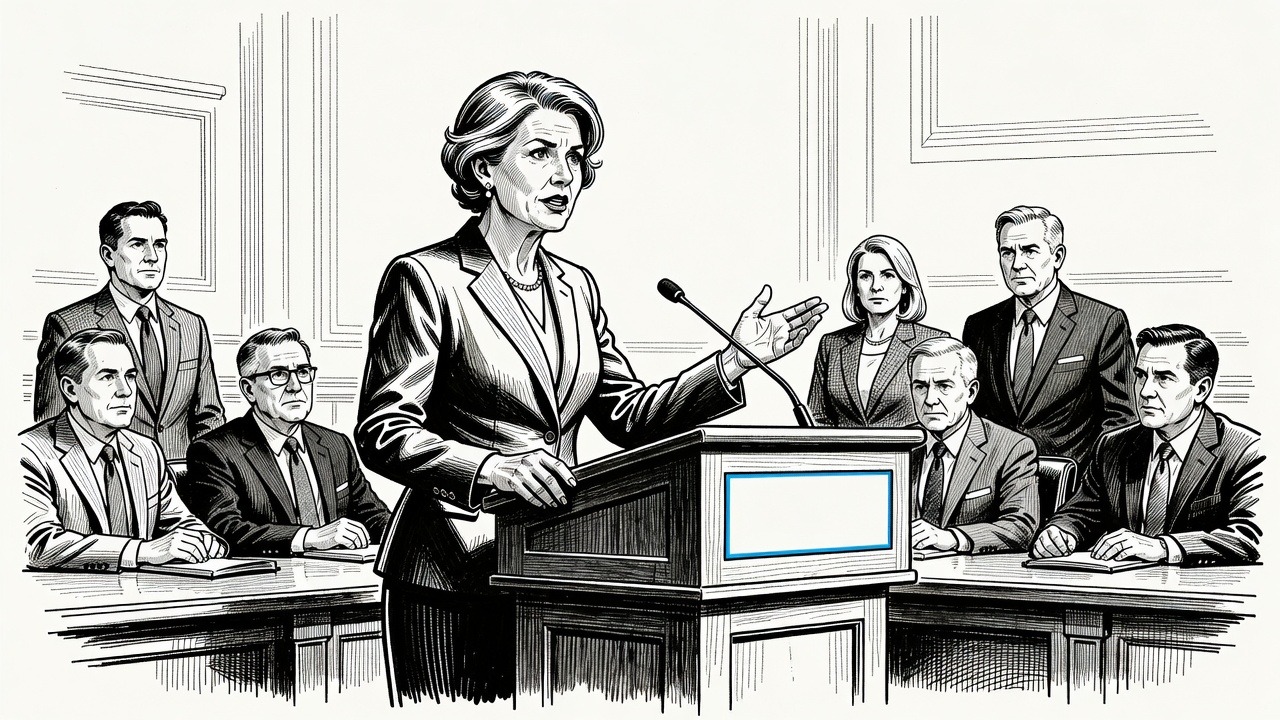
Sixty-seven people died over the Potomac because two arms of the federal government were allowed to share a crowded sliver of sky on the honor system. Less than a year later, one of those arms is announcing it would like to go back to work, and it is doing so before it has even filed the paperwork.
The FAA says it has received no formal request from the Army. Yet the Army is telling the press it intends to resume flights, and the NTSB chair is saying Dec. 1 is possible. The Army is treating the restart as a scheduling matter. The FAA's approval, and the public's interest in what comes with it, look like a formality to be cleared on the way.
That posture is the problem. The Army helicopter that struck the American Eagle jet was not an act of God. It was the predictable result of a system that normalized close calls between military and commercial traffic around one of the most congested, politically sensitive airports in the country. After the crash, the Army was involved in another incident in May, when a helicopter flew close enough to Reagan National to disrupt commercial flights. That wasn't a lesson learned. It was a rerun.
The fair counterargument is that military pilots must train, and that rusty crews are not safer crews. That is true, and nobody serious is saying Black Hawks should never fly again. But the counterargument has an obvious answer: do the risk assessment first. Sen. Maria Cantwell is asking for exactly that, and Rep. Don Beyer is asking that the NTSB's recommendations be implemented before the rotors turn. That isn't obstruction. It is the minimum we owe the next 60 passengers on a regional jet on final approach. If the Army can't wait for the safety work, then the training can happen somewhere other than the most crowded approach path in the capital.
There is also a question about who gets to set the terms. The people in those seats had no say in whether the Pentagon's convenience should outrank their margin of safety. Neither will the next passengers. They will board, trust the system, and assume somebody with authority already asked the hard questions. The point of regulators, investigators and congressional oversight is that somebody actually did.
This is also an administration whose first instinct after the crash was to hunt for a culture-war culprit, blaming diversity hiring before investigators had finished. The measure of seriousness is not a press conference. It is whether you impose boring, costly, procedural discipline on your own institutions. A government that cut and churned its way through aviation oversight, then rushes the military back to the scene, does not get the benefit of the doubt.
Democrats should not treat this as a sideshow either. Cantwell and Beyer are right, but a letter is not leverage. If the FAA gets a request, Congress should insist on the written risk assessment, the NTSB recommendations tracked line by line, and a public answer to a simple question: what exactly has changed since January? Not what is planned. What is in place.
If the answer is "we're working on it," the flights should stay grounded. Nobody ever regretted waiting one more month for a safety review. Sixty-seven families know what it costs to skip one.
How it may affect me
If you fly in or out of Reagan National, the restart date matters directly. The FAA must still approve any Army request. You can press your House and Senate members to demand a published risk assessment and a status report on NTSB recommendations before flights resume.