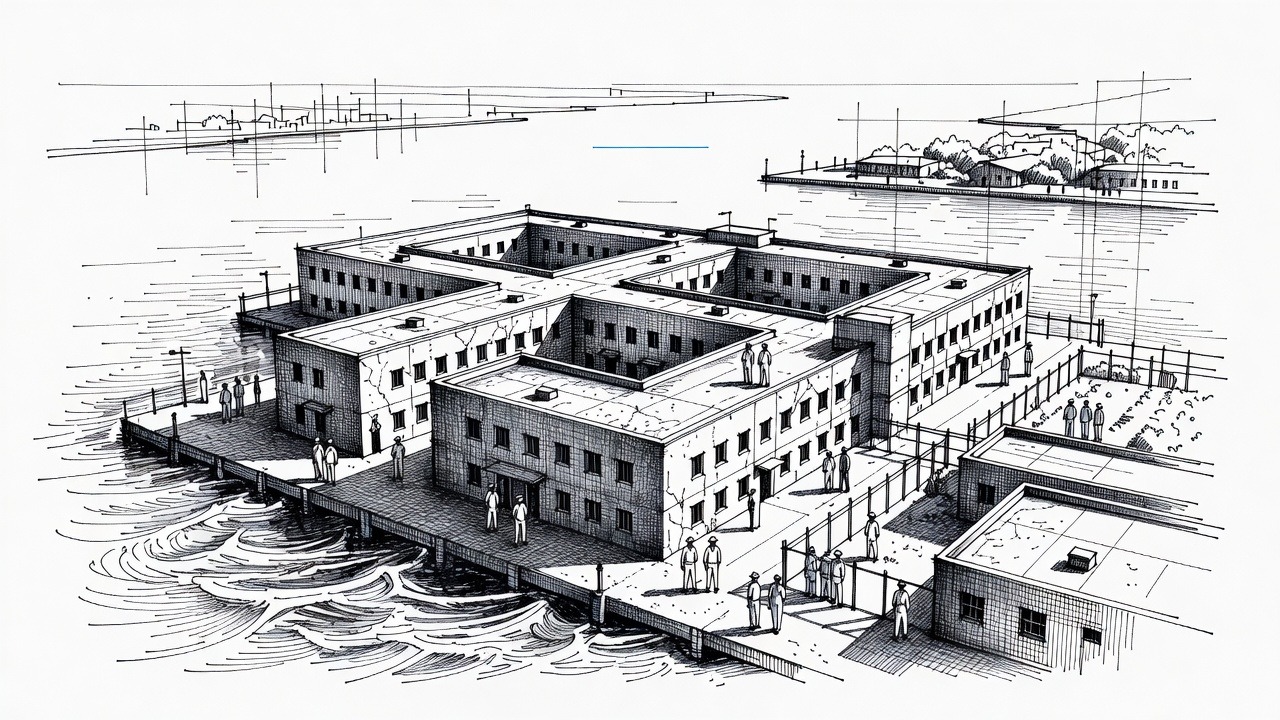
The most important number in this story isn't 2032. It's the gap between 4,500 beds and a jail population that has run well over 6,000 in recent years. Closing Rikers is not an architecture problem. It is a question of how many human beings the city decides to cage, and for how long.
Let's be honest about the date first. The law passed in 2019 promised closure by 2027. That deadline is dead, and the people who killed it were not abolitionists. They were the officials who let borough jail construction crawl, and the neighborhoods, including plenty of liberal ones, that discovered a sudden passion for zoning review once the jail might be near them. Everyone wanted Rikers gone. Almost nobody wanted the replacement on their block. Moving the date to 2032 is an admission of that failure. The Left should say so plainly rather than spin it.
But the answer to delay is not to leave a notorious complex open. The jail has been documented for years, by federal monitors, investigators and the families who bury the dead, as a place of chronic violence, neglect and preventable death. Delay is not a neutral policy. Every year of it has a body count, and the people paying are overwhelmingly Black and brown New Yorkers who have been convicted of nothing. The great majority of those held at Rikers are awaiting trial. Many are there because they can't make bail, or because the courts are too slow to resolve their cases.
That is why the court-speed piece of Mamdani's plan matters more than the construction schedule. You do not close a jail by building a smaller one. You close it by ending the habit of holding people for months or years because the system can't get around to them. If the administration treats case processing as seriously as it treats concrete, 4,500 beds is achievable. If it treats it as a footnote, the plan collapses into a smaller jail that quickly overflows, and the pressure to reopen the old one will return.
Critics like Paul Mauro say diversion has failed and that civilians can't make arrests. Notice the sleight of hand. Nobody proposes that a caseworker handcuff a suspect. Arrest is a police function, and it stays one. The question comes after arrest: does someone accused of a low-level offense, or someone in a mental health crisis, need a cell, or a bed, a clinic, supervision? Past diversion programs failed largely because they were underfunded, understaffed and used as press releases. "It was done badly" is an argument for doing it properly, not for jailing the mentally ill indefinitely at roughly the cost of a luxury hotel suite.
The Strategic Response Group is a different matter, and a welcome one. It was built as an elite unit for "disorder" and became best known for kettling and roughing up protesters. Dissolving it says that policing a demonstration is not a counterterrorism operation. Commissioner Jessica Tisch says public safety won't decline as officers are reassigned. Fine. Then there is no safety argument for keeping a unit that has cost the city settlements and trust. But the Left should watch whether the officers simply reappear under a new name with the same tactics. A rebrand is not reform.
This is where Mamdani's coalition gets tested. The easy part was winning an election on a promise. The hard part is spending political capital on tedious things: pushing judges and prosecutors, funding public defenders and supervised release, and standing in a community board meeting to say yes, a jail will go here, and it will be better than the alternative. Those are the choices that decide whether 2032 is real.
Rikers has outlived mayors, promises and deadlines. The measure of this plan is not the announcement. It is whether the city will accept that fewer people in cages is a goal worth fighting for, even when it is inconvenient.