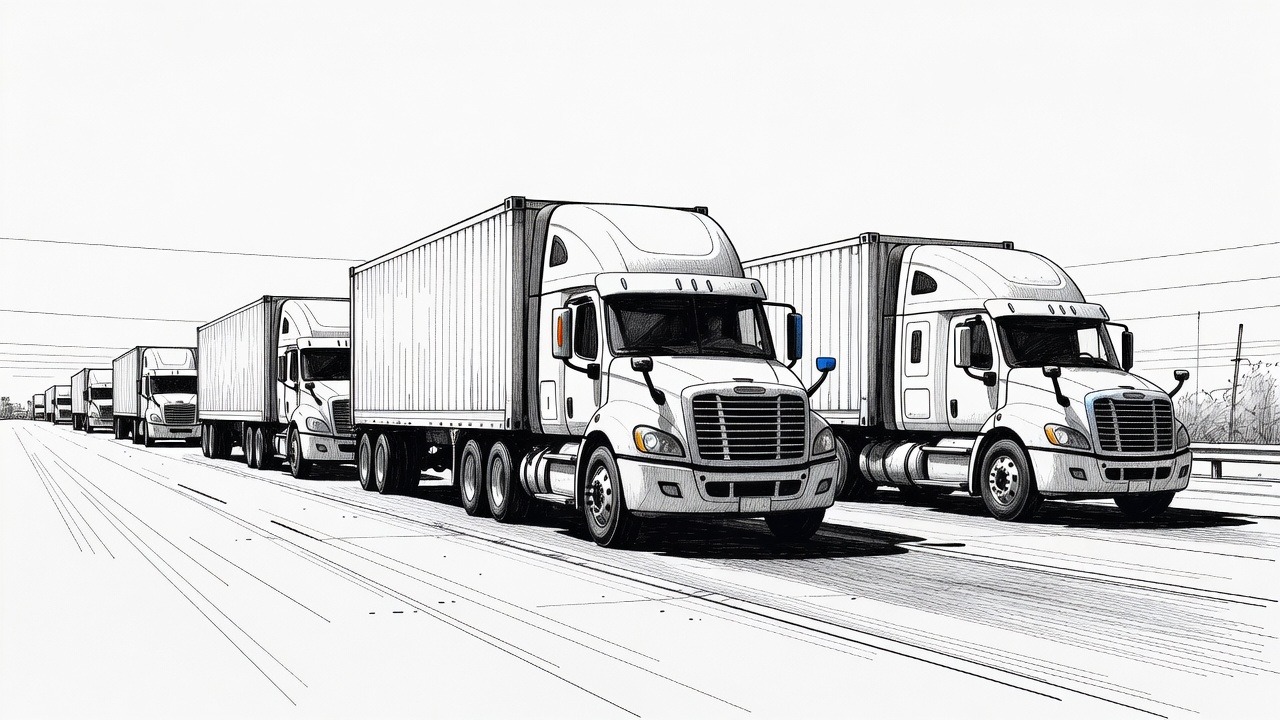
Read the two officials in this story side by side. A logistics executive tells Crimea's businesses to keep a three-month reserve of goods because the only road in is a drone-hunted highway about to freeze over. Meanwhile, Sevastopol's governor rations fuel and blames "panic buying by residents."
People are stockpiling because they have been told, in effect, to stockpile. When the supply line breaks and the authorities answer with rationing and scolding, the public isn't being irrational. It is reading the situation correctly. Officials who say "there is no crisis, only hoarders" are usually managing their own embarrassment, not the shortage.
That embarrassment is the real story. The Crimean Bridge was never just infrastructure. Vladimir Putin built it after the 2014 annexation as a monument: concrete proof that the peninsula was permanently, irreversibly Russian. Its fragility is political as well as logistical. An annexation that has to be defended with a single span, and now with a highway through other occupied territory, is not a settled fact. It is a wager, and the people of Crimea are the ones holding the bill.
The Left should say this plainly, because some of us flinch from it. Crimea was taken by force, and the war that followed has been conducted as a campaign of conquest. Ordinary Crimeans did not choose the bridge as a symbol, and they did not choose to become a logistics problem. They are the ones queuing at pumps and stocking cupboards for winter. Their suffering is real, and it is the direct product of a regime that put prestige ahead of their security.
The detour deserves attention too. The R-280 runs through southern Ukraine, land Russia occupies and Ukrainians have been forced out of or forced to live under. When Moscow says the "land corridor" will solve the problem, it is claiming Ukrainian towns and roads as its own plumbing. Those residents have no voice in this story, and they are the most exposed to the consequences.
There is a harder argument inside the left-of-center world, and it should be faced. One camp, wary of escalation and of Washington's long record of reckless wars, says every disruption like this pushes toward a wider conflict, so the priority must be a negotiated end. That instinct comes from an honest place. We have all watched "decisive" military action produce chaos in Iraq and Libya. But the consistency we demanded of America then applies to Russia now. Anti-imperialism cannot carry an exception for imperialists we dislike less. A settlement that ratifies Crimea's seizure as the price of quiet teaches every strongman with an army that borders are negotiable if you hold out long enough. And the working people who live under such arrangements, in Crimea or anywhere else, pay for them.
The lesson is not to cheer bridge damage or treat shortages as victories. Fuel lines in Sevastopol are not strategy, and a freezing truck driver on a blizzard-bound highway is not an enemy combatant. It is to refuse the official script that treats scarcity as the fault of the scarce. Russia's government chose this war, built this vulnerability, and now tells its own citizens to keep calm and not buy too much gas.
Any serious peace must start from the fact that the people stuck in the middle never got a vote on any of it.