Notice who wrote the sentence that matters. Not the White House. Not the State Department. The only source we have for Donald Trump's supposed reaffirmation that the United States "does not support Taiwan independence" is Beijing's own readout. Then, within hours, Beijing's Taiwan Affairs Office was telling Washington to "put into practice" what it says. That is not a diplomatic aside. That is a landlord reading you the lease you didn't know you'd signed.
The wording is the whole game. For decades, American policy has been carefully, even annoyingly, ambiguous. Washington acknowledged Beijing's position that Taiwan is part of China without endorsing it. It said it did not support independence, but it never said it would help Beijing enforce unification. The Taiwan Relations Act commits the US to providing Taiwan with defensive arms. The Six Assurances, given to Taipei in 1982, include a promise not to consult Beijing on those sales. Every word of that architecture was built to keep one principle intact: the future of Taiwan is to be settled peacefully, and not over the heads of the people who live there.
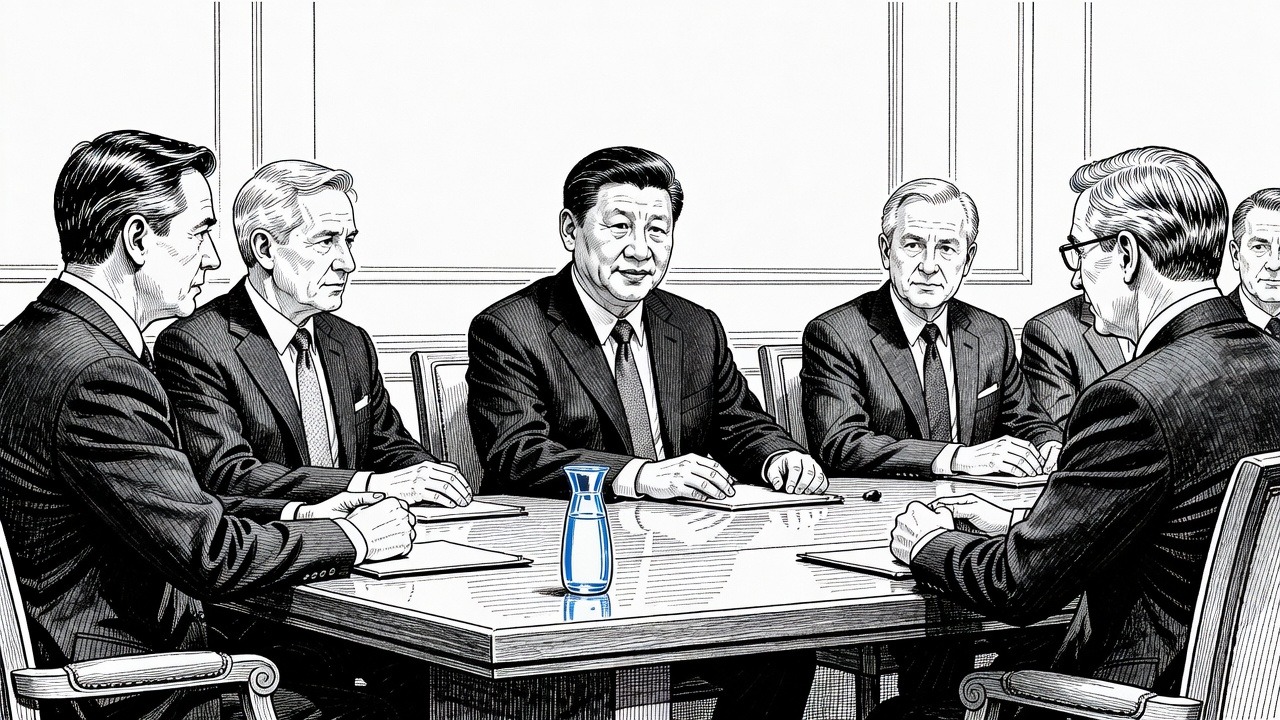
Trump has never shown reverence for that principle, or for any principle that can't be priced. He treats Taiwan the way he treats NATO, Ukraine and the Kurds: as an asset on a balance sheet, valuable until a better offer arrives. He has complained that Taiwan "stole" America's chip business. He has floated tariff relief and trade purchases as the currency of his China diplomacy. When a president who thinks this way sits across from Xi Jinping and walks out with Beijing saying "he said the words," the right reaction is not relief. It is to ask what was traded for them, and who was in the room to object.
Not the Taiwanese. The Taiwan Affairs Office also demanded that the Democratic Progressive Party "abandon the pursuit of independence." Think about that sentence. The DPP is not a rebel faction. It is a governing party that won free elections in one of the few real democracies in East Asia, one that legalized same-sex marriage before any other Asian society, and where the opposition can win and does. Beijing calls that "separatism." Strip away the euphemism and the demand is that 23 million people stop having a politics Beijing doesn't control.
This is where the Left should be clearest, and where too many Democrats have been mushy. Our case for Taiwan should not be Cold War nostalgia or a chip-supply spreadsheet, though both matter. It should be self-determination. A people's right to decide its own future, peacefully, without coercion, is not a conservative value or a Pentagon talking point. It is the principle we invoke when we criticize every other empire. We can't be anti-colonial in Gaza and Hong Kong and shrug in the Taiwan Strait because the villain is an inconvenient one.
Nor does defending Taiwan mean cheering for escalation. A left foreign policy should want less brinkmanship, not more: no reckless provocations, no arms-race swagger, and real diplomacy. But diplomacy means more than trading away an ally's standing for a pause in tariffs that Trump himself created. Trade wars have already cost American farmers and manufacturers real money. Making Taiwan the sweetener for a deal to fix a mess he made is the worst kind of governing: invent the crisis, then sell off someone else's security to end it.
Congress should demand a full, on-the-record US account of what was said in that room. Not a Beijing press release, not a Truth Social post. Democrats should insist that the Taiwan Relations Act and the Six Assurances are law and commitment, not bargaining chips a president can quietly shave down. If Trump truly changed nothing, he can say so plainly. His silence, or fuzziness, is the tell.
Peace in the Strait depends on predictability. Nothing is less predictable than a president who sells what isn't his.
How it may affect me
Taiwan makes the vast majority of the world's most advanced semiconductors, which power phones, cars, medical devices and AI hardware. Any deal or crisis that destabilizes the Strait could mean higher prices and shortages for American consumers, plus more tariff-driven cost increases on goods tied to China trade.