When politicians say they want to "restore order" in the West Bank, ask who removed it, and who still holds the keys.
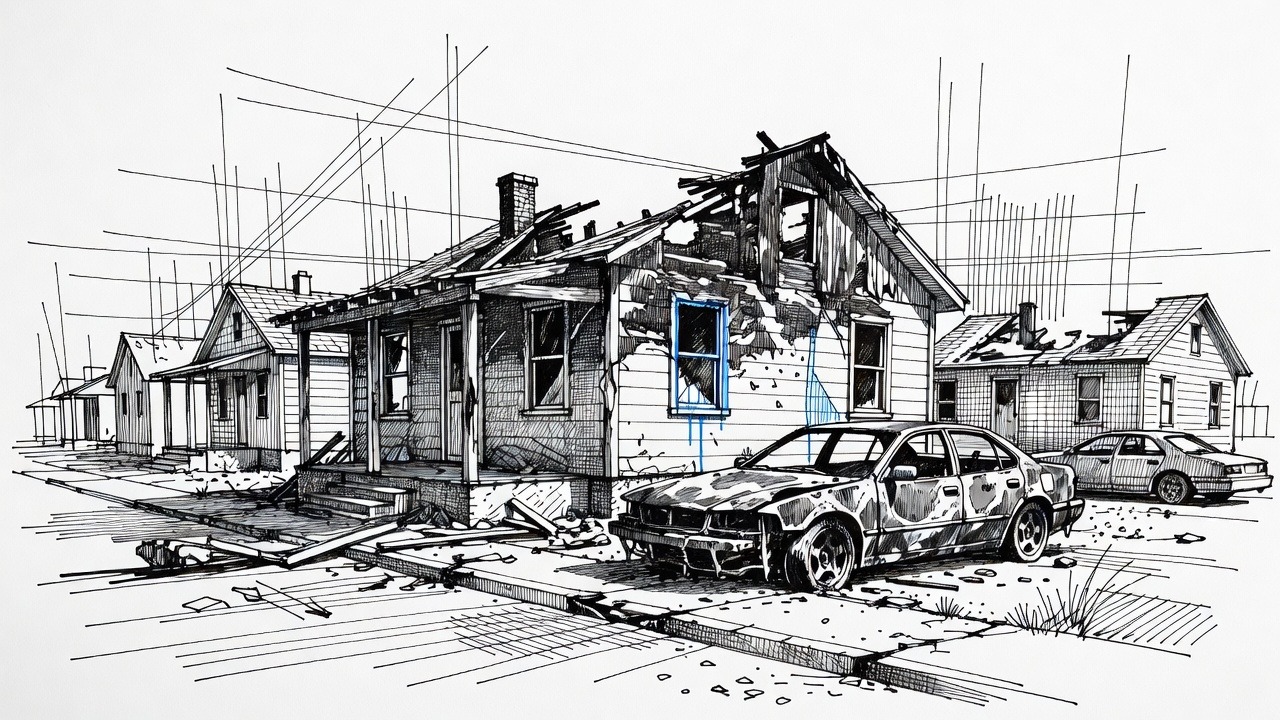
The story is simple. Palestinian homes and cars are burned, and graffiti is sprayed on the walls of people who live under military law. Police say they are investigating. An opposition leader demands arrests and blames the government. Someone else suggests coalition negotiators should make order an "agreed priority." Everyone sounds concerned. Almost no one says the obvious: this violence is not a breakdown of the system. It is what the system has produced.
Start with enforcement. Yesh Din, the Israeli rights group, has tracked investigations of Israeli violence against Palestinians for years. Its data shows the great majority of complaints end with no indictment, and only a small fraction end in conviction. Israel's own security establishment has said openly that Jewish extremist violence in the West Bank is a serious problem. Huwara in 2023, when a senior Israeli general called what happened a pogrom, was the clearest warning. It did not change the pattern. Palestinians file complaints and watch nothing happen. Settlers watch the same thing. They are not confused about what that means.
Then look at who holds power. Itamar Ben-Gvir, a man previously convicted of supporting a terrorist organization and inciting racism, runs the national police. Bezalel Smotrich holds authority over civil administration in the West Bank, and he has said plainly that his aim is to entrench settlement and block a Palestinian state. The government ended the use of administrative detention against settlers, a tool Israel uses routinely against Palestinians. When Washington sanctioned violent settlers under Biden, one of Trump's first acts in office was to scrap the sanctions. Every signal told the arsonists the same thing: the risk is low, and the people in charge are on your side.
So Eisenkot is right to blame Netanyahu, but the blame needs to go further. It is not enough to condemn the fires. Say the price. A government that depends on Ben-Gvir and Smotrich cannot be trusted to police the people who share their project. Asking coalition negotiators to treat order as a "priority" is like asking an arsonist's landlord to take fire safety seriously. Priorities are not the issue. Who controls the police, the army's rules of engagement and the prosecution file is the issue.
The strongest counterargument deserves a hearing. Israelis have suffered real terror, and many in the West Bank feel abandoned by a state that cannot keep them safe. Most settlers do not burn anything, and Israeli officials do condemn the worst attacks. All true. None of it answers the point. A state that claims sovereign control over a territory is responsible for protecting everyone in it, and the Palestinians in that territory have no vote in the government that rules them. Security for one group cannot depend on impunity for the other.
The opposition should also hold itself to a harder test. Condemnation is cheap in an election season. If the center-left wants credit, it should commit now to specific things: removing police authority from anyone who excuses settler violence, restoring administrative detention and prosecution for Jewish extremists on the same footing as everyone else, and compensating the families who lost homes and cars. Otherwise the next round of fires will be met with the same statement, and the same investigation that goes nowhere.
The word "unrest" lets everyone off the hook. It sounds like weather. These fires were set by people, in places where they expected not to be punished, under a government that taught them to expect that. Order will not return through appeals to coalition goodwill. It will return when the people who burn Palestinian homes are arrested, charged and convicted, and when the officials who looked away pay a political price.