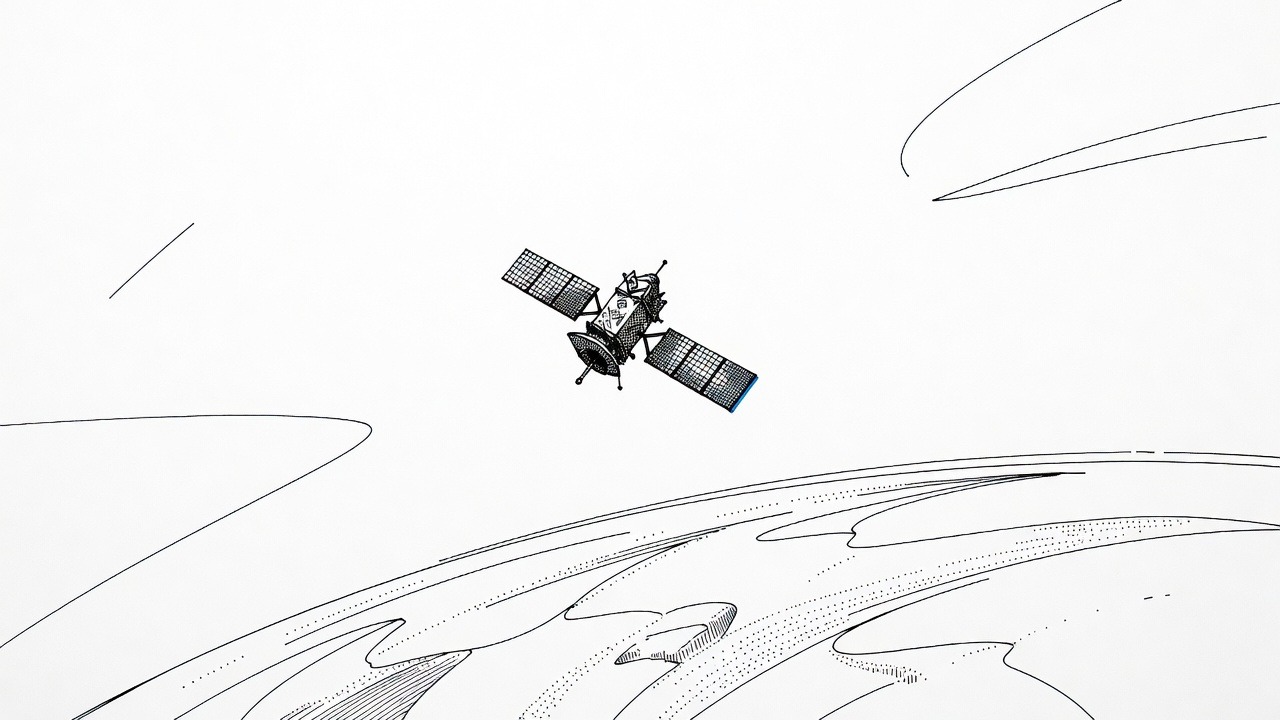
Let's start with what we don't know, because the Left has earned that caution. Intelligence assessments are not proof. We were once told about weapons in Iraq with the same grave confidence. Nobody outside the classified rooms can say whether Sputnik-S carries a live warhead, a dummy, or a bargaining chip. Anyone who tells you they know is selling something.
But skepticism about the evidence cannot become indifference to the pattern, because the pattern is not hidden. In 2024, Russia vetoed a U.N. Security Council resolution that did nothing more than reaffirm the Outer Space Treaty's ban on nuclear weapons in orbit. That ban is among the oldest and least controversial rules of the nuclear age. Moscow says it has no such plans. Then why veto a sentence that costs an innocent party nothing? A government that wants to keep a door open does not usually vote to take the lock off.
If the reporting is right, the target is not an enemy capital. It is the shared sky. A nuclear detonation in low-Earth orbit would not neatly delete a few military satellites. The radiation and electromagnetic pulse would spread and degrade or kill satellites indiscriminately, including the ones that run GPS, weather forecasting, bank settlements, crop monitoring, disaster response, and the phone in your pocket. The people with the least ability to absorb that damage are not generals. They are farmers who depend on satellite data, patients in rural clinics, and workers in every country whose paychecks move through systems that assume orbit is safe. This is a weapon that holds the global commons hostage.
The Kremlin bears the primary blame. Putin has turned nuclear threats into a routine instrument of coercion, using them to wrap a brutal war of aggression in impunity. That should be said plainly and without the reflexive both-sides throat-clearing.
But a serious Left does not stop there. It asks why the guardrails are failing at the moment we need them most. The last U.S.-Russia limit on deployed strategic arsenals, New START, was due to expire in February 2026, with no successor in sight. Donald Trump has talked about resuming nuclear tests. Washington's own plans for a space-based "Golden Dome" missile shield involve putting interceptors in orbit, which every rival will read as a step toward weaponizing space, and which will give Moscow and Beijing a ready excuse for whatever they build next. Each side points to the other's worst move to justify its own. Meanwhile defense contractors, who profit on both sides of every arms race, are the only reliably happy parties.
This is also a test for Democrats, who are tempted to treat any Russia story as a chance to sound tougher than Republicans. Toughness is cheap. What's scarce is the boring, unglamorous work: arms control talks, verification regimes, allied coordination, and a diplomatic corps that hasn't been gutted. Republicans who spent years praising Putin's "strength" and undermining NATO now want credit for alarm. Democrats who answer with a bigger budget and no strategy will have learned nothing from the last twenty years of forever-war politics.
What should happen? Washington and its allies should demand that Russia say, on the record, whether this satellite carries a nuclear device, and should take the question back to the U.N. with every government that depends on orbit, including China and India, which have as much to lose as anyone. They should pair public pressure with an offer to negotiate limits on all weapons in space, ours included. And they should say clearly that placing a nuclear weapon in orbit would end any pretense that Russia is a responsible steward of the arms-control order it helped build.
The Outer Space Treaty was signed in 1967, at the height of the Cold War, by governments that despised each other and still understood that some places must remain off-limits. If we cannot defend that modest idea now, we are not living in a new era of strength. We are living in a very old era of recklessness, with far more to lose.
How it may affect me
A nuclear detonation in orbit would threaten GPS, satellite communications, weather data and payment systems, which touch everyday life from navigation to banking. Nothing changes today, and the intelligence is unconfirmed. If the launch happens, watch for disruptions to satellite services and for rising defense spending and arms-race rhetoric.