Let's dispense with the lazy version of this argument first. Russia invaded Ukraine. Lithuania sits beside Belarus and the Kaliningrad enclave, and no Lithuanian needs a lecture from a Western leftist about whether the threat is real. A German brigade in Vilnius's neighborhood is a promise of solidarity, and a left that can't say so has forgotten what internationalism means.
But a good cause is not a blank check, and what happened at Rudninkai deserves more scrutiny than it will get.
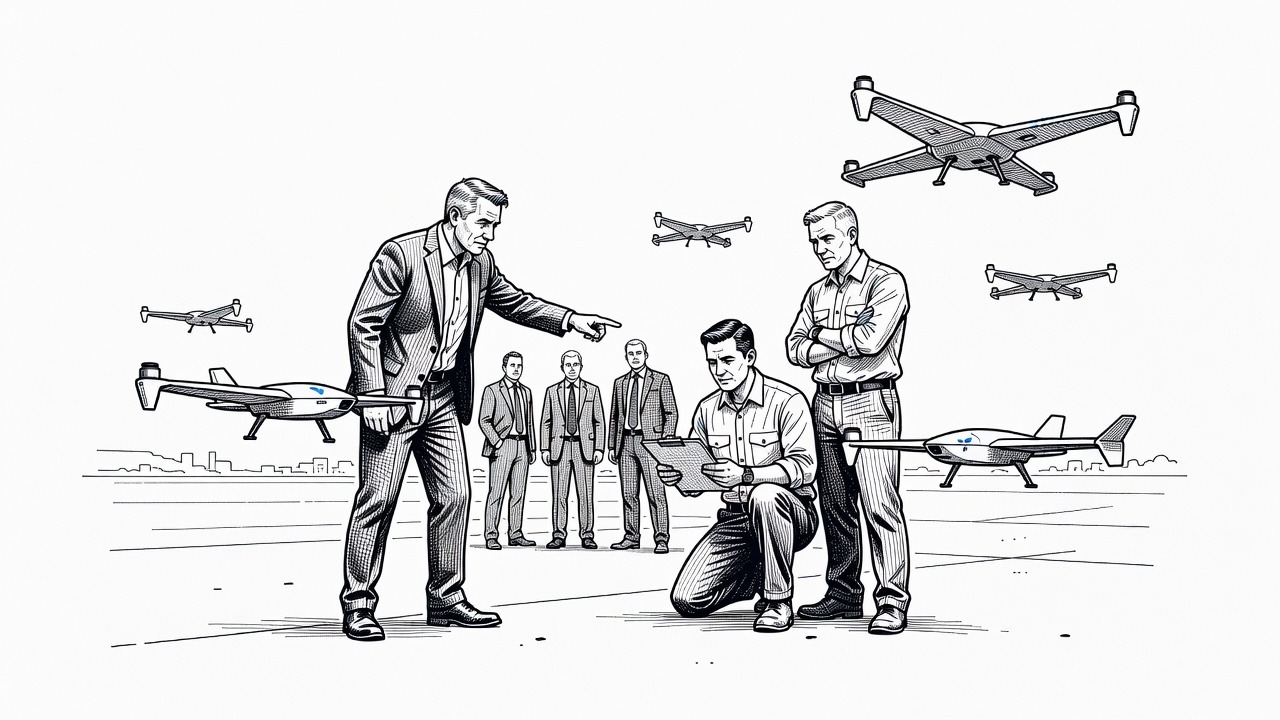
General Freuding watched strike drones from Helsing and Stark, and Helsing's Clarity software, which uses AI to fuse satellite, drone and sensor data and recommend courses of action. Look at who is on the other side of that handshake. Helsing is a venture-funded company, valued in the many billions, backed by tech money. Stark has drawn investment from Peter Thiel's Founders Fund. These are not arsenals of democracy. They are startups whose growth story depends on Europe staying frightened, and whose investors want the Bundeswehr as a permanent customer.
This is how it goes. Berlin spent decades telling its citizens there was no money. Then Germany carved defense out of the debt brake, the same constitutional rule that has starved rail, schools, bridges and housing for years. Suddenly the money exists, as long as it is spent on things that explode. The Left has fought for a decade to prove that fiscal limits are political choices, and the government just proved it for us, in the one direction where the choice never gets debated.
The larger problem is the software. An AI tool that "recommends courses of action" sounds like an administrative convenience. In war it is the first draft of a decision about who gets killed. Once a private company's proprietary model frames the options, the commander still signs off, but the menu was written elsewhere. Humans technically remain in the loop, but a human approving the fifteenth machine recommendation of the afternoon is not exercising judgment. He is providing a signature, and the company providing the system will treat its inner workings as a trade secret.
This is where the Left has something to say that the Right, with its worship of private innovation, cannot. Public money is building this capability, and the public should own what it builds: the code, the data, the audit rights. Germany should not rent its kill chain from firms that may be acquired, may chase export markets with looser scruples, or may simply fail. It should not create another defense contractor class whose first loyalty is to its cap table. We learned in Iraq what happens when war becomes a revenue stream. We should not relearn it in Brandenburg.
There's also the history, which Germans of all people should handle with care. This will be the first permanent stationing of a German combat brigade abroad since 1945. That may be right, and the Baltic states asked for it. But it deserves open parliamentary debate about its aims, limits and exit conditions, not quiet drone demonstrations followed by a procurement announcement.
The demands are not exotic. Binding human control over any lethal decision. Public disclosure of contract terms. Public ownership of the intellectual property paid for by taxpayers. And an end to the double standard that finds hundreds of billions overnight for weapons while insisting a school roof is unaffordable.
Defending Lithuania is a legitimate duty. Turning that duty into a startup subsidy with an algorithm attached is a choice, and nobody voted for it.