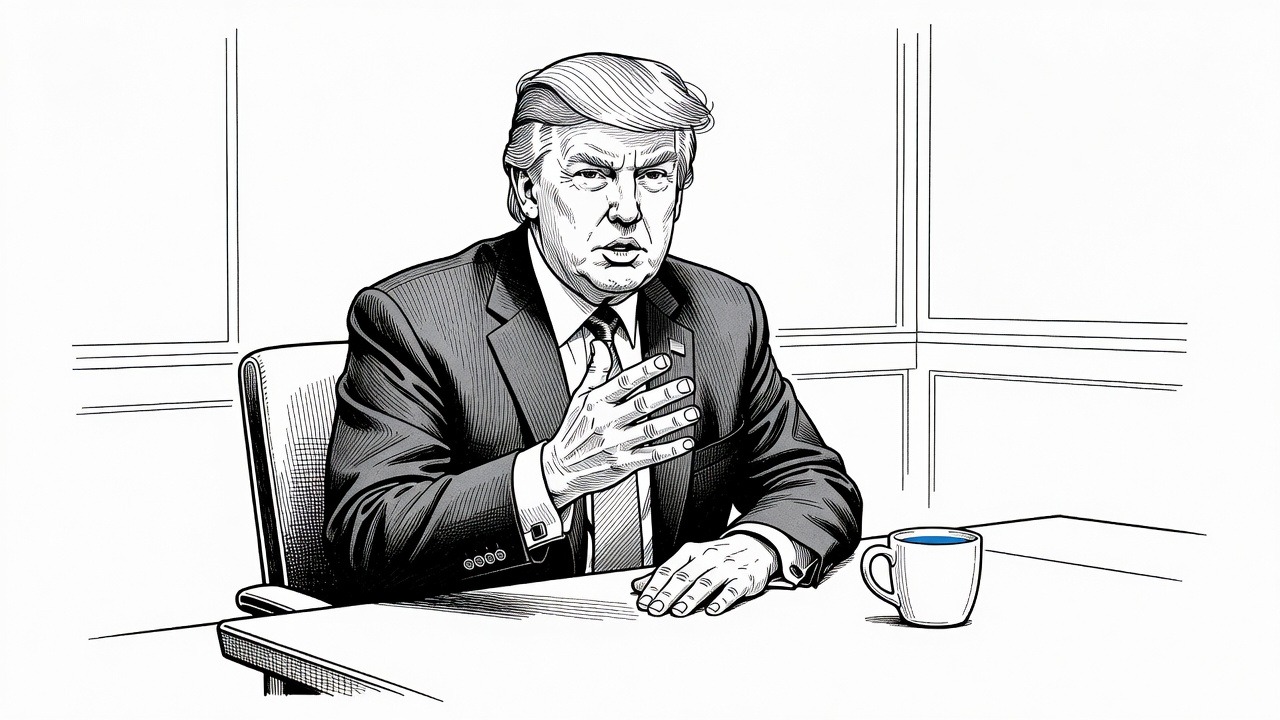
A president who announces, in the vocabulary of a landlord threatening eviction, that he may bomb a country of 90 million people "after the New Year" is not conducting diplomacy. He is setting a calendar for a war and inviting the rest of us to wait for it.
Look at the sequence. Trump accuses Iranian negotiators of stalling. Iran says it is keeping channels open through Qatari mediators to see whether diplomacy can work. One side is talking about a deadline and the other about a process. If the only acceptable result is the one Washington has already scripted, a negotiation is just a countdown.
The history matters here. The 2015 nuclear deal put Iran's program under the most intrusive inspections ever negotiated. Trump tore it up in 2018 and promised a better one. What followed was more enrichment, less visibility, and last summer's strikes, which were sold as having "obliterated" the program. If that were true, there would be nothing left to bomb next year. Either the earlier claim was a lie or the new threat is a bluff, and neither is a sound basis for sending Americans into harm's way.
Then there is the question almost no one in Washington wants to ask: who authorized this? Not Congress. The Constitution gives Congress the power to declare war, yet the practical rule is now that presidents may bomb whomever they like if they describe it as limited. Trump is stating an intention to launch another round of hostilities, and the legal justification is his own mood. Republicans have largely made peace with that. Plenty of them used to lecture Democratic presidents about congressional war powers, and now they treat the war power as a personal prerogative that happens to belong to their guy.
Democrats should not feel superior. Too many of them hide behind statements of "concern" and "urging diplomacy" while avoiding a recorded vote on war powers. Concern costs nothing. Force a vote, make every member say yes or no on another Middle East war, and let them explain it to constituents who remember Iraq. If the party cannot manage that, it has no standing to complain when the next escalation arrives.
The Houthi claim to have struck Saudi Arabia's Rabigh refinery shows what an Iran war would actually look like. The Saudi-led coalition says it intercepted a drone, so the Houthi claim is unverified. The point stands anyway. This region is a tangle of proxies, pipelines, shipping lanes and grudges. A strike on Iran would not stay contained in Iran, and the people who pay first will be the ones with the least say: Gulf migrant workers, Yemeni civilians already living in a catastrophe, U.S. troops on exposed bases, and Americans at the gas pump.
The hawks will say that Iran has had decades of chances, that it funds militias and that it cannot be trusted. All true, and none of it answers the question. Does another round of bombing produce less enrichment, more inspections and a safer region, or does it harden the argument inside Tehran that only a bomb guarantees survival? Strikes can set back a program. They cannot erase the knowledge behind it, and they tend to convince a government that it should never have trusted anyone at the table.
The real alternative is dull, slow and unglamorous: verification, sanctions relief tied to concrete limits, regional security talks, and a president willing to take yes for an answer. It will not make good television. It also does not end with flag-draped coffins. If Trump wants a deal, he should negotiate one. If he wants a war, he should come to Congress and say so.
How it may affect me
A wider conflict involving Iran, the Houthis and Saudi energy sites could raise oil and gasoline prices, disrupt shipping through the Red Sea and Gulf, and increase risks for U.S. troops and contractors in the region. Energy markets tend to react to threats before any strike happens.