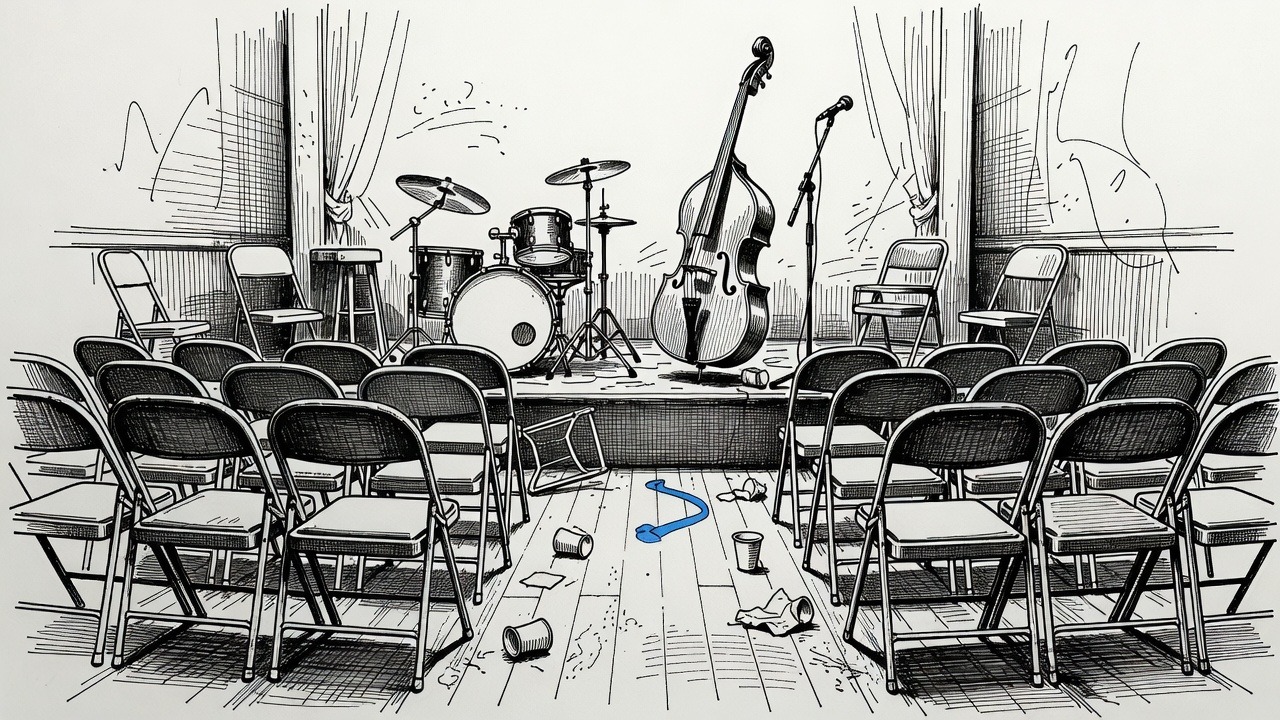
Nine people shot at a party. A 26-year-old with a bullet in his chest, fighting to live. Two more on operating tables. Others driven to hospitals by friends and relatives because waiting for an ambulance felt like a luxury. If this had happened at a suburban mall or a college campus, we would be in day three of wall-to-wall coverage. Because it happened in Strathmore, a small, mostly Latino farmworker community in the Central Valley, it will be a brief item on the way to the weather.
That gap in attention is the story.
Notice the word police reached for early: gang activity. It may be true. Investigators know things we don't, and so far no suspects and no arrests. But "gang-related" works as a moral off-ramp. It tells the rest of California that this was them, over there, a private feud among people who chose their risks. The word asks for no sympathy and promises no follow-up. Meanwhile, 150 people came to a music party on a Saturday evening, and some were presumably just there to dance, eat and see their neighbors. Nobody at a party is a statistic until the shooting starts.
Strathmore is a small community that lacks the things that make a place hard to ignore: a deep local tax base, a loud press corps, a council with the clout to demand answers, and the money for a rec center, a late-night youth program, or a safe, licensed place for 150 people to gather. It sits in Tulare County, one of the poorest counties in California, where the people who pick the state's fruit often live in its worst-served places. Young people there are told to find something to do and then policed when they find it in a field, a backyard or a rented lot. Informal parties are what you get when formal ones don't exist.
Some on the Right will say this is about gangs and enforcement, and that more deputies and tougher sentences are the answer. Enforcement matters, and these victims deserve arrests. But Tulare County has never lacked for law enforcement. It has lacked everything that comes before the sheriff: jobs that pay, places to go, trauma care within quick reach, schools with counselors, and political power. Deputies arrive after the shots. They can't be the whole social policy of a county.
And Democrats should not get a pass. Sacramento loves to brag about having some of the toughest gun laws in the country, and those laws have done real good. But a press release about a statute is not the same as showing up in Strathmore. If a party of 150 people can end with nine wounded, the state needs to ask hard questions about how guns are still flowing into these communities, why violence-intervention money so often lands in big coastal cities while Valley towns get promises, and why the people with the least political leverage get the least protection. A progressive state that treats rural brown California as a rounding error has not earned its self-image.
The answer isn't mysterious, only expensive and unglamorous. It means funding community violence intervention outside the big metros, serious trace-and-prosecute work on trafficked firearms, trauma and emergency capacity for rural counties, and real investment in the kids who are told they are the problem. Do that before the next party, not after.
A 26-year-old may die. Eight others will carry this for life. The question isn't just who pulled the trigger. It's why we keep acting surprised, and why the surprise fades so quickly when the victims are from places like Strathmore.