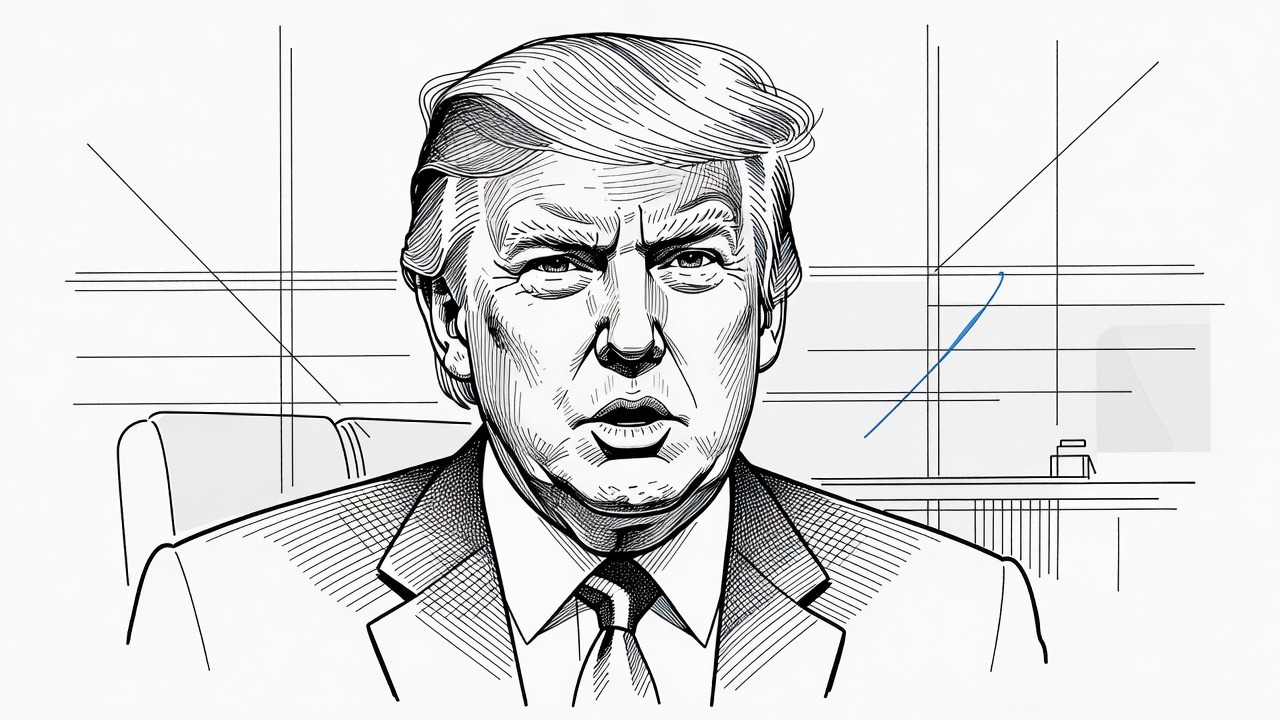
President Trump says he is "displeased" that someone broke into the FBI's National Crime Information Center. That is the whole policy response so far, and it tells you a lot.
We don't yet know who got in, what they touched, or how. The most important fact in the story is a negative: no indication, yet, that records were altered. Retired agent Jason Pack is right that accuracy matters, but he framed it as officer safety. It is also civilian safety. NCIC is the system an officer consults at a traffic stop, and it decides whether the person at the window is treated as a motorist or a threat. A hacker who can read the database has stolen secrets. A hacker who can write to it can add a warrant, delete a protection order, flag an innocent person as armed and dangerous, or let a dangerous one pass as clean. In that second case, the person who pays is someone in a car at night with a hand on the glovebox.
The database was already flawed before any intruder arrived. NCIC has a long record of stale, wrong or mismatched entries. People have been handcuffed, jailed or held at gunpoint because of a cancelled warrant that was never cleared or a stolen-car flag that outlived the theft. Ordinary people have almost no way to see their entries, much less fix them. We built a system whose errors land hardest on those with the least ability to contest them, and we told ourselves it was safe because it was official.
Now look at who is in charge of the fix. This administration has spent its time in office purging experienced FBI agents for political reasons, gutting the civilian cyber agency meant to help defend federal systems, and treating sensitive government data as something to be pooled and opened up for its own priorities. It has also pushed to fold immigration enforcement into the same infrastructure, including reported efforts to load civil immigration records into NCIC. Every expansion of what the system holds and who uses it raises the stakes of a breach. Officials who tell us they can be trusted with ever more data should have to show they can protect the data they already have.
There is a fair counterargument, and it deserves a hearing. Foreign and criminal hackers target federal systems no matter who is president, and no administration has a perfect record. That is true. It is also why the Left has argued for years that sprawling, centralized databases are liabilities as well as tools. The honest conclusion is that holding more data than you can secure is a policy choice with victims. It is not an act of God.
So here is what Congress and the public should demand, with no patience for "displeased":
• A full account of what was accessed and whether anything was changed. • An independent audit of NCIC's record integrity, not just its perimeter. • Notice and a real correction process for people whose records are wrong or exposed. • Hard limits on adding new categories of data, especially civil immigration records, until the system is shown to be secure.
Law enforcement says over and over that it needs accurate information to do its job safely. Believe it, and then act like it. Accuracy is a public good, and it has to be protected with staff, oversight and humility, not press-conference irritation. If this White House wants to be the law-and-order administration, it can start by securing the machine that law and order runs on.
How it may affect me
NCIC feeds background checks, traffic stops and warrant lookups nationwide. Nothing suggests ordinary people's records have been changed, but if you've ever been wrongly flagged, ask the agency that entered the record to correct it. You can also request your own FBI identity history summary through the FBI's website to check for errors.