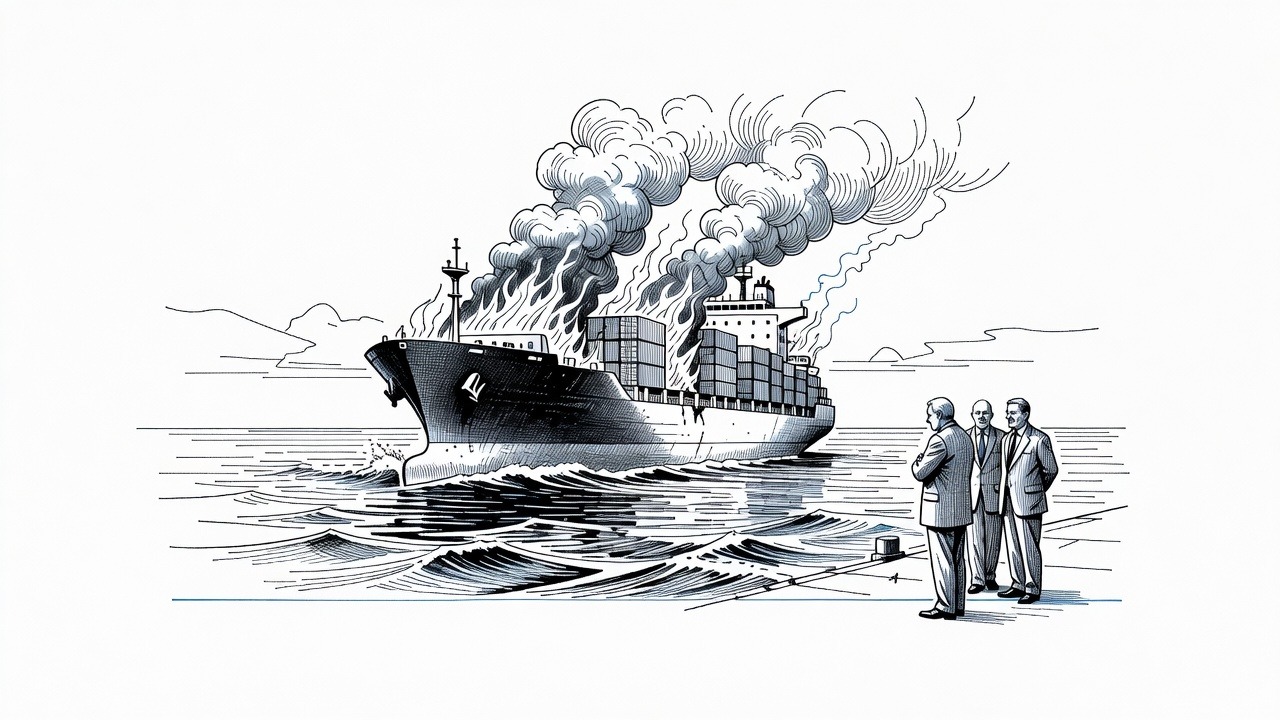
Let's get the math out of the way, because the funny version of this story is the lazy one. Forty-eight thousand sandwiches a month sounds like gluttony. A carrier carries roughly 5,000 people. That works out to about ten a month each, one every third day. Nobody should mock a sailor for grabbing a crustless PB&J at 3 a.m. between watches. It's shelf-stable, it's fast, and it tastes like being nine years old. Good for them.
The story is not that sailors like Uncrustables. The story is why the Chief of Naval Operations is publicly musing about them as a way to "sustain personnel."
That phrase tells you something. Here is a Navy asking people to live and work on a steel island for eight or nine months at a stretch, as the Red Sea deployments did. It is also a Navy that, in recent years, has had to reckon with sailors' complaints about galley hours, food quality, and the toll of the work on their mental health. Pentagon surveys have found roughly a quarter of troops reporting some food insecurity. In that setting, a frozen sandwich becomes a morale policy. The admiral isn't wrong to want sailors fed. He is revealing how thin the margin has become.
Then there is the other number in this story: Smucker says its military sales are up 60% in a year. Somebody is doing very well out of troops' appetite for convenience. That's not a scandal in itself. A company sells a popular product. But it's a useful reminder of how the defense economy actually works. Money flows reliably to suppliers, and the person at the end of the chain gets whatever the supply chain was built to deliver. When a service is stretched on time and on hands, the cheap grab-and-go option fills the gap, and a vendor's quarterly report records the gap as growth.
Meanwhile, the same political class that gets teary about "supporting the troops" has spent years stuffing the Pentagon with a budget approaching a trillion dollars while the department has never passed a clean audit. Washington can find money for the next hull, the next missile, the next consulting contract. Yet quality of life, meaning food, housing, childcare, pay that doesn't push junior enlisted families toward SNAP, is treated as an afterthought, a morale problem to be managed with branding and goodwill. Republicans who wave the flag hardest mostly vote for the platforms, not the people. And Democrats too often wave through the toplines because they fear looking weak, rarely asking what the people inside the machine are living on.
The Left should say this plainly, without condescension. The people who crew a carrier are overwhelmingly young, working-class, and doing a brutal job on behalf of the rest of us. They are not a prop for patriotic speeches. They are workers, with a workplace that has no weekends, no union, and no exit during a deployment. Respecting them means treating their daily conditions as a serious budget item rather than a heartwarming anecdote.
So yes, Admiral, buy the sandwiches. Nobody serious objects. But if the best story the Navy can tell about sustaining its sailors is a snack, then the real question is what else it's asking them to run on. A Navy that wants to retain sailors should hire the cooks, shorten the deployments, and pay people enough that nobody has to treat a PB&J as a meal plan. Do that first. Then we can all enjoy the joke.