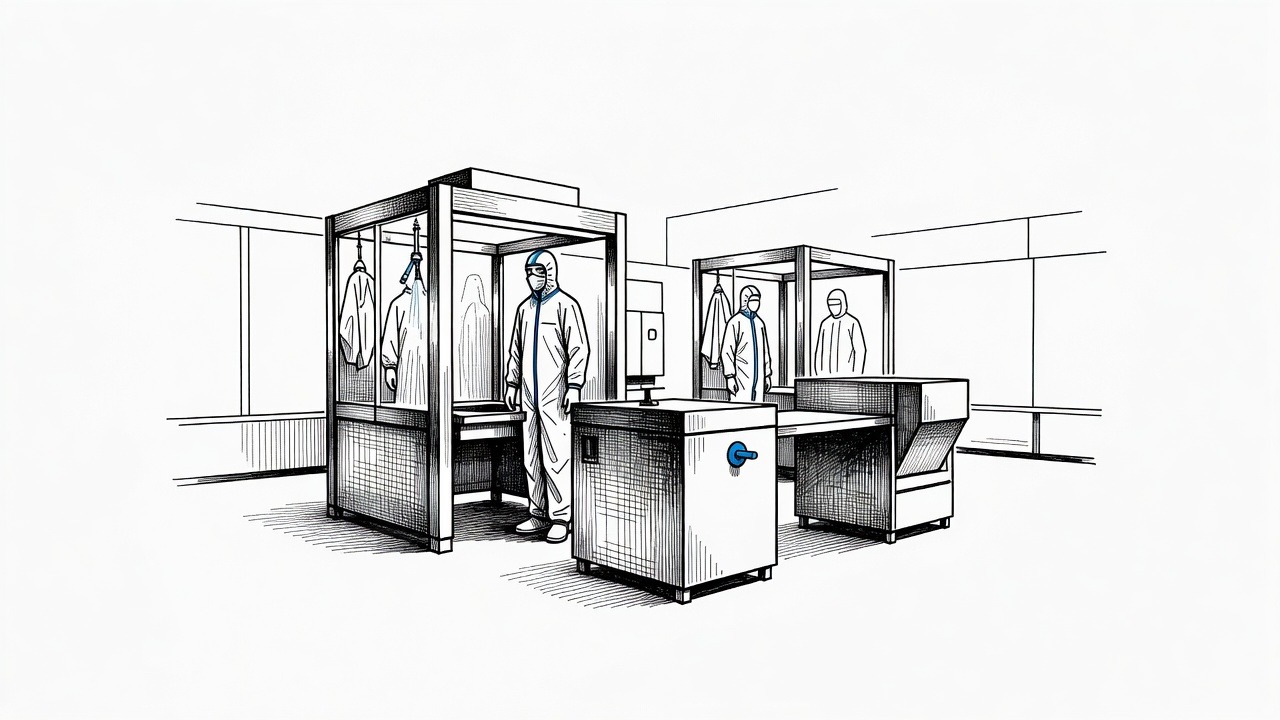
Read the story closely and notice how little it contains. The chief of staff says the military is preparing for the *possibility* that Iran could obtain unconventional weapons. He says forces are monitoring and making preparations. No specific weapon is named, no intelligence is cited, and no timeline is given. What we get is a mood, followed by a useful explainer on atropine and decontamination.
Let me be fair to the mood first. Civil defense is not warmongering. Teaching medics to treat nerve-agent exposure and telling families to seal a room is what a government owes people who live under threat. Israelis have real reasons for fear, and they should have shelters, drills and doctors who know what they're doing. Any American who has watched their own government fumble basic emergency preparedness should be able to admire that.
But "unconventional weapons" is an elastic phrase. It bundles chemical, biological and nuclear threats into one dread-soaked category, and it has a history. We have heard "possibility" before. In 2002, the possibility of Iraqi weapons became a certainty on cable news, and hundreds of thousands of people paid for the difference. The Left's memory of that is not nostalgia. It is a standing rule: when officials talk about what an adversary *could* obtain, ask what they want the public to do with that fear.
Here the question is especially pointed, because the one arrangement that actually constrained Iran's nuclear program was destroyed on purpose. The 2015 nuclear deal put Iran's enrichment under the most intrusive inspections ever negotiated, and the IAEA repeatedly certified compliance. Benjamin Netanyahu campaigned against it. Donald Trump withdrew from it in 2018, and the "maximum pressure" that followed did not produce a better deal. It produced higher enrichment and fewer inspectors. Those who spent years sabotaging verification now cite the resulting uncertainty as grounds for alarm. That is a fire code written by arsonists.
The Democratic establishment deserves its share of blame. Too many party leaders treat any Israeli security claim as self-validating, and they rarely ask what policy is being built on top of it. Supporting Israel's right to defend its people is not the same as signing blank checks for open-ended escalation. Real friends ask hard questions. Is the threat specific? Is diplomacy being foreclosed? Who decides when "preparation" becomes "pre-emption"?
Then there is the question the explainer's neat instructions quietly raise: who gets to shelter? Israeli civilians have a Home Front Command, a national ambulance service and a number to call. Iranians, who would bear the consequences of any war, have no such guarantees, and neither do Palestinians in Gaza, who have spent years with no safe room, no reliable hospitals and nowhere to go. A moral framework that registers the terror of one population and treats the terror of its neighbors as background noise is not a security doctrine. It is an incomplete accounting.
The lesson isn't to dismiss the threat. It's to refuse the habit of letting vague threats do political work. If Israeli or American officials believe Iran is seeking chemical or biological capability, they should say what they know, brief Congress, and bring the evidence to inspectors and allies, not only to a fearful public. If the answer is to restore verification, that is a harder, duller and far cheaper path than another war sold on possibilities.
Protect civilians. Stock the atropine. But don't let the fear of what might exist become the permission slip for what we already know how to do: bomb first and discover the consequences later.