Here is what we know: Russian missiles and a suspected drone landed on the territory of a NATO member. Nobody was hurt. Everything else is a dispute over intent, and the most revealing voice in that dispute belongs to the man with the most power to settle it.
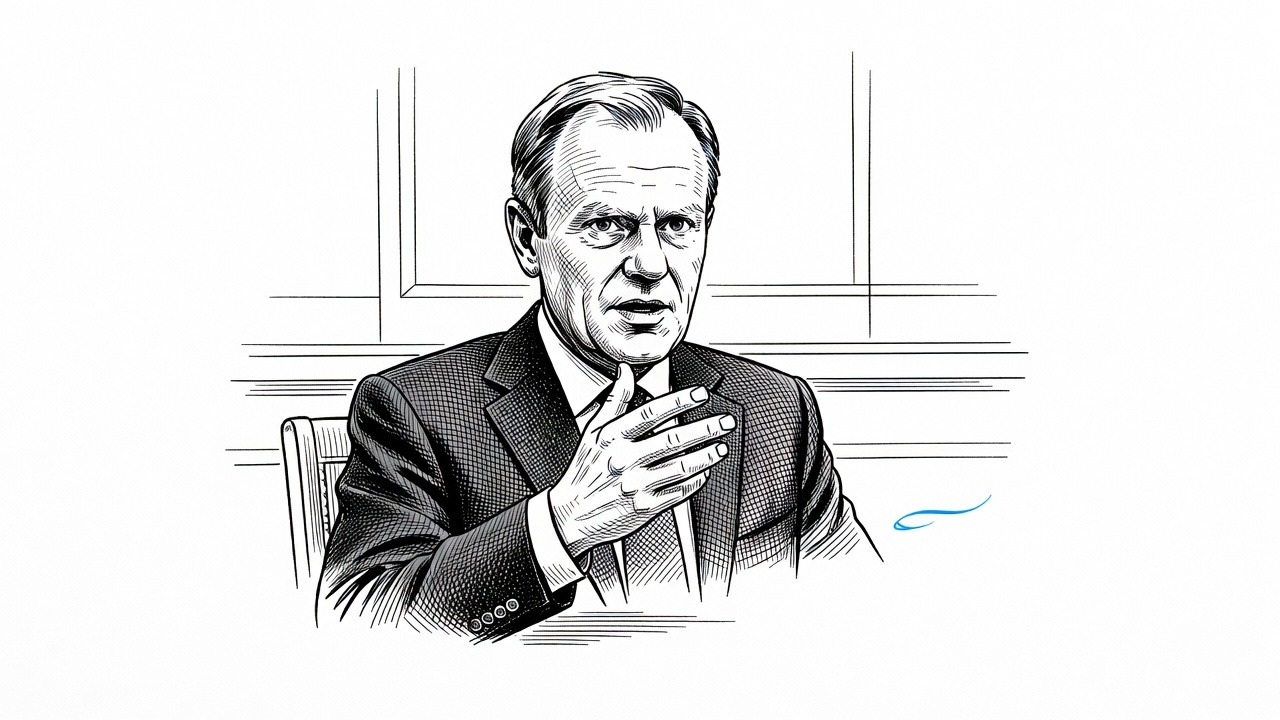
Donald Tusk calls it a deliberate provocation. Poland's defense minister points to nearby military exercises, which complicates that reading without erasing it. Mark Rutte calls it a serious violation of Polish airspace, which is simply true whatever the motive. Then there is Donald Trump, who announced that the missiles and drones fell in Poland by mistake.
He had no way of knowing that. No investigation had been completed. What he offered was a verdict, and it happened to be the one most convenient to Moscow.
The strongest counterargument deserves a hearing. Escalation is real. A president who responds to every stray munition with talk of Article 5 risks stumbling into a war with a nuclear power over a navigation error or a jammed guidance system. Tusk, a politician with his own domestic incentives, may be reading intent into chaos. Prudence is not appeasement, and a calm head in Washington is better than a hot one.
But Trump was not calm. He was certain, and certainty is a different thing. A leader who wanted to avoid a spiral could have said that the facts were being gathered, that the violation was unacceptable, and that the alliance would respond in proportion to what it learned. That language is cautious and still firm. Instead he handed Russia its defense before Russia had to make one.
Deterrence is a belief held in the mind of an adversary. Vladimir Putin watches how the United States reacts when his weapons cross into allied territory. Each time Washington shrugs, the lesson is that the line can be tested at almost no cost. If the Poland incidents are accidents, the cost of treating them seriously is a stern statement. If they are probes, the cost of excusing them is a war that grows. The risks are not symmetrical.
The politics here are rich in irony. Poland has become the model ally of the Republican imagination. It spends a far larger share of its economy on defense than most of NATO, buys American hardware, and pays its own way. This is the burden-sharing that Trump's movement has demanded for years. Poland did its part, and its reward is a U.S. president explaining away missiles on its soil.
The Left has its own work to do. Too many Democrats treat Ukraine as a reflex rather than an argument, and too many on the left flank mutter about "provocations" by NATO as though the aggressor were a bystander. The anti-war position is not to look away from a war being fought one province from a treaty ally's border. It is to end the war on terms that do not reward invasion, and that requires making Russian aggression expensive. Air defense over Ukraine, and over Poland's eastern edge, is cheaper than the alternative.
The working people who pay the bill if this widens are not in Washington or Moscow. They are in Rzeszów, Lublin and the border villages, where the drone landed. They are also the reservists and families anywhere an Article 5 promise could someday be called in. They deserve an alliance whose leader acts as though its commitments are real.
We may never fully learn whether this was malice, malfunction or the sloppy overflow of a brutal bombing campaign. We do know that how the West answers shapes what comes next. A serious country investigates, speaks plainly, and holds the violator responsible. A president who rules "mistake" before the evidence arrives has not shown restraint. He has chosen a side, and it is not the one that needs him.