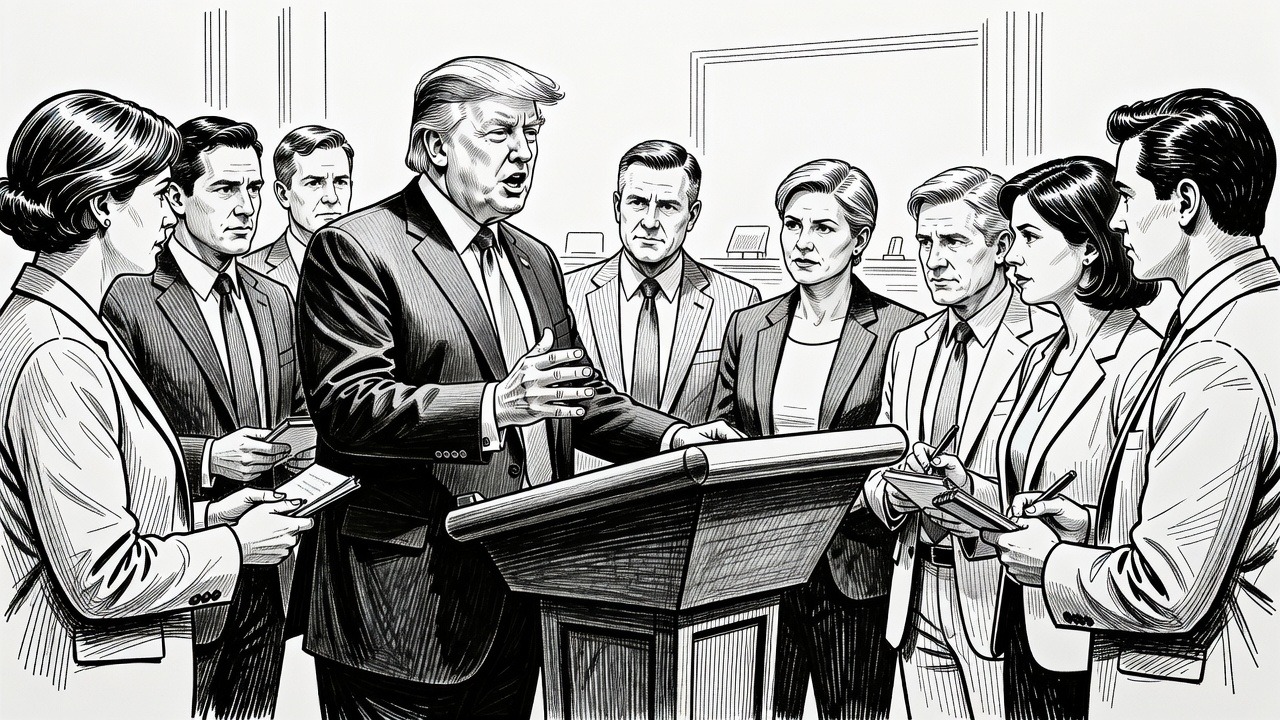
The most revealing moment in this White House briefing was not about Iran. It was about loyalty.
The vice president said the decision to strike Iran in February was the president's, and that his own job was to support him. Then he blamed the war for the Republican midterm losses, including the Senate, and called for it to end. The president said he wasn't displeased with the conclusion. What he wanted was for his deputy to say the strikes were necessary and that he'd do it again.
That is how a war looks when it is run as a personal brand. The country has absorbed the consequences of a military campaign, and the president's main concern is whether his subordinate will certify that he was right.
Credit Vance for one thing: he said out loud what a lot of Republicans have clearly been thinking. The war is a political albatross. But look at what moved him. It wasn't the legal question of who authorizes war, or the strategic question of whether this achieves anything. It was the election results. The case for ending the war, as he framed it, is that it cost his party the Senate. Voters, in other words, had to take away a majority before the people running this thing would admit the obvious.
The stated goal, preventing Iran from obtaining a nuclear weapon, is one nearly everyone shares. It is not a strategy. Trump tore up the 2015 nuclear deal in 2018, and Iran's enrichment expanded afterward. Last June, after U.S. strikes on Iranian nuclear sites, he said the program had been obliterated. If so, what did February accomplish? If not, what did June accomplish? The administration can't say the problem was solved and also that another war was essential, and then demand gratitude for both.
Then there's Congress. The Constitution gives it the power to declare war, and for decades members of both parties have treated that duty as optional, preferring to complain afterward. The Republican majority that sat through this decision now sees what it enabled. Its members mostly acted as an audience. If Vance is right that the war was a political disaster, that is an indictment of a party that handed a single man the power to launch it and then declined to ask hard questions until the polls answered for them.
Democrats shouldn't take much comfort here either. The midterm result is a repudiation of the war. It is not a plan. A party that wins on war fatigue and then goes quiet on war powers has learned nothing. The lesson isn't just that this president misjudged Iran. It's that any president, of either party, can start a conflict with a signature and a speech, while the people who will pay for it, service members, their families, and taxpayers, get no vote until the next election. Democrats should be writing binding limits on that power now, while Republicans are scared enough to listen.
Trump's demand that Vance affirm the strikes was necessary and that he'd make the same choice again is the tell. A leader confident in his judgment doesn't need his vice president to say so on camera. A leader who has lost the argument and the Senate, and can't stand it, does. Wars don't end when someone is proved right. They end when someone is made to answer for them.
Vance has now put on record that the war damaged his party and should stop. The country should take him at his word, and then ask why it took defeat for anyone in power to say so.