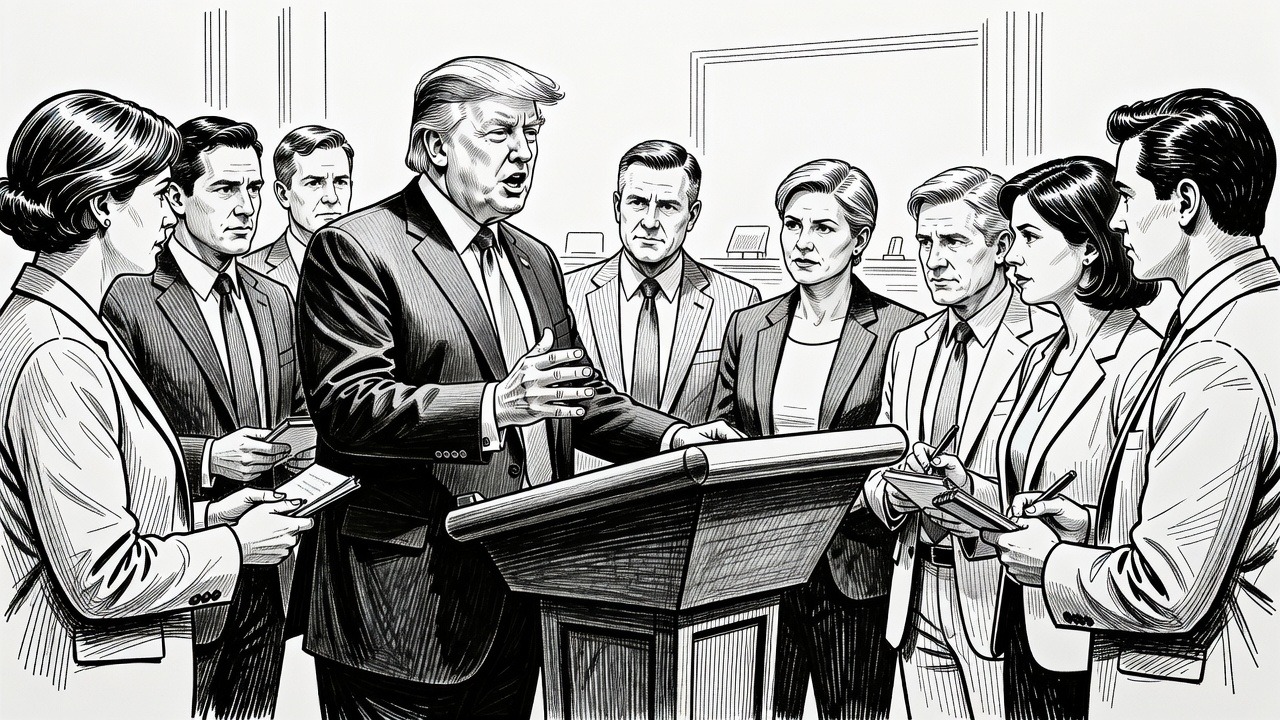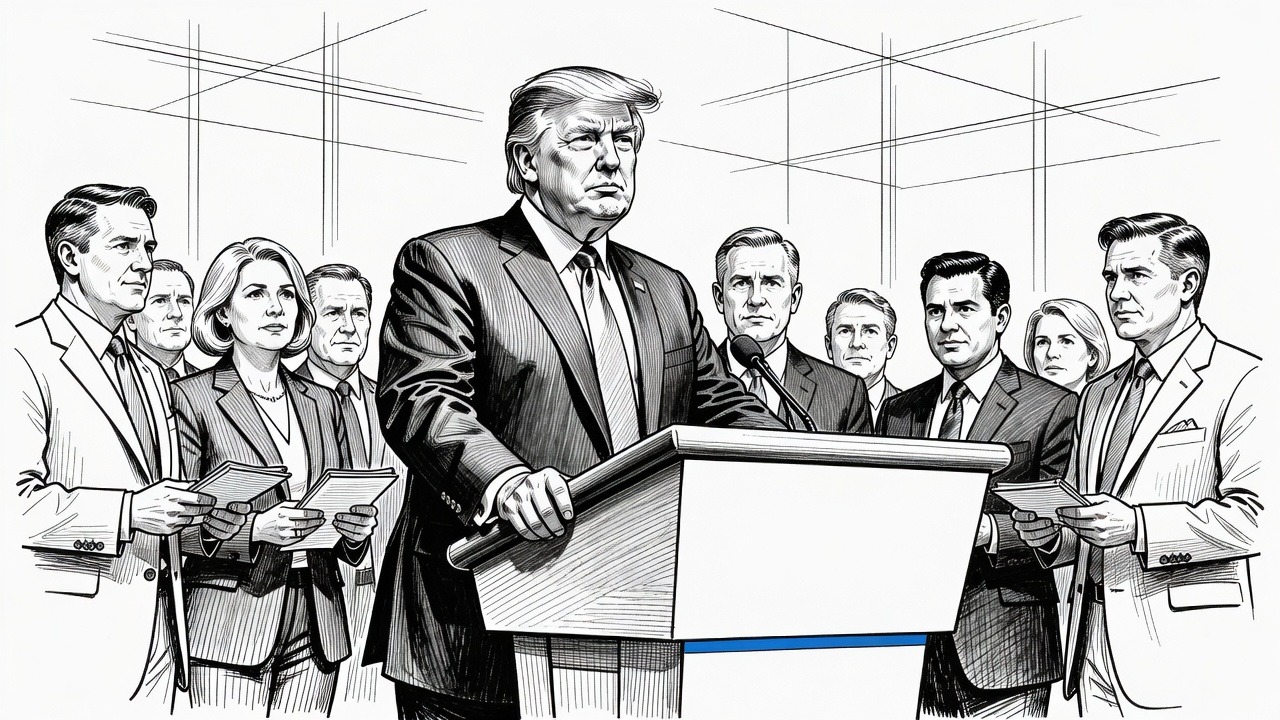
Watch how casually it was said. A president of the United States sits beside his vice president and his secretary of state, two men auditioning in public, and muses that the party might hold an open primary or might simply "unite behind a ticket." The reason for skipping the voting, he explains, is that it would save money for the general election. He also intends to stay engaged in the process.
That is not how a democratic party talks about choosing a leader. It is how a family business talks about succession.
Consider the candor of the thing. Primaries are the one point in American politics where ordinary partisans, not donors or consultants, get to decide who carries the banner. Trump frames them as a budget line, an inefficiency to be trimmed. The party's voters become a cost center. And the man who will decide whether they get a real choice is the one telling the world he plans to keep his hand on the scale.
Vance and Rubio have an obvious incentive to treat this as normal. Each is competing for one prize, and the donor is the judge. Neither will say that the rules of the contest should belong to Republican voters rather than to a 80-year-old president. Watch how they behave. That tells you more than any policy speech about what the party now rewards.
This is also the same man who has repeatedly toyed with the idea of a third term, despite the Twenty-Second Amendment, and who has left the topic just ambiguous enough to keep every ambitious Republican guessing. Ambiguity is power. A leader who might run again, or might bless a successor, or might hold a primary, keeps the entire party in a permanent state of deference. No one gets ahead of him. No one dares to build a base he did not approve. That is how a constitutional office gets turned into a throne with an expiration date that the occupant claims the right to negotiate.
Now the part my own side will not enjoy. Democrats have no standing to be smug about anointings. In 2024 a party that spent years assuring voters about the president's fitness then swapped nominees without a single primary vote cast for the replacement. We called it necessity, and maybe it was, but the damage to trust was real, and Republicans have never stopped using it. Every Democrat who now howls about Trump's succession theater should admit that we handed him a talking point. The honest lesson is not "our anointing was fine and theirs is a scandal." It is that both parties have grown comfortable treating their own voters as an audience.
The difference is in the design. Ours was a crisis that exposed a failure. Theirs is a plan. One party panicked its way into a shortcut. The other is openly proposing the shortcut as a virtue, with the sitting president as kingmaker and cost-savings as the cover story.
What should Democrats do with this? Not mimic it. We should make the opposite promise loudly and credibly: an open, contested, televised primary for 2028, with debates, no thumb on the scale from the donor class, and no pre-selected heir. The party that trusts its voters should say so, and mean it. If Republicans want to offer a coronation, let them. Voters can see the difference between a party that asks for their judgment and one that merely announces its decision.
Democracy depends on the habit of letting people choose. Every time a party skips that step because it is cheaper or tidier, the habit weakens. Trump just said, in plain English, that he finds it cheaper and tidier.