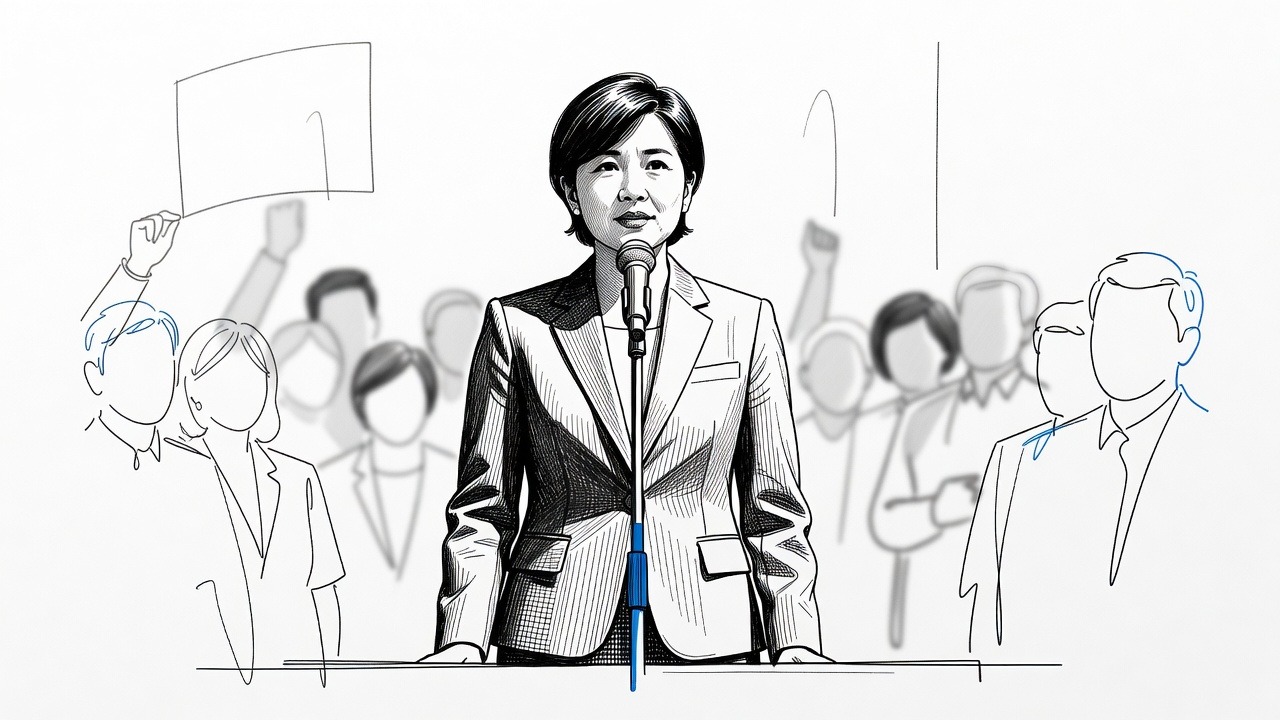
There is no dramatic line in this story. A vice president stood in a temple courtyard and promised buses, rail, senior benefits and help for small manufacturers. Cynics will call it routine campaigning. They are missing what a democracy under siege looks like when it works. Taiwan is defending self-rule against a neighbor that wants to abolish it, and the defense is made of mundane things: a bus line in Shengang, a subsidy for someone's grandmother, a factory retooling to survive.
That is the strongest case for the Democratic Progressive Party's pitch in Taichung. The Left in Taiwan should insist that sovereignty is not an abstraction defended only by warships and speeches. It is defended by a society whose people feel the state is on their side. A senior who keeps her health insurance subsidy and a small supplier who gets help moving up the value chain have a stake in the island's future. Patriotism built only on fear of Beijing is brittle. Patriotism built on a government that visibly delivers is not.
But the rally also exposed something the DPP should be embarrassed by. Hsiao urged supporters to canvass and push residents living outside the city to come back and vote. That sentence is not a get-out-the-vote slogan. It is an indictment. Taiwan still has no absentee voting for domestic elections. The young worker in Taipei, the factory hand in Hsinchu and the caregiver in Kaohsiung must travel to the place of their household registration or lose their voice. Those who can't afford the time, the fare or the unpaid day are quietly disenfranchised. It is a tax on mobility, and mobility is exactly what a modern working population has.
The DPP held a legislative majority for eight years, from 2016 to 2024. It can blame a hostile opposition now, but it had the votes then and did not make this a priority. A party that calls itself the guardian of Taiwan's democracy should not treat the hardest part of voting as a logistics problem for volunteers. If you believe every vote counts, you build a system in which people can cast one without a train ticket.
There is also something uncomfortable in the pitch that Taichung needs a mayor who will work with the central government. Politically, it is shrewd. Local officials from the opposing party have long complained that funding and cooperation flow along partisan lines, and the DPP is now offering the same implied bargain from the other side: elect us and the pipeline opens. Voters should resist that logic no matter who wields it. Public transit, elder care and industrial upgrading are not favors dispensed to loyal districts. They are what taxes are for. The Left's principle should be that a city's buses do not depend on which party wins its mayoralty.
He Xin-chun's promises on senior benefits will be tested by the details, especially the changes to how points on the senior card work. Rule changes that sound like simplification can become quiet cuts. Voters should demand the numbers: who gains points, who loses them, and what it costs. Welfare promises that arrive at a rally need to survive a budget.
Taiwan's democracy will be defended on days like this one, with unglamorous promises and unglamorous obligations. The DPP should keep the first and fix the second. A party serious about democracy should make voting easier for the people it asks to come home.
How it may affect me
Taiwanese voters must still cast ballots at their household registration address, so anyone working or studying in another city needs to plan travel before election day. Taichung seniors should watch for the final wording on senior card point changes, since the rules will determine which benefits they keep.