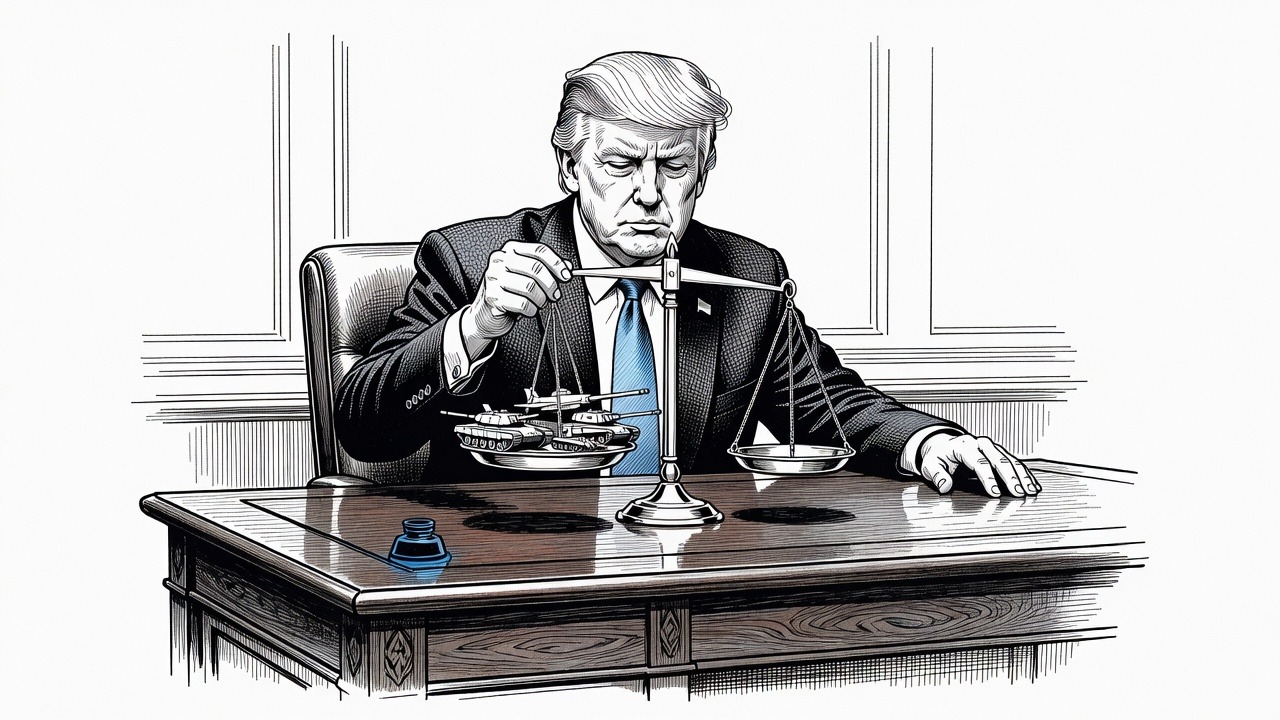
We don't yet know who got into the database, what they took, or whether they changed anything. The FBI hasn't told us much, and we should be careful not to invent a story to fit our fears. But one line in the early reporting deserves more attention than the usual "sensitive information may be exposed" boilerplate. A former head of FBI cybercrime investigations warned that attackers could compromise the accuracy of the data police rely on every day.
Privacy is the familiar worry, and it is a real one. Integrity is worse. Stolen data hurts people in the abstract. Corrupted data hurts them at a traffic stop.
A police database is not a library. It is a machine for deciding who gets treated as a threat. An officer pulls a license plate, sees a flag, and approaches the car with a hand on a holster. A warrant entry, a wrong name, a fabricated association: each can change how a stranger gets treated in the next ninety seconds. Those errors rarely fall on the powerful. They fall on people who already get stopped more often, believed less, and given the least time to contest what the screen says. If someone can quietly poison these systems, the cost won't land on the agencies that built them.
The Left has been called paranoid for decades about the sprawl of government data: the gang databases that sweep in teenagers because of their neighborhood or their clothes, the watchlists with no meaningful appeal, the facial-recognition tools that misidentify Black men and send police to the wrong door. The usual reply was that the government can be trusted with all this because it has safeguards. A breach at the center of federal law enforcement shows how thin those safeguards can be. We already saw it with Salt Typhoon, when Chinese hackers burrowed into U.S. telecom systems, including ones tied to lawful wiretapping. The surveillance infrastructure meant to protect us became an intelligence gift to a foreign power.
The politics here are uncomfortable on both sides, and I'd rather say so. Democrats helped build this apparatus. The post-9/11 consensus was bipartisan, and plenty of liberal officials voted for the data-hoarding and sold it as modernization. We don't get to act as if the Left only discovered the danger yesterday.
But the current administration has made the problem worse in plain view. It has pushed to merge data across agencies that were deliberately kept apart, including tax, benefits and immigration records, and it has leaned on private contractors like Palantir to stitch them together. In January 2025 it also disbanded the Cyber Safety Review Board, which was investigating the Salt Typhoon intrusions, and it has cut staff at the federal cyber agency. You cannot gather more of the nation's personal information into fewer hands while gutting the people who check whether those hands are safe. That is not toughness. It is negligence with a flag on it.
The answer should not be a bigger budget for the same hoard. Better security matters, but the first principle is that data you don't collect can't be stolen or tampered with. That means narrower databases, firm limits on who can query them and why, audit trails that outsiders can inspect, and a legal right for ordinary people to see and correct what the government says about them. Right now that right is mostly theoretical.
The agencies will say they are investigating, and they should. But the question isn't only who broke in. It's why we built a system where one intrusion can alter what police believe about us, and why those most likely to be harmed by bad data have the least power to correct it.
How it may affect me
You can request your own FBI Identity History Summary (your "rap sheet") through the FBI's website and challenge errors with the agency that supplied them. If you've ever been wrongly flagged at a stop, a background check or a border crossing, ask for records now and keep copies.