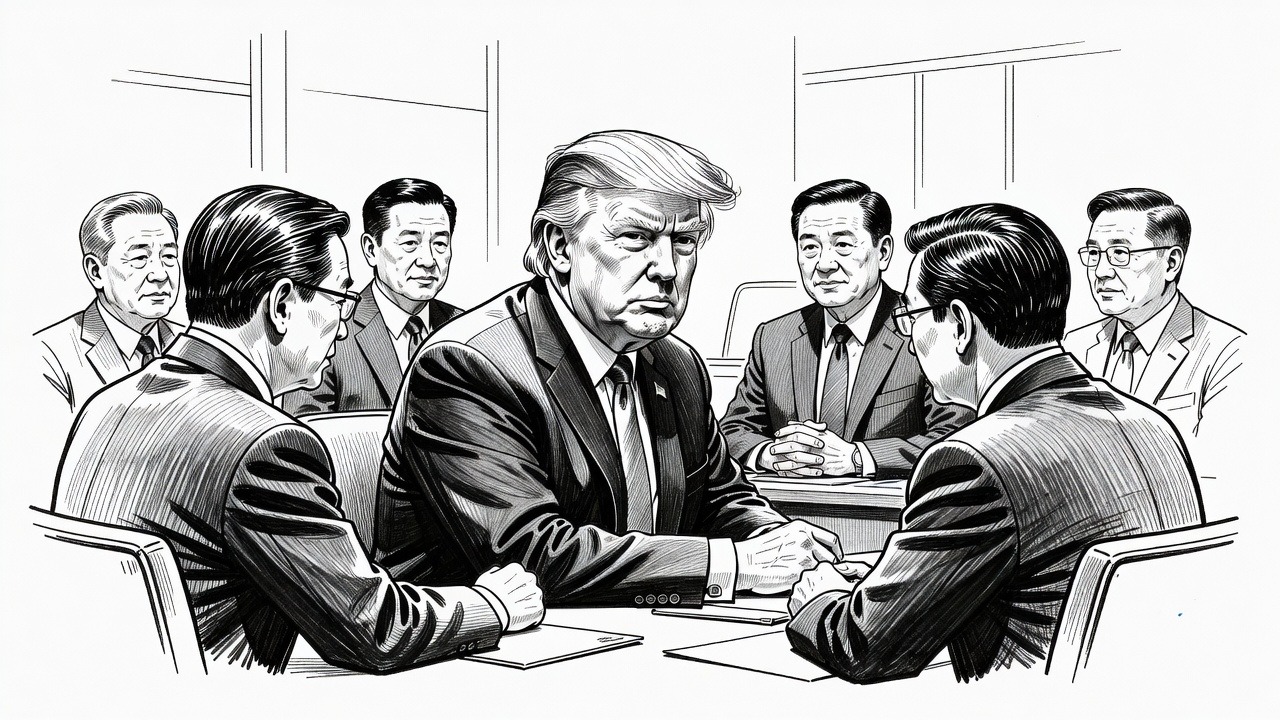
Strip away the pageantry of three men in a room in Shenzhen, and the sentence that matters is the one about courts. The joint declaration says that state officials' immunity must be respected and that the International Criminal Court and similar institutions must not "abuse their jurisdiction." Read it again with the signatories in mind. One is under an ICC arrest warrant for the forced deportation of Ukrainian children. Another presides over the surveillance and mass detention of Uyghurs. The third is the president of the United States.
That last part is the one Americans should be loudest about. This is not a country that wandered into Putin's preferred worldview by accident. Early in his second term, Trump signed an order sanctioning ICC officials, a remarkable step against a court whose most prominent warrant right now is for the man he just shared a stage with. His Supreme Court has already handed presidents broad immunity for official acts at home. Now the same principle goes global: leaders are special, and the rules are for everyone else.
Let me be fair to the strongest version of the other side. Talking beats not talking. Three nuclear powers agreeing to discuss reducing nuclear risks is better than three nuclear powers sulking while the arms-control architecture rots. The Left has argued for decades that diplomacy with adversaries is not appeasement, and we should not abandon that because Trump is the one doing it. If this summit produces verifiable limits on warheads, I will say so loudly.
But look at what was actually delivered: a pledge to "dialogue." Not a treaty, not an inspection regime, not a number. The only concrete commitments are the ones that serve the men signing. More refined petroleum, at a moment when the climate science is more urgent, not less. A reform agenda for the UN whose only specified content is weakening accountability. And impunity, written down and signed. Dialogue is the appetizer. The meal is a club of leaders agreeing that none of them will ever be judged.
Then there is Ukraine, discussed in a separate meeting between Trump and Putin, with Ukraine absent. We have seen this movie. Great powers settle the fate of smaller countries over their heads and call it realism. Ukrainian families whose children were taken across the border are not a bargaining chip in a spheres-of-influence conversation. They are the exact victims the ICC warrant exists to name. Asking that court to stand down is asking those families to accept that what happened to them is a diplomatic inconvenience.
Democrats should resist the urge to answer with nostalgia for a rules-based order they themselves enforced selectively. Washington has never joined the ICC, and it shielded allies from scrutiny while lecturing rivals. That hypocrisy is real, and Trump and Xi know it, which is why this declaration will play well in much of the world. But the answer to selective justice is more consistent justice, not a signed treaty of impunity. The Left's tradition says the powerful should answer to something beyond their own consciences. That applies to Putin, to Xi, to Netanyahu, and to an American president.
The lesson of Shenzhen is not that peace broke out. It is that three leaders who each face real questions about accountability found common cause in making those questions illegal to ask. When your closest diplomatic partners are the men with the most to fear from courts, you should ask whom your foreign policy is actually serving. It is not the voters. It is not the victims. It is the club.