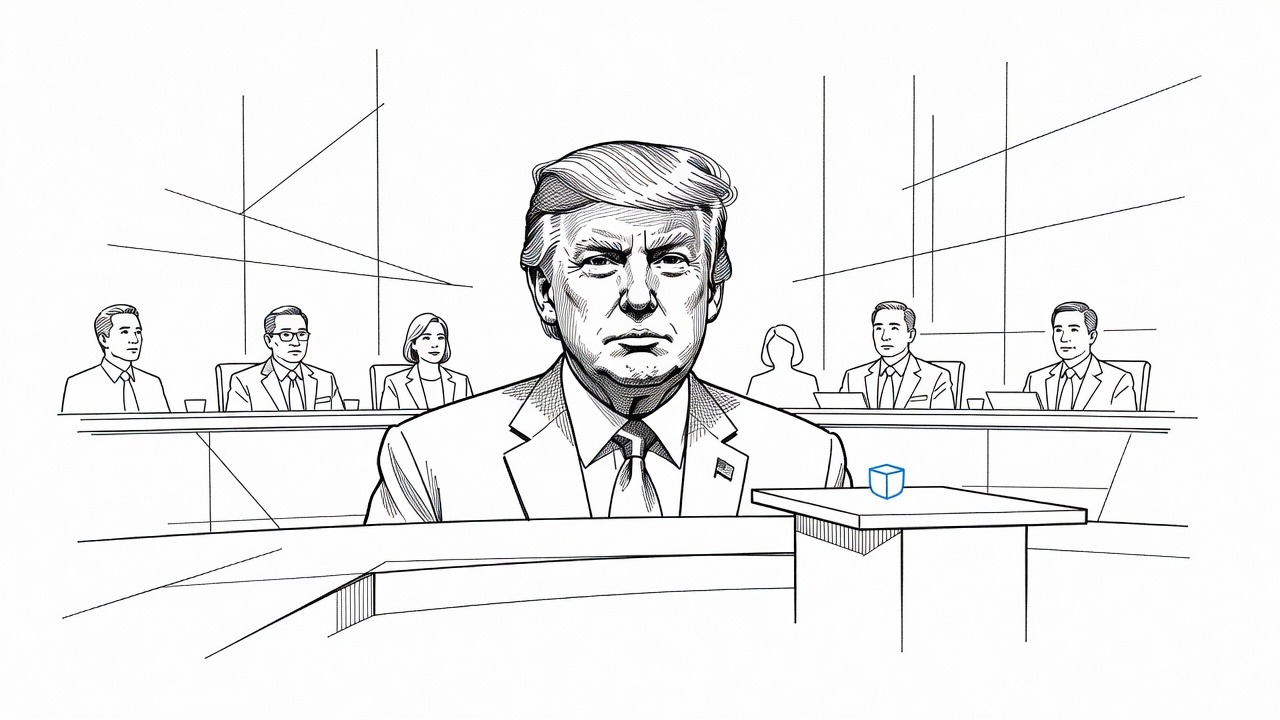
Let's be clear about what the Left should not say. We should not say that a president talking to Vladimir Putin is a scandal. Talking to adversaries is the job. Anyone who has marched for arms control, or who remembers how reckless the Cold War brinkmanship was, knows that nuclear powers have to talk, and that the alternative to talking is a slow slide toward catastrophe. If Donald Trump really does get nuclear reductions on the table in Shenzhen, that is worth something, and it would be perverse to pretend otherwise.
But diplomacy is not a photo op, and a warm line about a 'longstanding relationship' is not a strategy. The question is who is in the room, who isn't, and who pays when the deals are made.
Start with the venue. An American president is meeting the Russian president on Chinese soil, as a guest of Xi Jinping, with Xi positioned to preside over a three-way conversation about Ukraine, Iran and nuclear weapons. Whatever else that is, it isn't American leadership of a coalition. It's an American president auditioning for a seat at a table someone else built. Beijing gets to look like the grown-up broker while Washington's allies read about it in the news.
Then there is Ukraine, which Trump now says he will not strike a deal without. Good. Hold him to it. But Ukraine's foreign minister had to remind the world that decisions cannot be made without the party directly involved, and the fact that this needed saying should tell you something. We have watched this movie. The Alaska summit last year put Putin on American soil with the Ukrainian president nowhere in sight, and the peace proposals that followed read as if Moscow had helped with the drafting. A pledge of inclusion from a president who has repeatedly treated Kyiv as a bargaining chip is a promise to be audited, not applauded.
The Left has its own obligation here, and it isn't a comfortable one. Many of us want this war to end, and rightly so. Ukrainians are dying, and so are Russian conscripts, and the money and weapons can't flow forever. But a ceasefire that rewards territorial conquest isn't peace. It's an invitation to the next invasion, in Ukraine or somewhere less famous. A real left position on this war was never 'stop the weapons.' It is that the people being bombed get a decisive voice in how it ends, and that the settlement is backed by something sturdier than one man's goodwill toward another.
That's the deeper problem with the Trump method. Everything runs through personal chemistry. Trump has a relationship with Putin, a relationship with Xi, a feel for each. That is how you get an agenda that jumbles trade, artificial intelligence, nuclear arsenals and a European land war into a single week of summitry. Nuclear arms control, in particular, is painstaking work that depends on verification, staff, expertise and Senate ratification. It isn't a handshake. If the president can't say what Congress will be asked to approve, or what inspectors will be allowed to see, then he's performing diplomacy rather than conducting it.
And ask what 'trade and AI' with Xi means for people outside the room. American workers have been told for years that tariffs and tough talk would protect them, while consumers absorbed the costs. Now the same president is bargaining over the technology that will reshape their jobs, with no public account of what is being traded away or who benefits. Democrats should be demanding that account loudly, not retreating into reflexive Russia-baiting that Trump's defenders can dismiss as partisan noise.
The standard is simple. Talk to everyone. Negotiate hard. But do it in the open, with allies beside you, with Ukraine at the table rather than on the menu, and with Congress holding the pen on anything that binds the country. Anything less is a summit for the leaders, paid for by everyone else.