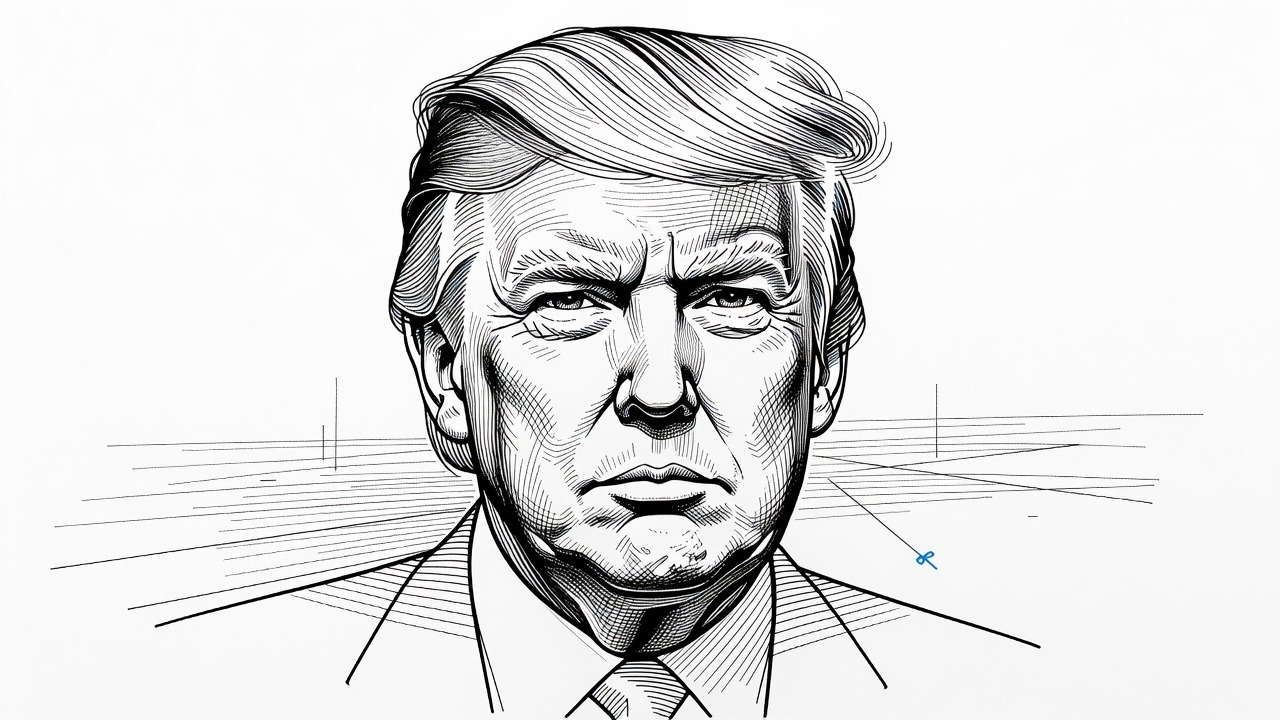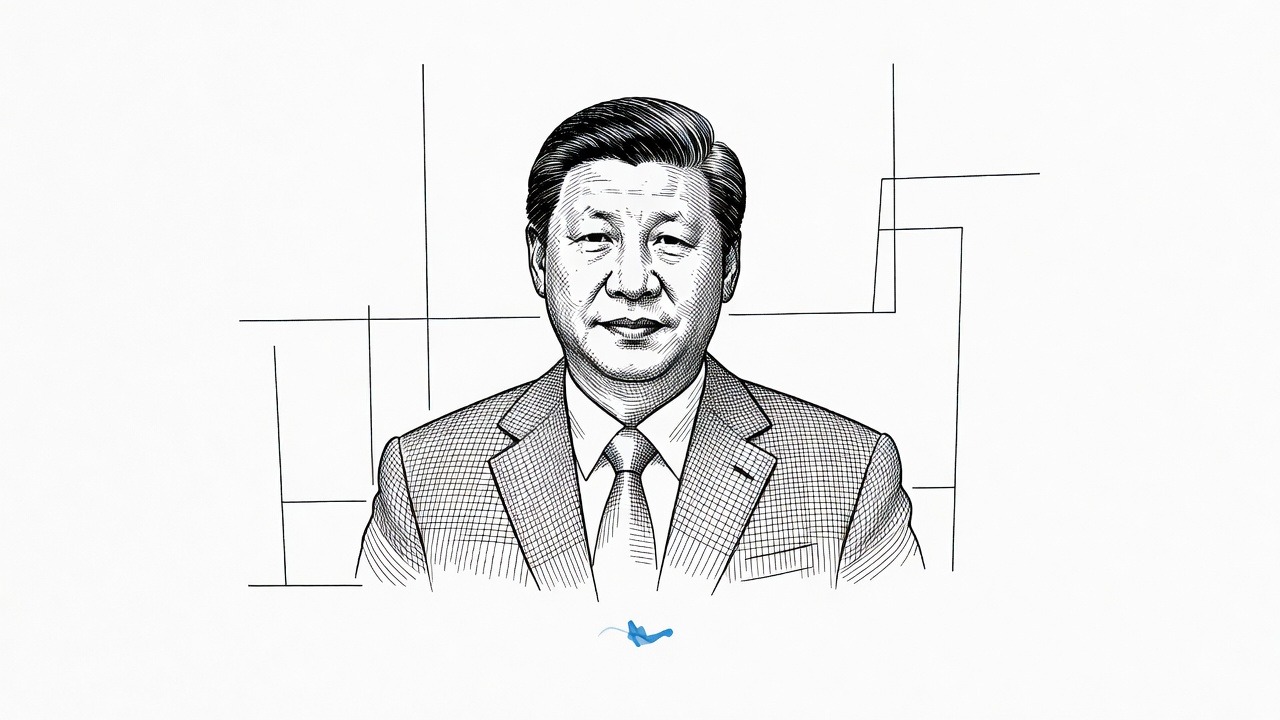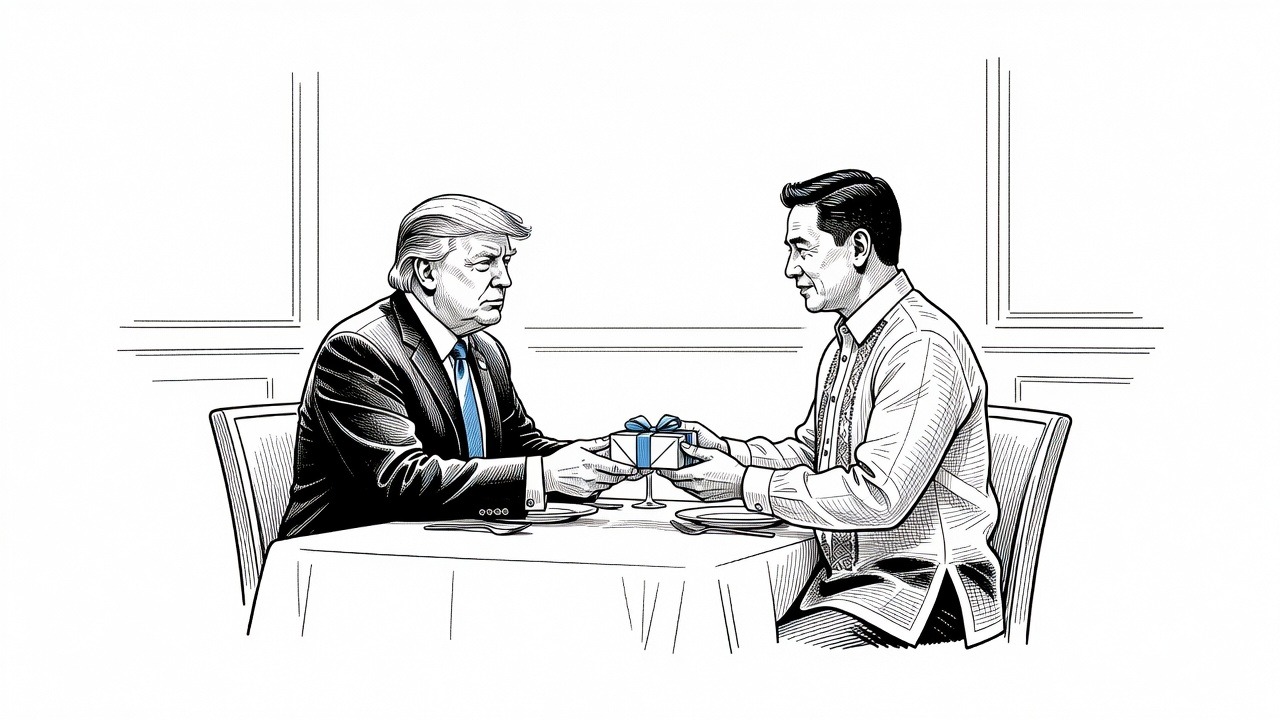
Fried chicken and a gift from Imelda Marcos. That is how the leader of the world's most powerful democracy spent an evening in Manila, and the cheerful tone of the coverage is the most revealing part.
Let's be precise about who greeted Donald Trump with a present and called him a leader of world peace. Imelda Marcos was the partner of a dictator who ruled under martial law for years. Amnesty International documented thousands of killings, tens of thousands tortured, and tens of thousands imprisoned during that period. Philippine authorities spent decades chasing billions of dollars the family is believed to have looted. In 2018, a Philippine court convicted Imelda on corruption charges. She never served time. The family didn't just survive; it came back, and her son now sits in Malacañang.
Trump told the dinner he had known the Marcos parents "for a long time." That is meant as a pleasantry. Read it again as a confession. It's the whole Trump foreign policy in one line: relationships over rules, familiarity over principle, flattery as the currency of statecraft. The man who has lobbied openly for a Nobel Peace Prize was handed a "world peace" compliment by a woman whose family history is a lesson in what unaccountable power does. He took it gladly.
There's a serious argument on the other side, and it deserves a hearing. The Philippines is a frontline state in the South China Sea. American access to bases there matters, and Japan's presence at the table signals a regional bloc forming against Beijing's coercion. You cannot run that strategy while refusing to shake hands with anyone whose family tree has a stain. Fair. My own side should concede that Joe Biden courted Marcos Jr. with the same strategic logic, and Democrats made little fuss. Washington has been here before: Reagan's government kept the elder Marcos afloat until the very end, then flew him to Hawaii.
But engaging a government is not the same as embracing a legacy. A president can meet Marcos Jr. in a conference room and talk about shipping lanes, joint patrols and supply chains. He can do that while making clear, even quietly, that Washington remembers what the family's rise cost Filipinos. What he shouldn't do is sit through a ceremony of mutual admiration with the matriarch and treat the history as a charming backstory. That isn't realism. It tells every strongman watching that American friendship is available to anyone who flatters well and offers a useful map position.
The cost is concrete. Washington's argument to Southeast Asia is that it offers something Beijing doesn't: a rules-based order, with partners treated as sovereign equals rather than clients. Every scene like this undercuts that pitch. Filipino survivors of martial law, who still campaign for recognition and restitution, watch an American president celebrate with the family that denies their story. Meanwhile, the Marcos political machine, which has spent years rehabilitating the dictatorship's image through nostalgia and online mythmaking, gets a gift-wrapped photo for the family album.
The lesson isn't that America should isolate Manila. It's that alliances built on personal warmth are only as durable as the personalities involved, and that a country that says it defends democracy shouldn't be so comfortable applauding people who buried it. Trump may not know the difference, or may not care. Those of us who do should say so, and say it about Democrats too when they forget.