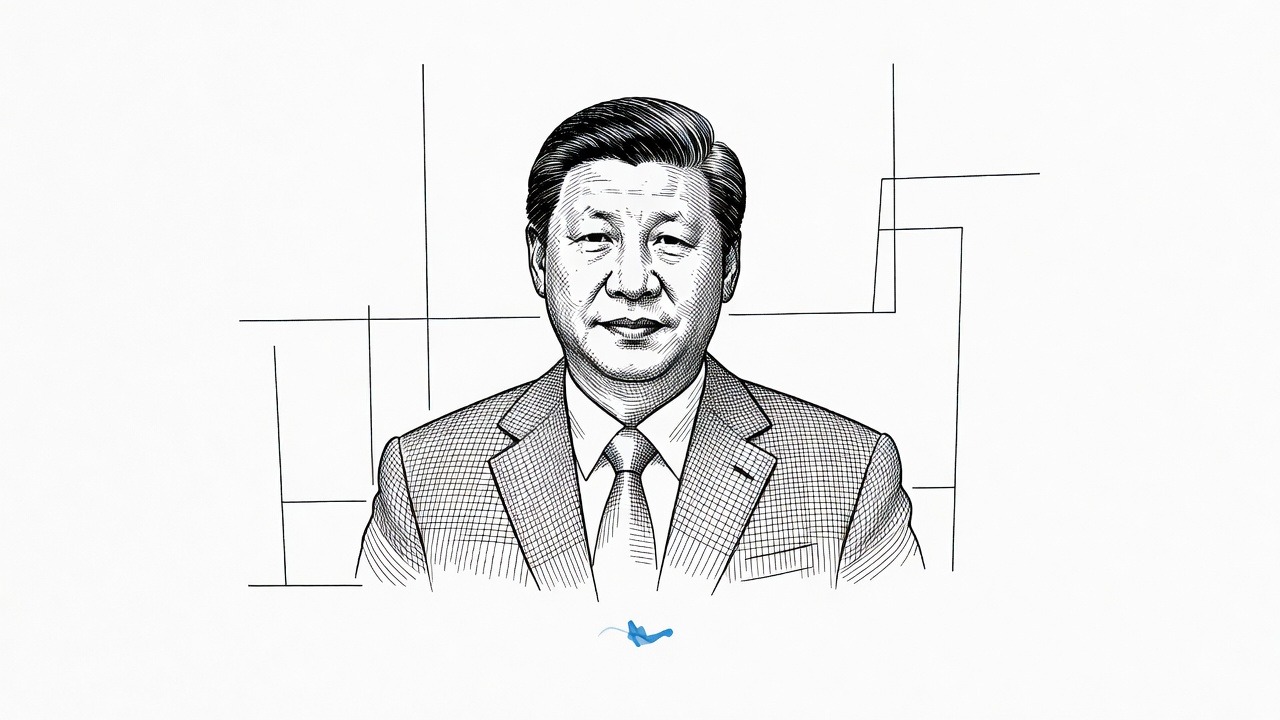
Watch the choreography. Xi Jinping, who runs a one-party state with an export machine built on state subsidy, stands next to Vladimir Putin and calls for open trade and opposition to protectionism and unilateralism. The next day, both men are due to sit down with the American president. That sentence should embarrass Washington more than it embarrasses Beijing.
Xi's line is cynical, and nobody should mistake it for conviction. China protects its industries, surveils its people and leans on its neighbors. But it lands because the United States under Donald Trump has spent two years making unilateralism its brand. Tariffs imposed by executive declaration, allies shaken down like debtors, treaties treated as opening bids: this is what turned a strongman's talking point into a respectable position. Xi no longer has to be right. He only has to be steadier than the man across the table. That is a remarkable thing to have given him.
Then there is Putin, who says bilateral trade has hit a record high. Of course it has. Russia has been cut off from much of the Western economy because it invaded a neighbor, and it now relies on Beijing as its biggest customer and supplier. A record in Russia-China trade is a measure of how well Moscow has been pushed into dependency, and of how much of its war economy a Chinese buyer now underwrites. The Kremlin presents this as partnership. A more honest word is leash. Beijing knows it.
Which raises the question the three-way format conveniently buries: who is not in the room? Ukrainians, whose country is the subject of the largest European land war in generations. Europeans, whose security is being discussed above their heads. Every country that has to live with whatever the three leaders decide to call stability. A summit of great powers is an old and ugly genre, and its defining feature is that the people most affected get informed afterward.
To be fair, talking to adversaries is not appeasement. Diplomacy with Moscow and Beijing is necessary, and a Left that cares about avoiding nuclear catastrophe and a new cold war should say so plainly. Nobody serious wants Trump and Xi not speaking. The problem is the shape of this diplomacy. It is personal, improvised and transactional, with no coalition behind it and no visible principle in front of it. Strong diplomacy rests on allies who trust you and rules you actually follow. This administration has spent both on tariffs and flattery, and now arrives to negotiate with its leverage already discounted.
And Americans will pay the bill. Tariff policy made by whim is a tax on working families, collected at the checkout and the dealership, while farmers and manufacturers are told to be patient about markets that may never return. If this summit produces a deal, expect it to be sold as a triumph. Ask who negotiated it, who it benefits, and whether anyone outside the room had a say. Ask whether workers got anything, or whether the winners are the same donors and the same exporters who always get a seat.
The Democratic opposition has its own homework. "Restore the old order" is not a program, because the old order delivered cheap goods and hollowed-out towns and left many voters feeling that globalization was something done to them. The Left's answer should be a foreign policy that treats workers, democratic allies and international law as assets instead of afterthoughts: industrial policy that actually builds things, alliances that actually hold, and a spine on Ukraine that does not depend on who flatters whom.
Xi and Putin met in Shenzhen to project unity. The more worrying question is what Washington is projecting when it joins them: a country with principles, or just one more party looking for a deal.