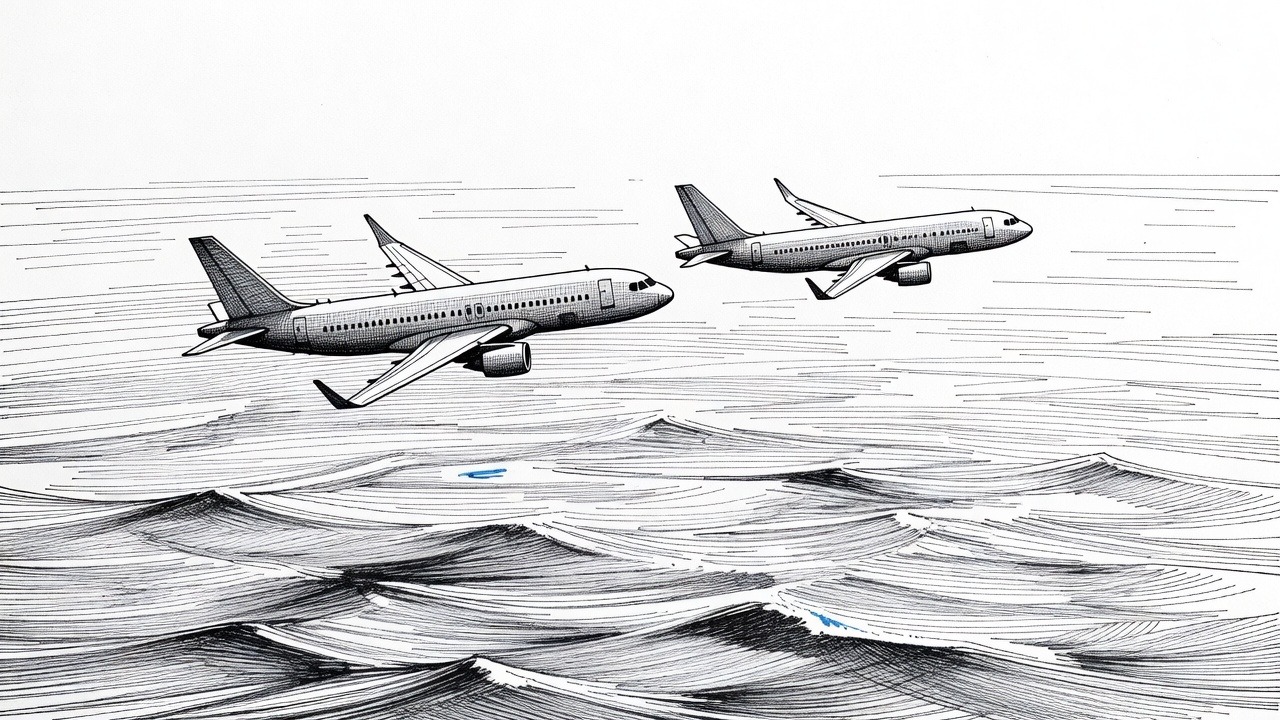
Two aircraft, presumed Russian, wandered through Taiwan's air defense zone and into Japanese airspace. The reporting mentions no shots fired and no casualties. Tokyo lodged a protest, and Taipei said it monitored and responded. It is tempting to file this under routine gray-zone noise. That would be a mistake, but so would the opposite reflex, which is to treat every incursion as a down payment on war.
Start with what the story admits. Japan's air staff chief said the aircraft's models and Russian identity remain presumptive. That caution is a feature, not a bug. The most dangerous moments in great-power standoffs are rarely planned. They come from misidentification, a pilot's bad judgment, or a politician who has already decided what the radar blip means. Japan is behaving like a grown-up here: identify, protest, document, and don't improvise. That's the standard everyone else should meet.
But the larger context matters. This happened in a tense stretch for East Asia. Japan's new prime minister, Sanae Takaichi, had just stirred a dispute with Beijing by suggesting a Taiwan contingency could count as a survival-threatening situation for Japan. China answered with economic and diplomatic punishment. Whether or not Moscow's flight was coordinated with anyone, and nothing in the reporting says it was, the Kremlin has every incentive to make Japan feel that its northern and southern flanks are linked. Russia, bogged down in Ukraine and dependent on Chinese trade, is an eager junior partner in anything that stretches Western and Asian democracies thin.
The Left should say plainly what the Right's critics of "war hysteria" sometimes won't: authoritarian states probing the borders of their neighbors is real, and it is not an invention of defense contractors. Taiwan's 23 million people live under a standing threat. Japan has a legitimate interest in its own sovereignty. Anyone who shrugs this off as Western projection isn't being anti-war. They're being indifferent to who gets bullied.
But the Left also has a duty to ask who profits from the alarm. Every incident like this will be cited in budget fights, in arguments for loosening Japan's postwar constitutional limits, and in American appropriations that are rarely debated with any honesty about trade-offs. Defense spending is not free. Every yen or dollar poured into a bigger arsenal is a choice not to spend on housing, health care, wages or climate resilience, and those costs fall on ordinary people who never get a vote on the threat assessment.
The real scandal is the thinness of the diplomatic architecture meant to keep these episodes from spiraling. Washington's posture toward its Pacific allies has become transactional and erratic. Donald Trump has treated alliances as protection rackets and Taiwan as a bargaining chip, and he reportedly urged Takaichi to cool the rhetoric rather than standing visibly behind an ally. Allies cannot tell whether American backing is a doctrine or a mood. Deterrence rests on credibility, and credibility rests on predictability. Adversaries read that vacuum as opportunity.
The right answer is dull and demanding: sturdy alliances, working military hotlines, incident-management agreements with Moscow and Beijing, and public leaders who refuse to inflate or minimize what the radar shows. Protest the violation. Verify the facts. Keep the channels open. Resist the urge to turn a flyover into a cause.
A world where two ambiguous aircraft can trigger a regional alert is a world with too little margin for error. The people who should worry most aren't the pundits cheering for escalation. They're the pilots, the fishing crews and the families in Taipei and Hokkaido who would live inside the mistake.