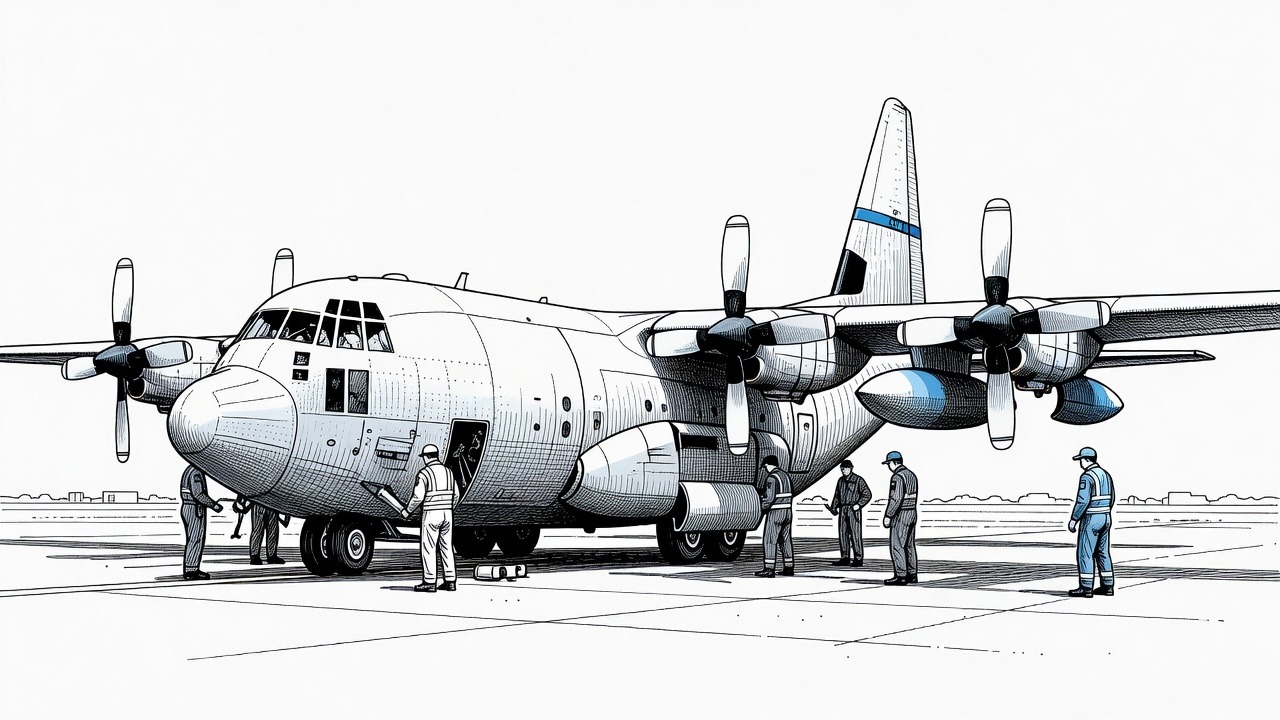
Prosecutors say Daithi O’Corrain did not hold a sign at Shannon Airport. They say the 48-year-old entered a parked U.S. Air National Guard C-130, barricaded himself inside, cut wiring and hydraulic lines, damaged cockpit instruments, struck the exterior with an ax, and put ball bearings into the fuel tanks. A $60 million aircraft was left unable to return to service. He is not in American custody. He does face a U.S. charge for destruction of government property, plus criminal damage and trespassing counts in Ireland. His supporters already have the caption ready: independent peace activist.
That caption is the insult. Peaceable protest is speech, assembly, pressure, elections. An ax in a cockpit and debris in a fuel system are a technique for disabling an airplane. Ball bearings are not a metaphor. They are how you ruin engines. Cut hydraulics are not a cry of conscience. They are how you make sure the machine does not fly. Anyone asking the public to hear “sabotage” and think “witness” is not describing the act. They are laundering it.
The stated motive does not improve the defense. A fundraising organizer said the damage was meant as a protest against U.S. military operations involving Ireland, Iran, and Gaza. Disagree with those operations. Make the case. Ireland has argued with itself for years about American transit through Shannon, and it is entitled to. What no activist is entitled to is a private veto enforced with tools on someone else’s military aircraft. You do not get to ground American airlift because you have decided Washington’s wars are illegitimate. That is not neutrality. It is a one-man embargo with an ax.
The sovereignty objection deserves a straight answer, because it is the only serious one. Irish citizen, Irish airport, Irish charges already filed — why should the United States indict him at all? Because the property is American, the loss is American, and Ireland’s record on this exact grievance is not a reassurance. In 2003, campaigners damaged a U.S. Navy aircraft at Shannon and were later acquitted by an Irish jury after arguing, in substance, that the damage was justified. A country that has already watched a jury treat an attack on American equipment as a moral emergency should not be surprised when Washington declines to leave the matter entirely to local sentiment. Dual prosecution is not an occupation. It is what follows from smashing a sovereign asset and discovering that “we’ll see” is not an answer.
None of this requires romanticizing the policy that put the C-130 on that ramp. Successive Irish governments have allowed the transit. Successive American administrations have used it and preferred not to litigate the politics in public. That bargain is debatable, and a Right that believes in sovereignty should be willing to say so. Debate is not the issue. The issue is the substitute being offered for debate: wreck the plane, call it peace, and dare either government to treat the wrecking as a crime.
A C-130 is not a symbol sitting there for the enlightenment of passersby. It is a transport aircraft — troops, cargo, the unglamorous work of moving a force and, often, of relief after the shooting stops. Disabling one does not end a war in Gaza or restrain Tehran. It subtracts a usable airframe from the Air National Guard and hands the bill to American taxpayers. The people applauding have not struck a blow for peace. They have cheered a grounded airplane.
Charging O’Corrain is not a war on dissent. Dissent was available on the pavement, in the Dáil, in print, and at the ballot box. The indictment says he chose the inside of the aircraft instead. A serious country does not answer that allegation by adopting his supporters’ vocabulary. It says what the tools already said. This was an attack on American property. Prosecute it like one.
How it may affect me
The loss is not abstract. An Air National Guard C-130 that cannot return to service is one fewer aircraft for that unit’s deployments, training, and domestic missions, and a repair-or-replace bill in the tens of millions falls on taxpayers. Fuel-system sabotage is also why airports treat this as a safety crime: debris in tanks is a known way to destroy engines, not a form of expression.